- Tokyo: 17:35
- Singapore: 16:35
- Dubai: 12:35
- London: 09:35
- New York: 04:35
WHAT IS JARA?
Jara is a traditional beehive that has been used since ancient times in Georgia, there is no evidence for when exactly Jara appeared. However, several local folktales note that ancient inhabitants found the bees in a tree hollow that they called this place in the forest ‘the bee tree’. Later, locals understood that the ‘bee trees could be replicated. They collected swarms of wild bees and settled them into hollowed wooden logs and then placed them high up in trees to protect them from bears. Such wooden logs were called Jara. After the invention of frame beehives in the 19th century, Jara hives were increasingly replaced by modern beehives. But there are still few places in Western Georgia where Jara hives are still used to make the wild honey Jara.

HOW IS JARA HONEY HARVESTED?
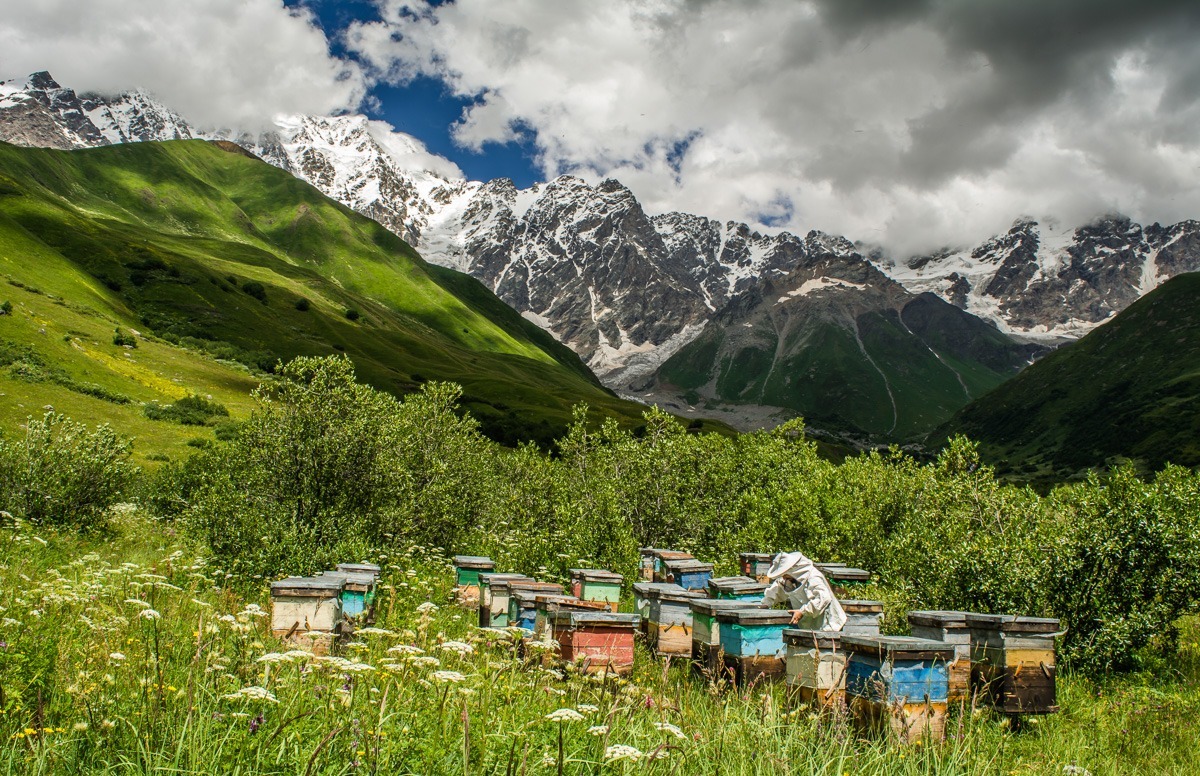
The Jara hive is harvested only once a year mainly at the beginning of autumn after the end of the flowering period.
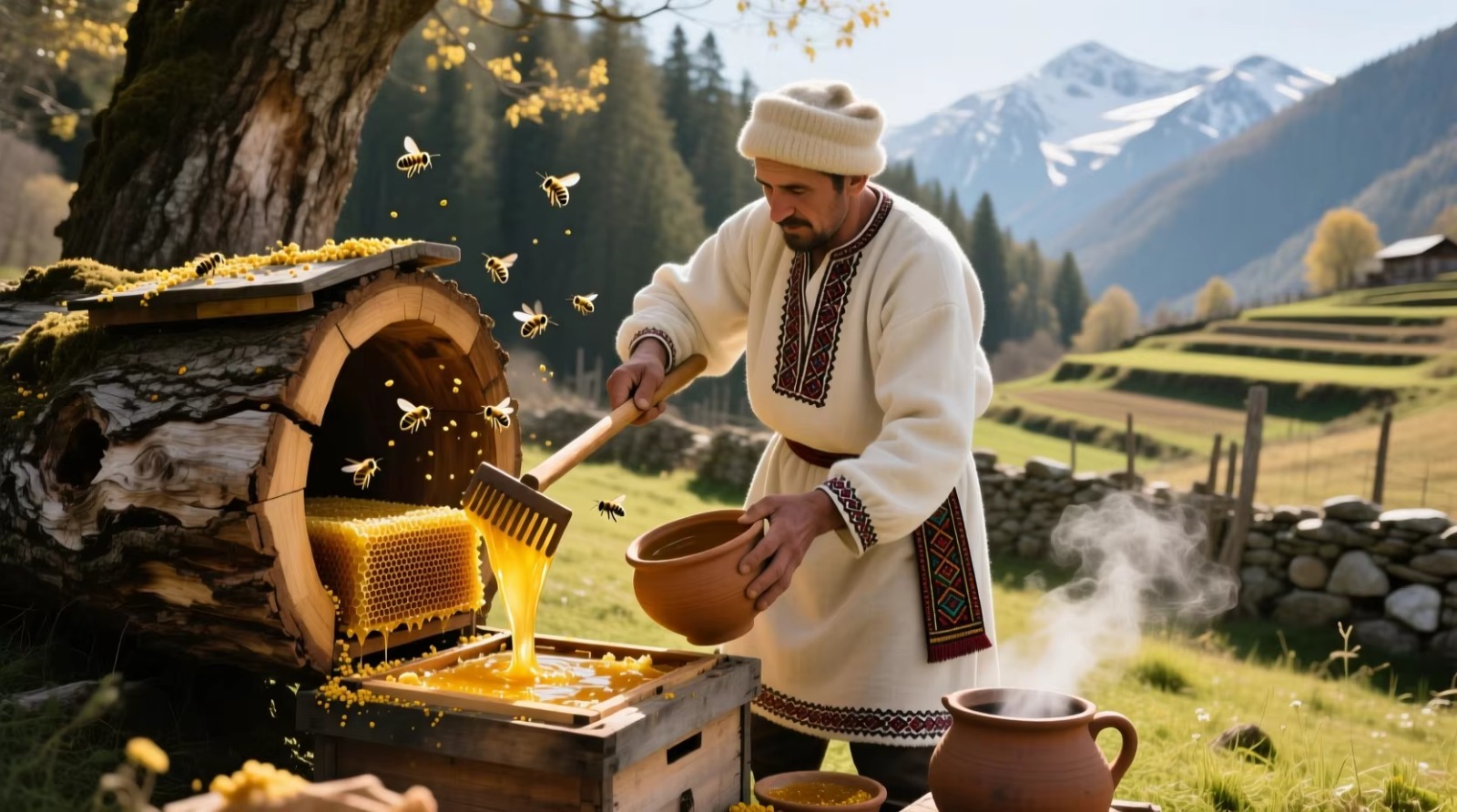
Harvesting honey from a Jara hive is much more difficult and labor-intensive than common frame beehives. The process requires special preparation. As a rule, honey from a Jara is harvested by two people. However, additional support is needed for a Jara hive placed in a tree or on a rock. Beekeepers use special instruments such as oval knives, smokers, ropes, balancers (Kombali), pulleys (Makhara), and branch-ladders (Ghja) for harvesting honey. First the beekeeper opens and observes the hive inside to understand whether it is possible to harvest honey. If there is enough honey, the beekeeper cuts honeycomb from half of the hive and does not touch the other half where the bee colony brood is located. Honeycomb can be different in color as it contains honey from different plants and flowers such as the acacia, chestnut, linden and a vast number of alpine flowers.
