- Tokyo: 00:43
- Singapore: 23:43
- Dubai: 19:43
- London: 15:43
- New York: 10:43
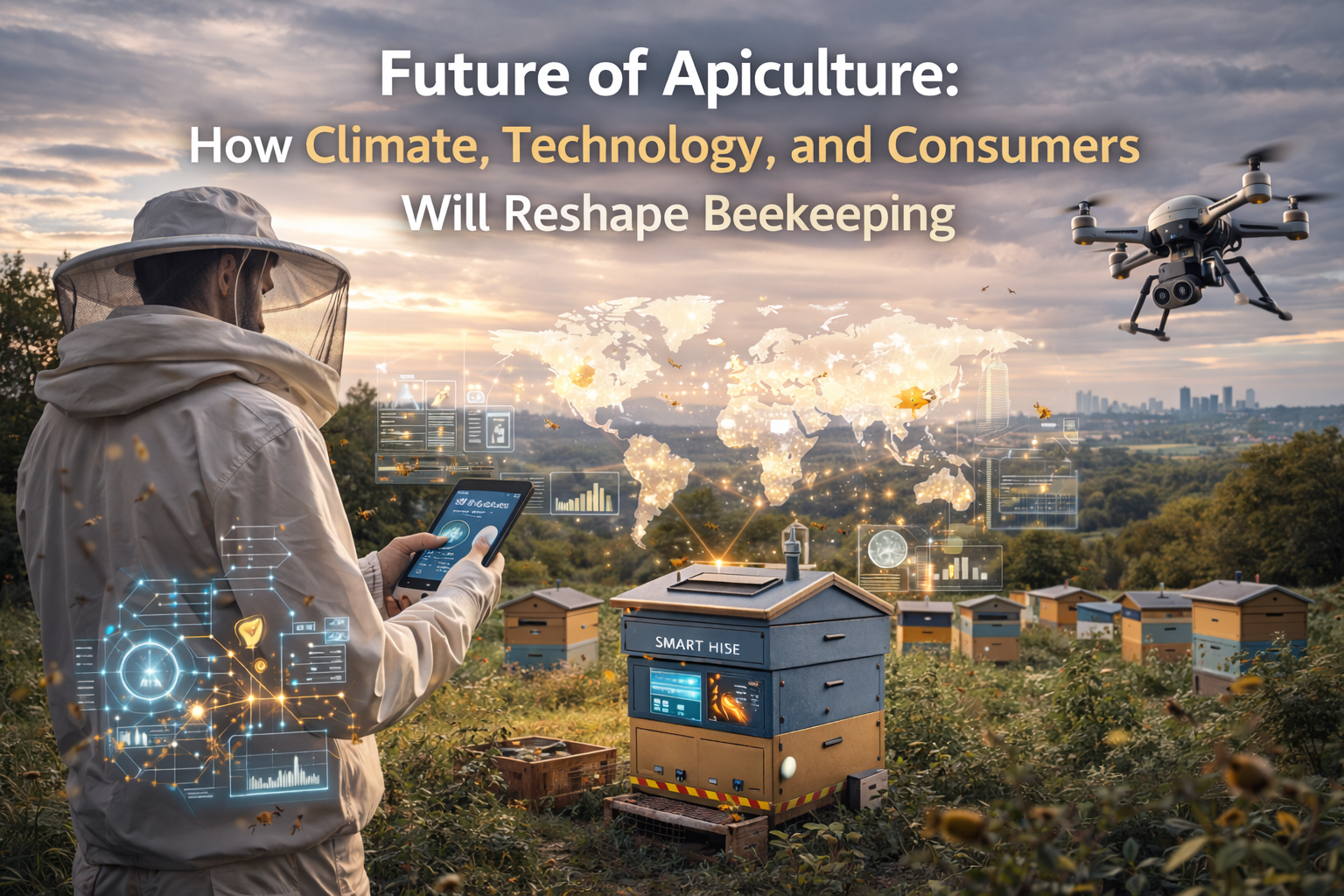


Future of Apiculture: How Climate, Technology, and Consumers Will Reshape Beekeeping
- Reading Time: 2 minutes, 43 seconds
- Post Views: 1327
Apiculture, the practice of beekeeping, has existed for thousands of years, yet it is now entering one of the most transformative periods in its history. Climate change, rapid technological innovation, and evolving consumer expectations are reshaping how bees are managed, how honey is produced, and how sustainability is measured. What was once a largely traditional practice is becoming a data-driven, climate-aware, and consumer-influenced industry.
Understanding the future of apiculture is essential not only for beekeepers but also for policymakers, food producers, and consumers who depend on pollinators for global food security.
Climate Change and Its Impact on Beekeeping
Shifting Flowering Cycles and Nectar Availability
Climate change has disrupted the natural timing of flowering plants. Rising temperatures and irregular rainfall patterns cause:
1. Early or delayed blooming
2. Shortened nectar flows
3. Mismatches between bee activity and flower availability
These disruptions reduce honey yields and place nutritional stress on colonies
Increased Heat Stress on Bee Colonies
Bees are highly sensitive to temperature changes. Prolonged heat waves:
1. Increase water demand inside hives
2. Disrupt brood development
3. Reduce foraging efficiency
To survive, future apiculture must focus on heat-resilient hive designs and improved colony management
Climate-Driven Spread of Diseases and Pests
Warmer climates allow pests and pathogens such as Varroa mites and fungal diseases to spread more rapidly and into new regions. This has led to:
1. Higher colony mortality rates
2. Increased reliance on monitoring systems
3. Greater need for preventative care
Sustainable disease management will be a cornerstone of future beekeeping
Technology Transforming Modern Apiculture
Smart Hives and IoT Monitoring
One of the most significant advancements in apiculture is the rise of smart hives. These technology-enabled hives use sensors to monitor:
1. Temperature and humidity
2. Hive weight and honey flow
3. Bee activity and sound patterns
Real-time data allows beekeepers to intervene early, preventing colony collapse and improving productivity
Artificial Intelligence in Beekeeping
AI-powered systems are increasingly used to:
1. Detect abnormal hive behavior
2. Predict disease outbreaks
3. Optimize honey harvesting schedules
Machine learning models can analyze hive sounds and movement patterns to assess colony health without disturbing the bees
Precision Beekeeping and Data-Driven Decisions
Future apiculture will rely heavily on precision beekeeping, where decisions are guided by data rather than intuition alone. Benefits include:
1. Reduced colony losses
2. Improved honey quality
3. Lower environmental impact
This shift mirrors broader trends in sustainable agriculture and agri-tech innovation.
Sustainability as the Core of Future Apiculture
Bee-Friendly Farming Practices
Modern apiculture is closely linked to agricultural ecosystems. The future depends on:
1. Reduced pesticide usage
2. Pollinator-friendly crop planning
3. Biodiverse landscapes
Beekeepers and farmers must collaborate to create environments where bees can thrive
Conservation of Wild and Native Bees
While honeybees dominate commercial apiculture, wild bees play a critical role in pollination. Protecting diverse pollinator species strengthens ecosystems and supports food security
Sustainable Honey Harvesting
Future beekeeping will emphasize ethical honey extraction practices that:
1. Preserve colony strength
2. Maintain sufficient honey reserves for bees
3. Avoid overharvesting
This approach ensures long-term productivity rather than short-term gain
Changing Consumer Expectations
Demand for Transparency and Traceability
Modern consumers want to know:
1. Where honey comes from
2. How bees are treated
3. Whether products are ethically sourced
This has increased demand for traceable, origin-specific honey
Preference for Raw and Minimally Processed Honey
Consumers are increasingly choosing:
1. Raw honey
2. Organic honey
3. Unfiltered honey
These products retain natural enzymes and bioactive compounds, aligning with wellness-focused lifestyles
Awareness of Honey Adulteration
Global honey fraud has made consumers more cautious. As a result:
1. Authenticity testing is gaining importance
2. Education around purity is essential
3. Trusted brands play a key role
Beekeepers and producers must adopt stricter quality controls
The Role of Policy and Research in Apiculture’s Future
Governments and research institutions are investing more in:
1. Pollinator protection policies
2. Climate adaptation strategies
3. Sustainable agricultural frameworks
Scientific research now guides decisions on hive placement, nutrition, and disease control
Apiculture and Global Food Security
Approximately one-third of global food production depends on pollination. As climate and environmental pressures increase, apiculture will play a vital role in:
1. Crop yield stability
2. Nutritional diversity
3. Ecosystem resilience
Future beekeeping is not just about honey; it is about protecting food systems worldwide
Conclusion
The future of apiculture lies at the intersection of climate adaptation, technological innovation, and conscious consumerism. Beekeeping is evolving from a traditional craft into a science-backed, sustainability-driven practice that supports both ecosystems and economies.
Those who embrace smart technologies, ethical practices, and environmental responsibility will shape a resilient future for bees and for the planet they help sustain.
