- Tokyo: 00:32
- Singapore: 23:32
- Dubai: 19:32
- London: 16:32
- New York: 11:32
The Impact of Pathogens and Parasites on Honeybee Longevity and Hive Productivity
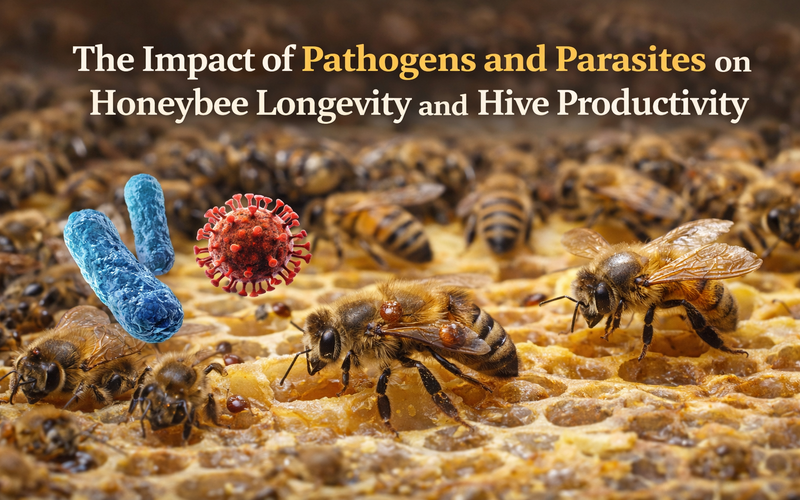
Honeybees (Apis mellifera) play a fundamental role in pollination and agricultural productivity. However, honeybee populations worldwide are increasingly threatened by pathogens and parasites that compromise their health, longevity, and overall hive performance. These biological stressors weaken immune systems, disrupt colony dynamics, and significantly reduce honey production. This research examines the impact of pathogens and parasites on honeybee lifespan and hive productivity, highlighting their implications for sustainable apiculture.
Major Pathogens Affecting Honeybee Health
Viral Infections
Honeybees are susceptible to several viruses that impair physiological and behavioural functions. Viral pathogens often spread rapidly within colonies through direct contact, contaminated food sources, and parasitic vectors.
Viral infections reduce foraging efficiency and flight endurance
Infected bees exhibit shortened lifespans
Colony immunity weakens under viral stress
Studies indicate that viral infections can reduce honeybee longevity by up to 30–50%, limiting their contribution to pollination and hive maintenance.
Bacterial Diseases
Bacterial infections affect both brood and adult bees, disrupting colony growth and survival.
Brood mortality rates increase due to bacterial contamination
Colony population declines rapidly
Honey production decreases due to workforce loss
These infections often require early detection and management to prevent widespread colony collapse.
Fungal Pathogens
Fungal infections thrive in humid hive environments and negatively affect larval development.
Reduced brood survival rates
Slower colony growth
Increased susceptibility to secondary infections
Poor hive ventilation and environmental stress often exacerbate fungal outbreaks.
Parasitic Threats to Honeybee Colonies
Mite Infestations
Parasitic mites are among the most damaging threats to honeybee colonies.
Mites feed on bee haemolymph and weaken immune systems
Act as vectors for viral transmission
Increase colony stress and mortality
Infested colonies may experience productivity losses of up to 40%, significantly affecting honey yield and pollination capacity.
Protozoan Parasites
Internal parasites attack the digestive systems of honeybees.
Reduced nutrient absorption
Impaired digestion and metabolism
Decreased energy levels for foraging
Affected bees often demonstrate reduced lifespan and diminished work efficiency within the hive.
Effects on Honeybee Longevity
Pathogen and parasite exposure leads to:
Shortened adult lifespan
Reduced resistance to environmental stress
Impaired cognitive functions such as navigation and communication
A decline in worker bee longevity directly limits colony productivity and increases turnover rates.
Impact on Hive Productivity
Reduced Foraging Activity
Weakened bees collect less nectar and pollen, leading to:
Lower honey reserves
Decreased brood nourishment
Reduced wax production
Colony Population Decline
High infection rates result in:
Increased mortality among worker bees
Fewer brood reaching maturity
Disruption of colony hierarchy
Decreased Honey Yield
Hive productivity is directly correlated with colony health. Disease-affected colonies may produce significantly less honey due to reduced workforce efficiency.
Economic and Ecological Implications
Declining honeybee productivity affects:
Agricultural crop pollination
Honey supply chains
Biodiversity and ecosystem stability
Reduced pollination services threaten global food security and increase economic risks for beekeepers and farmers alike.
Mitigation and Disease Management Strategies
Regular Hive Monitoring
Routine inspection helps detect early signs of disease and parasite infestation.
Hygienic Beekeeping Practices
Maintaining clean equipment and proper ventilation reduces pathogen spread.
Integrated Pest Management
Combining biological, mechanical, and chemical control methods minimises parasite impact.
Selective Breeding
Breeding disease-resistant bee strains enhances colony resilience.
Conclusion
Pathogens and parasites represent a major threat to honeybee longevity and hive productivity. Addressing these challenges through improved monitoring, sustainable hive management, and disease control strategies is essential for maintaining healthy bee populations and ensuring long-term agricultural sustainability.


