- Tokyo: 00:56
- Singapore: 23:56
- Dubai: 19:56
- London: 15:56
- New York: 10:56
Why Yemen is Known as the Home of Sidr Honey
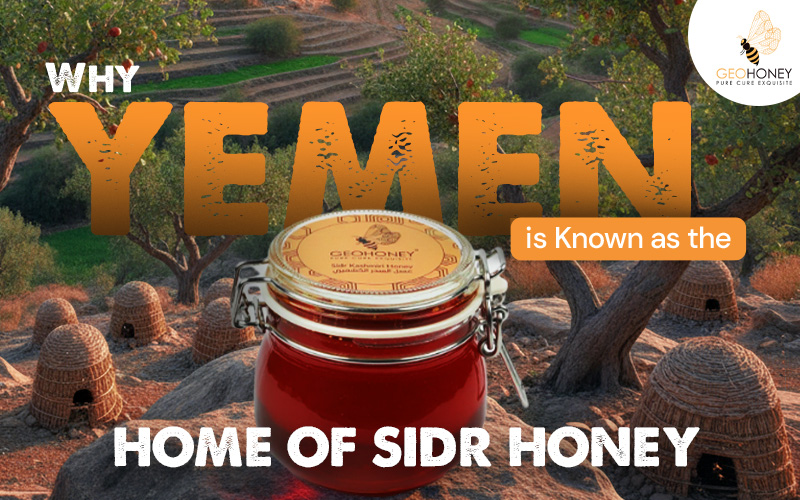
The Sidr honey from Yemen is popular among honey enthusiasts globally as it possesses a unique set of features. This honey is a symbol of the region’s rich beekeeping heritage.
The resilient Sidr tree or Ziziphus spina-christi tree provides the nectar for this honey. This tree thrives in Yemen’s arid mountainous regions away from pollution or human influence.
Yemen is a country with a rich beekeeping tradition, and that is why many people label it as the home of authentic Sidr honey.
This blog discusses what makes Yemen a key player in the production of this organic honey. So, keep on reading to learn more.
Sidr Honey: Origins and Key Features Sidr Honey from Yemen: What Makes it A Perfect Home for This Exotic Honey Cultural Significance of the Yemeni Sidr Tree Abundance of Sidr Trees in Pristine, Natural Habitats Ancient Beekeeping Traditions Still in Practice Limited Production Health Benefits

Sidr Honey: Origins and Key Features
Sidr honey originates from the Ziziphus spina-christi tree, also referred to as the Sidr tree. This tree is indigenous to the remote mountainous locations of Yemen, including places like Wadi Do'an (Hadramaut), Al-Osaimat, and Shabwa. Sidr trees grow in pristine environments that contribute to the high purity of the honey.
A recent report by the World Bank says that the honey production in recent years has been estimated at roughly 2,500–3,000 tons annually in Yemen.
Sidr trees are very resilient and drought-tolerant, which makes the arid mountains and valleys of Yemen suitable for their growth.
Because of this unique nectar source, this raw honey possesses a unique set of characteristics. Here are a few notable ones.
Sidr honey has a rich, earthy, and caramel-like flavor.
The texture of this honey is thick and velvety.
This honey possesses a dark amber to golden color.
The slow rate of crystallization imparts a long shelf life to this honey.

Sidr Honey from Yemen: What Makes it A Perfect Home for This Exotic Honey
The following points illustrate why Yemen is the home to the pure, exotic Sidr honey.
Cultural Significance of the Yemeni Sidr Tree
The source of the Sidr honey is the Sidr tree which is a symbol of blessing as well as healing in the local tradition. Several Islamic texts associate this tree with divine purity and protection.
The fruit, bark, and leaves of this tree find uses in traditional medicine for skin and hair care. Several remedies with these ingredients are also a part of ancient cultural rituals in the area.
The deep cultural respect that this tree enjoys is the reason why it stands tall as Yemen’s most prized natural asset.

Abundance of Sidr Trees in Pristine, Natural Habitats
Yemen possesses a diverse geography. It has high mountains and deep valleys. You can also find dense forests and vast deserts in the region. The region’s unique location and climate provide ideal conditions for the Sidr trees to grow in abundance.
Several regions throughout Yemen support the growth of these trees. Most common examples include the following.
Wadi Do’an in Hadhramaut (known for its unique Sidr honey doani)
Shabwa
Amran
Dhamar
Marib
The sidr trees have deep roots and high resilience against harsh climates. This makes Yemen’s semi-desert environments ideal for these trees. Bees that feed on the nectar from these trees produce pure Sidr honey that is free from any adulteration whatsoever.
Apart from pristine climate, other factors like the clean air and mineral-rich soil also play a vital role in the growth of Sidr trees that contain high concentrations of pure nectar that bees use to create the iconic Sidr honey.

Ancient Beekeeping Traditions Still in Practice
Yemen is the home of pure sidr honey, as the local beekeepers still rely on ancient techniques for harvesting as well as processing this liquid gold.
Research shows that more than 100,000 Yemeni beekeepers rely on honey production as a key livelihood.
The wild Sidr trees grow in the region without any pesticide usage. Most beekeeper prefers to harvest by hand. The minimal use of machinery ensures unparalleled purity of this honey.
These beekeepers do not heat or pasteurize this honey. There is also minimal filtration which allows the honey to retain most of its nutrients.
Another ancient method that Yemeni beekeepers use is the seasonal hive migration. These experts use their insights into flowering cycles as well as weather patterns to discover blooming Sidr trees. Then they shift their hives to these regions, which ensures maximum nectar collection.
These ancient beekeeping practices create a very special honey that you only find in Yemen and nowhere else in the world.
Limited Production
Unlike regular honey, the honey from Yemen is not that abundant. The Sidr tree blooms only twice a year for just a few weeks. This limits the nectar availability.
To get the honey, local beekeepers have to travel to remote hives in mountainous regions. The difficult harvesting conditions also limit the availability of this honey.
After the harvest, these beekeepers use traditional processing methods that focus more on purity and less on the yield. All these factors lead to very limited production of this honey.
Health Benefits
Yemeni honey is rich in nutrients, including
Phenolic Acids
Flavonoids
B Vitamins
Iron
Calcium
Potassium
Zinc
Mangesium
Glucose Oxidase
These healthy components impart antibacterial/anti-inflammatory effects to this honey. It enhances immunity and destroys pathogens that can prove harmful to your health. Regular use of this honey promotes digestive health.
This honey is a key part of traditional Yemeni remedies for seasonal illnesses as well as wound healing. Topical use of this honey also promotes skin health. Sidr honey before bed induces calmness, which leads to better sleep.
Conclusion
Every single batch of Yemeni Sidr honey encapsulates purity and centuries of tradition. Yemen’s unique natural environment along with the meticulous craftsmanship of the local beekeepers, makes it the home of pure Sidr Honey.
Honey lovers from around the globe cherish this product for its unmatched flavor. The rarity as well as impressive healing features further make this specific honey so popular. So if you wish to see firsthand what makes Yemen a perfect region for Sidr honey production, make sure to try this exotic honey at least once in your lifetime.
Visit us at Geohoney today to buy premium quality, authentic Yemeni Sidr honey that has no match for its purity and exquisite flavor.
FAQs
What makes Yemen’s geography perfect for Sidr trees?
The region is popular for its distinctive wilderness. Yemen’s rich landscapes span from coastlines to mountains. The region also has pollution-free highlands as well as valleys that support the growth of pristine Sidr trees.
What is the reason behind the high price of Yemeni Sidr honey?
The Sidr tree blooms only once or twice a year for a very short time. This leads to a limited supply of the nectar for Sidr honey. The limited production with high demand drives the high prices of this honey.
What are some other common names of Sidr trees?
This tree is also known as the Lote tree or Christ's Thorn. People also refer to it as the Jujube or Nabkh tree based on their local customs.
What are the special features of Sidr honey that set it apart?
Yemeni honey comes from Sidr trees that grow in pristine forests. This honey is minimally processed with the help of ancient beekeeping tools and methods, which leads to its distinct flavor.
Is Sidr honey healthier than Manuka honey?
Sidr honey possesses a rich flavor with a smooth texture. This honey also has potent healing features due to its high antioxidant content.
Manuka honey, on the other hand, possesses strong antibacterial properties due to high MGO content. Thus, both of these honey types are equally beneficial in terms of their nutritional value.
Is Sidr honey exclusively from Yemen?
This honey comes from the nectar of the sidr tree (Ziziphus spina-Christi). This tree is native to some parts of Saudi Arabia and Yemen.