- Tokyo: 02:28
- Singapore: 01:28
- Dubai: 21:28
- London: 18:28
- New York: 13:28
Economic Impact of Adulterated Honey on International Markets
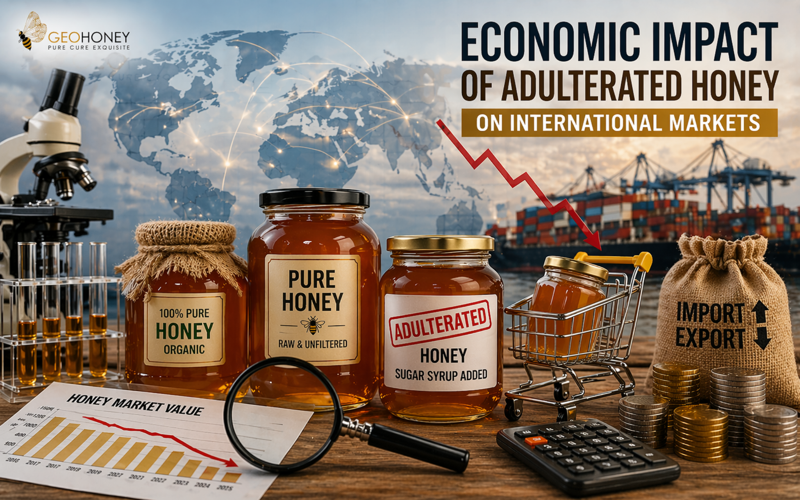
Honey is one of the world’s most traded natural food products, valued for its nutritional, medicinal, and commercial importance. However, honey adulteration, the addition of cheaper sugar syrups, mislabeling of origin, or fraudulent blending has become a major global trade concern. Researchers and market reports consistently identify adulterated honey as a threat to fair pricing, consumer trust, beekeeper livelihoods, and international trade stability. This article examines the economic impact of adulterated honey on international markets, highlighting how fraud distorts supply chains and damages authentic producers.
Understanding Honey Adulteration
Honey adulteration typically includes:
Mixing honey with corn, rice, beet, or cane syrups
False labeling of floral or geographic origin
Over-processing to mask poor quality
Re-exporting honey through third countries to disguise the source
Because honey commands premium prices, it remains highly vulnerable to economically motivated adulteration.
Price Distortion in Global Markets
Fraudulent honey is often sold below the true production cost of authentic honey, creating artificial price pressure across global markets.
Key Economic Effects:
Genuine producers struggle to compete with cheaper, adulterated imports
Wholesale honey prices fall below sustainable levels
Market volatility increases for exporters and packers
Small-scale beekeepers face declining profitability
Industry reports describe widespread adulteration as a major factor behind price declines affecting producers in North America and Europe.
Losses for Beekeepers and Rural Economies
Beekeeping supports millions of livelihoods through honey sales, wax, pollination services, and rural employment. When fake honey floods markets:
Authentic beekeepers lose income
Hive numbers may decline as operations become unprofitable
Rural employment opportunities shrink
Investment in sustainable beekeeping decreases
Investigations have linked falling honey prices to financial stress among beekeepers in producing regions.
Consumer Trust and Brand Damage
Once consumers suspect honey fraud, they may reduce purchases or shift only to trusted premium brands.
Market Consequences:
Lower confidence in imported honey
Higher marketing costs for honest brands
Growth of niche/local honey markets
Increased demand for certified authenticity labels
Recent UK reporting highlighted authenticity concerns after multiple retail samples were flagged as suspicious, intensifying scrutiny of the honey supply chain.
Rising Compliance and Testing Costs
To combat fraud, governments and companies increasingly invest in:
Nuclear Magnetic Resonance (NMR) screening
Isotope ratio testing
DNA and traceability systems
Audits and origin verification
Advanced machine learning authentication tools
These measures improve market confidence but increase operating costs for importers, exporters, and retailers.
Trade Barriers and Regulatory Pressure
Honey adulteration can trigger:
Import rejections
Customs delays
Anti-dumping investigations
Stricter labeling regulations
Loss of preferred market access
The EU has expanded scrutiny and labeling reforms to improve honey transparency and combat fraud.
Long-Term Environmental Costs
When authentic honey becomes less profitable:
Beekeepers may reduce colony numbers
Pollination services can weaken
Agricultural productivity may suffer
Biodiversity support declines
Thus, honey fraud creates not only financial harm but also broader ecological risks.
Mitigation Strategies for International Markets
Stronger Testing Standards
Harmonised global authenticity testing reduces loopholes.
Transparent Origin Labeling
Clear country-of-origin disclosure improves buyer confidence.
Digital Traceability
Blockchain and supply-chain data systems can verify movement and source.
Support for Authentic Producers
Premium certification programs help real beekeepers compete fairly.
International Cooperation
Cross-border enforcement is essential because fraud often spans multiple countries.
Conclusion
The economic impact of adulterated honey on international markets is substantial. Fraud suppresses prices, harms beekeepers, erodes consumer confidence, increases regulatory costs, and destabilises trade. Protecting the global honey market requires stronger testing, transparent labeling, and coordinated enforcement. Ensuring honey authenticity is essential not only for fair commerce, but for the long-term sustainability of beekeeping and food systems worldwide.


