- Tokyo: 03:36
- Singapore: 02:36
- Dubai: 22:36
- London: 19:36
- New York: 14:36
Medical Applications of Honey in Dermatology
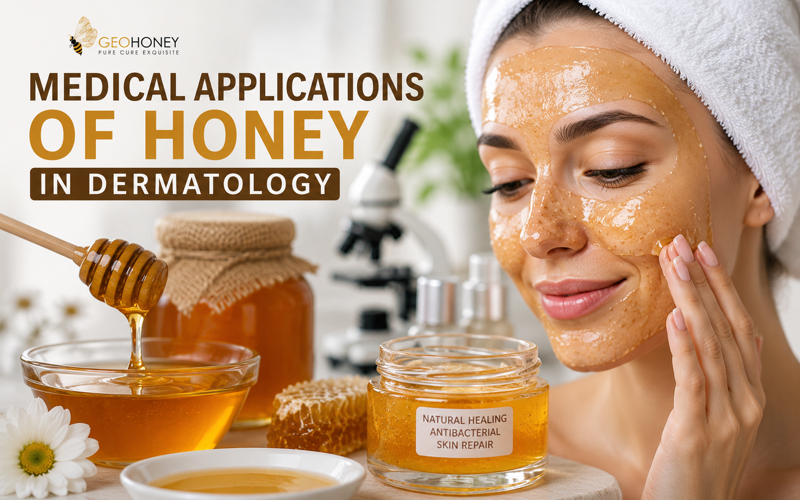
Honey has been used in traditional medicine for centuries due to its antimicrobial, anti-inflammatory, and wound-healing properties. In modern dermatology, scientific research increasingly supports the therapeutic potential of honey in managing various skin conditions. Rich in bioactive compounds, enzymes, antioxidants, and natural sugars, honey provides multiple dermatological benefits ranging from wound care to skin hydration and infection management. This article explores the medical applications of honey in dermatology, highlighting its mechanisms, clinical relevance, and future therapeutic potential.
Bioactive Properties of Honey Relevant to Dermatology
Antimicrobial Activity
Honey exhibits broad-spectrum antimicrobial effects against bacteria, fungi, and certain viruses. Its antimicrobial properties are linked to:
Low pH levels
High osmotic pressure
Hydrogen peroxide production
Natural phytochemicals and flavonoids
These characteristics make honey effective in reducing microbial growth on damaged skin and infected wounds.
Anti-Inflammatory Effects
Inflammation is a key factor in many dermatological conditions. Honey helps reduce inflammation by:
Lowering oxidative stress
Modulating inflammatory responses
Supporting tissue regeneration
This contributes to reduced redness, swelling, and skin irritation.
Antioxidant Properties
Honey contains antioxidants such as phenolic acids and flavonoids that help neutralise free radicals, protecting skin cells from oxidative damage associated with ageing and environmental stress.
Honey in Wound Healing
Accelerated Tissue Repair
Honey promotes wound healing by maintaining a moist wound environment and stimulating tissue regeneration.
Clinical observations show that honey may help:
Improve granulation tissue formation
Enhance epithelial regeneration
Reduce wound healing time
Management of Burns
Medical-grade honey has been widely studied in burn treatment.
Benefits include:
Reduced infection risk
Faster healing of superficial burns
Lower scarring potential
Reduced pain and inflammation
Honey dressings are increasingly used in burn care due to their soothing and antimicrobial effects.
Treatment of Chronic Wounds
Honey has shown potential in managing:
Diabetic ulcers
Pressure sores
Surgical wounds
Non-healing skin lesions
Its antibacterial action helps control infection while supporting tissue repair.
Dermatological Applications Beyond Wound Care
Acne Management
Honey’s antimicrobial and anti-inflammatory properties may help reduce acne-causing bacteria and calm irritated skin.
Potential benefits:
Reduced bacterial colonisation
Lower inflammation
Improved skin hydration
Eczema and Dermatitis
Honey may provide symptomatic relief in inflammatory skin conditions such as eczema and dermatitis.
Research suggests honey can:
Reduce itching and redness
Improve skin barrier function
Support hydration in dry skin conditions
Antifungal Applications
Certain honey varieties demonstrate antifungal activity against skin fungi associated with:
Ringworm
Athlete’s foot
Fungal dermatitis
Cosmetic and Skincare Applications
Skin Hydration and Moisturisation
Natural sugars and humectant properties help retain moisture in the skin, making honey valuable in skincare formulations.
Anti-Ageing Potential
Honey’s antioxidants may help:
Reduce oxidative stress
Improve skin texture
Minimise visible signs of ageing
Post-Procedure Skin Recovery
Honey-based formulations are increasingly explored for supporting recovery after dermatological procedures.
Advantages of Honey-Based Dermatological Treatments
Compared to some conventional topical treatments, honey offers:
Natural antimicrobial protection
Reduced risk of microbial resistance
Multi-functional therapeutic effects
Biocompatibility with skin tissue
Challenges and Research Considerations
Despite promising applications, challenges remain:
Variability in honey composition
Lack of standardisation among commercial products
Need for large-scale clinical trials
Risk of contamination in non-medical-grade honey
Medical-grade honey is generally preferred in clinical settings due to quality control and sterilisation.
Future Perspectives in Dermatology
Emerging research is exploring:
Honey-infused wound dressings
Nanotechnology-based honey formulations
Combination therapies with antimicrobial agents
Bioengineered honey compounds for advanced skin treatments
These innovations may expand honey’s role in evidence-based dermatological care.
Conclusion
Honey possesses significant therapeutic potential in dermatology due to its antimicrobial, anti-inflammatory, antioxidant, and wound-healing properties. From burn treatment and chronic wound care to acne and skincare applications, honey continues to gain recognition as a valuable natural dermatological agent. Continued research and clinical standardisation will further strengthen its role in modern skin therapy and regenerative medicine.


