- Tokyo: 04:28
- Singapore: 03:28
- Dubai: 23:28
- London: 20:28
- New York: 15:28
Lifecycle Assessment of Honey Production Systems
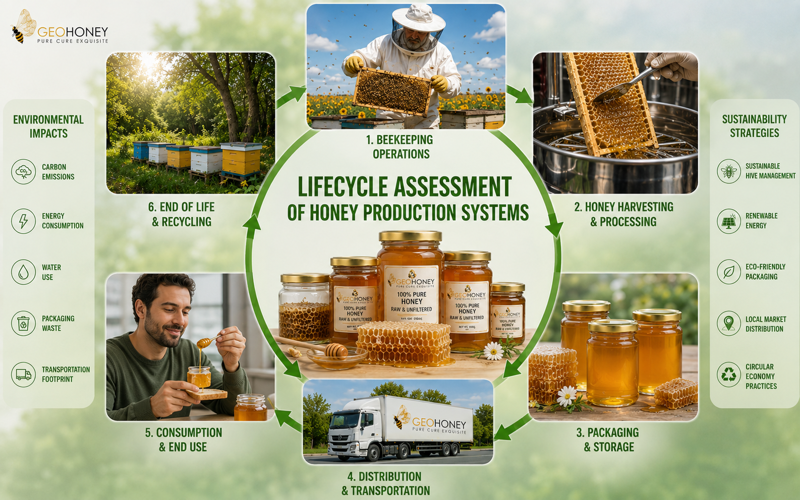
As global demand for natural and sustainably sourced foods continues to rise, understanding the environmental footprint of honey production has become increasingly important. Lifecycle Assessment (LCA) is a scientific methodology used to evaluate the environmental impacts associated with a product throughout its entire lifecycle, from resource extraction and production to distribution and end use. In apiculture, LCA provides valuable insights into the sustainability of honey production systems, helping producers, policymakers, and consumers make informed decisions. This research examines the lifecycle assessment of honey production systems, identifying key environmental impacts, resource requirements, and opportunities for sustainable improvement.
Understanding Lifecycle Assessment (LCA)
Lifecycle Assessment is a standardized environmental evaluation framework that examines:
Resource consumption
Energy use
Greenhouse gas emissions
Water utilization
Waste generation
Transportation impacts
The objective is to quantify environmental burdens across all stages of production and identify areas where sustainability can be improved.
Stages of Honey Production Lifecycle
Raw Material and Equipment Production
The lifecycle begins with the manufacture of:
Beehives
Protective clothing
Honey extraction equipment
Packaging materials
Environmental impacts during this stage include:
Energy consumption
Material extraction
Manufacturing emissions
Wooden hives generally have lower environmental impacts compared to synthetic alternatives due to renewable material sourcing.
Hive Management and Beekeeping Operations
Routine beekeeping activities require:
Hive inspections
Colony management
Supplemental feeding (when necessary)
Disease and pest control
Major environmental considerations include:
Fuel use for transportation
Resource inputs for colony maintenance
Veterinary treatments
Efficient hive management can significantly reduce operational emissions.
Honey Harvesting and Processing
Harvesting involves:
Honey extraction
Filtration
Storage
Packaging preparation
Environmental impacts vary depending on:
Processing intensity
Electricity consumption
Equipment efficiency
Minimally processed honey generally requires less energy than highly processed commercial honey products.
Packaging and Distribution
Packaging materials commonly include:
Glass jars
Plastic containers
Metal lids
Labels and shipping materials
Distribution contributes significantly to lifecycle emissions due to:
Transportation fuel consumption
Long-distance exports
Cold storage requirements in some markets
Packaging selection and logistics optimization strongly influence overall environmental performance.
Environmental Impact Categories
Carbon Footprint
Carbon emissions arise from:
Equipment manufacturing
Transportation
Processing activities
Packaging production
Studies consistently identify transportation and packaging as major contributors to honey's carbon footprint.
Energy Consumption
Energy inputs occur throughout the production chain, particularly during:
Equipment manufacturing
Honey extraction
Processing
Distribution
Renewable energy adoption can substantially reduce lifecycle energy impacts.
Water Footprint
Although honey production generally requires less water than many agricultural commodities, water is still consumed indirectly through:
Equipment cleaning
Processing operations
Packaging manufacturing
Efficient water management improves sustainability outcomes.
Waste Generation
Sources of waste include:
Damaged equipment
Packaging materials
Processing residues
Circular economy approaches can help reduce waste and improve resource efficiency.
Comparative Sustainability of Honey Production Systems
Small-Scale Beekeeping Systems
Advantages:
Lower processing intensity
Reduced industrial resource consumption
Greater emphasis on local markets
Challenges:
Lower production efficiency
Limited economies of scale
Commercial Honey Production Systems
Advantages:
Higher production efficiency
Improved logistics networks
Standardized quality control
Challenges:
Increased transportation emissions
Higher packaging requirements
Greater energy consumption
Organic Honey Production Systems
Organic systems often demonstrate environmental benefits through:
Reduced chemical inputs
Enhanced biodiversity conservation
Improved ecosystem services
However, certification and monitoring may increase operational requirements.
Strategies for Reducing Environmental Impact
Sustainable Packaging Solutions
Using recyclable and biodegradable packaging materials can significantly reduce lifecycle emissions.
Transportation Optimization
Local sourcing and efficient logistics reduce fuel consumption and greenhouse gas emissions.
Renewable Energy Integration
Solar-powered extraction facilities and renewable energy systems can lower operational carbon footprints.
Sustainable Hive Management
Maintaining healthy colonies minimizes resource inputs and improves production efficiency.
Circular Economy Approaches
Reusing wax, recycling packaging, and minimizing waste contribute to long-term sustainability.
Economic and Ecological Benefits of Sustainable Honey Production


