- Tokyo: 23:33
- Singapore: 22:33
- Dubai: 18:33
- London: 15:33
- New York: 10:33
Pollinator Decline: Ecological Consequences and Mitigation Strategies
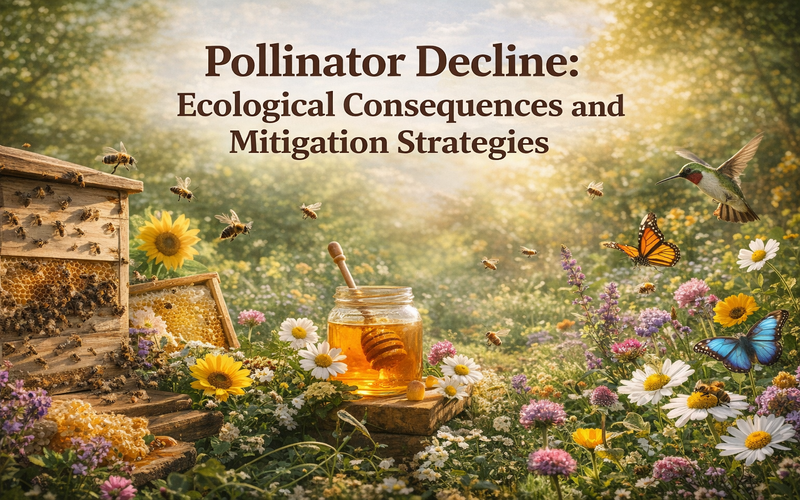
Pollinators, including honeybees, wild bees, butterflies, birds, and bats, are essential for ecosystem stability and food security. Scientific assessments show that pollinators support nearly 75% of flowering plant species and contribute to approximately 35% of global crop production. Despite their importance, pollinator populations are declining at alarming rates worldwide. This article examines the ecological consequences of pollinator decline and outlines evidence-based mitigation strategies to address this growing environmental challenge.
Importance of Pollinators in Ecosystems
Pollination enables plant reproduction, genetic diversity, and ecosystem resilience. Globally, pollination services contribute an estimated USD 235–577 billion annually to agricultural productivity. Beyond food crops, pollinators support forest regeneration, soil stability, and carbon sequestration, making them indispensable to both natural and managed ecosystems.
Key Drivers of Pollinator Decline
Habitat Loss and Fragmentation
Urban expansion, deforestation, and intensive land use have eliminated major foraging and nesting habitats. Habitat degradation is one of the primary reasons pollinator species have declined in over 40% of regions globally.
Pesticide and Agrochemical Exposure
Exposure to pesticides, particularly neonicotinoids, can reduce pollinator survival by up to 50%. Sublethal exposure affects navigation, learning, and immune response, weakening colony resilience.
Climate Change
Climate change has altered flowering timelines by 2–3 weeks in many regions, causing mismatches between pollinators and nectar availability. Rising temperatures and extreme weather events further disrupt pollinator life cycles.
Pathogens and Parasites
Pollinators face increasing pressure from parasites and diseases, contributing to annual managed honeybee colony losses of 20–40% in several countries.
Monoculture Farming
Large-scale monoculture systems reduce floral diversity and nutritional intake, increasing vulnerability to disease and environmental stress.
Ecological Consequences of Pollinator Decline
Loss of Plant Biodiversity
Pollinator decline can reduce seed and fruit production by up to 90% in pollinator-dependent plants, threatening native vegetation and ecosystem balance.
Disrupted Food Chains
Reduced plant reproduction affects herbivores and higher trophic levels, leading to cascading ecological disruptions across entire food webs.
Agricultural Yield Reduction
Without effective pollination, crop yields can decline by 5–30%, particularly for fruits, nuts, and vegetables. This threatens food availability and increases economic instability.
Genetic Erosion
Limited cross-pollination reduces genetic diversity, making plant populations more susceptible to disease, pests, and climate stress.
Mitigation Strategies for Pollinator Conservation
Habitat Restoration and Floral Diversity
Restoring wildflower corridors and native vegetation has been shown to increase pollinator activity by up to 60%, providing essential forage and nesting sites.
Sustainable Agricultural Practices
Reducing pesticide use and adopting integrated pest management can improve pollinator survival rates by 30% or more, while promoting long-term ecosystem health.
Climate-Resilient Land Management
Protecting climate refuges and supporting adaptive conservation planning enhances pollinator resilience under changing environmental conditions.
Support for Ethical and Sustainable Beekeeping
Responsible hive management, disease monitoring, and biodiversity-focused practices improve pollination efficiency and colony health.
Policy, Research, and Public Awareness
Science-based regulations, education initiatives, and long-term research funding are critical for reversing pollinator decline at regional and global levels.
Long-Term Ecological and Economic Benefits
Healthy pollinator populations enhance ecosystem resilience, stabilise crop yields, improve soil health, and support biodiversity conservation. Protecting pollinators delivers long-term benefits for agriculture, environmental sustainability, and food security.


