- Tokyo: 02:46
- Singapore: 01:46
- Dubai: 21:46
- London: 18:46
- New York: 13:46
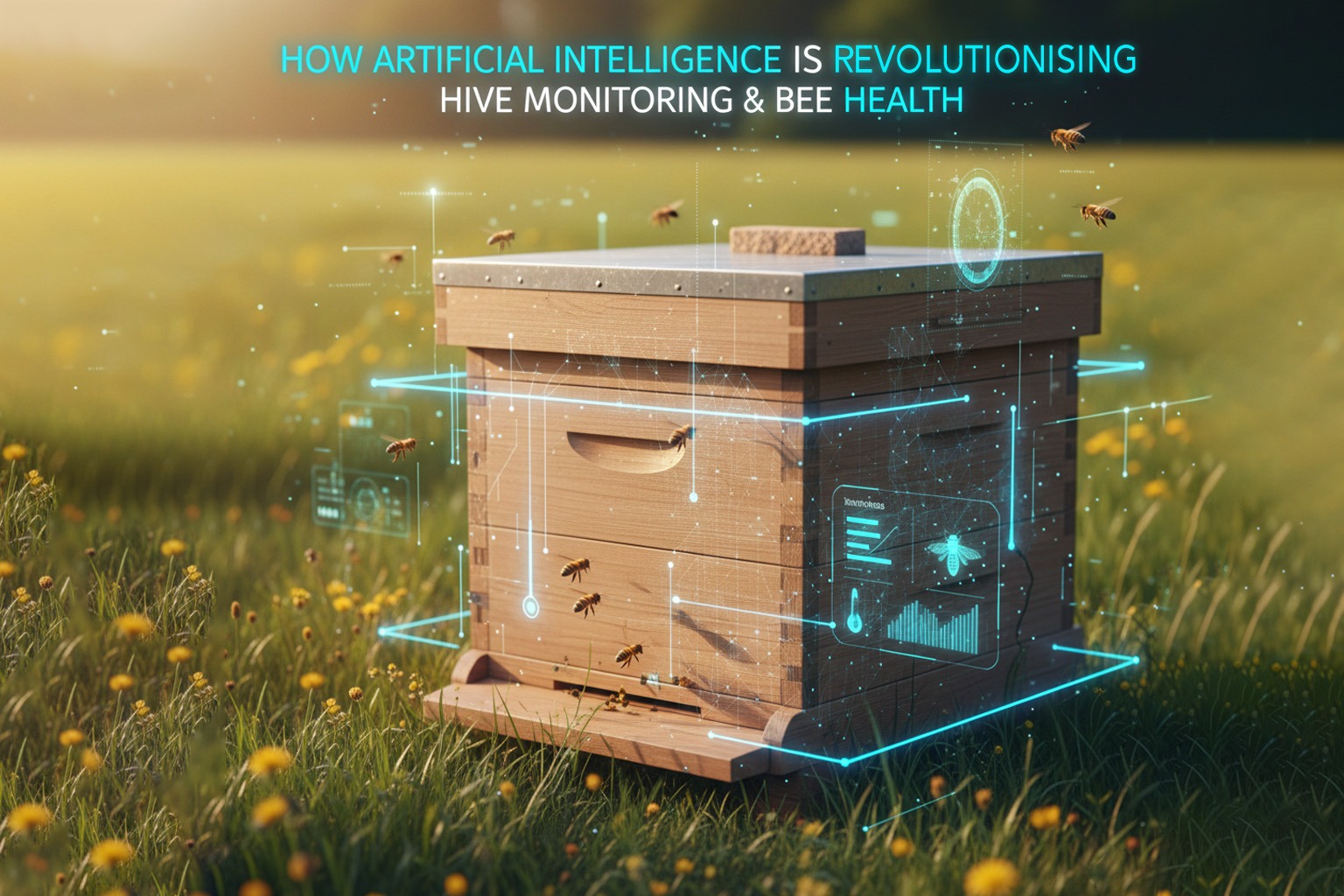


How Artificial Intelligence Is Revolutionising Hive Monitoring & Bee Health
- Reading Time: 2 minutes, 43 seconds
- Post Views: 1327
Artificial intelligence is becoming a practical tool for modern beekeeping. With global bee populations under pressure from habitat loss, pesticides, climate shifts, and diseases, both small and large-scale beekeepers are increasingly turning to technology to understand what is happening inside the hive without intrusive inspections. AI makes this possible by analysing sound, temperature, movement, and environmental data that bees naturally produce.
Why AI Matters for Bee Health
Healthy colonies maintain a steady internal rhythm. Bees regulate temperature, humidity, brood care, food storage, and communication through subtle patterns. Human observation alone can miss early signs of disturbance.
AI helps detect these patterns much earlier by processing continuous streams of data from sensors and cameras. This leads to faster decisions, reduced hive stress, and better long-term resilience.
Smart Sensors: The Foundation of AI-Driven Monitoring
Modern hives equipped with IoT sensors gather several types of data:
Temperature fluctuations that indicate brood development or colony stress
Humidity levels linked to honey curing and brood health
Acoustic signatures, such as piping, fanning, or buzzing associated with swarming or queen issues
Weight changes, which reflect nectar flow, food shortage, or hive absconding
Bee traffic counts, showing foraging activity or potential disease outbreaks
AI models process this data in real time, learn typical colony behaviour, and highlight unusual patterns long before a problem becomes visible.
Acoustic Analysis: Listening to the Hive
One of the most interesting AI applications is sound analysis. Each hive produces unique audio frequencies depending on its condition. Research projects have shown that machine-learning models can differentiate:
Normal worker activity
Queenlessness
Swarming preparation
Varroa mite stress
Environmental threats like extreme heat
By “listening” to bees continuously, AI helps identify issues that usually require manual checks.
Early Detection of Diseases and Parasites
Diseases such as Varroa destructor infestation, Nosema, and American foulbrood can quickly spread through colonies. AI tools trained on images and sensor data can recognise early warning signs, such as:
Reduced foraging
Abnormal bee gait or wing movements
Changes in brood pattern
Declining hive temperature stability
This early detection supports timely interventions, reducing colony losses and improving overall honey production.
AI-Enhanced Hive Cameras
Computer-vision technology has become another useful asset. High-resolution cameras placed at hive entrances or inside observation hives capture consistent footage. AI then evaluates:
Bee traffic density
Pollen loads returning from foraging trips
Drone-to-worker ratio
Presence of predators like wasps
In-hive behaviour linked to queen replacement
These insights help beekeepers understand colony strength without disturbing the bees.
Forecasting Honey Yield & Resource Planning
AI can combine hive-level data with weather forecasts and local flowering cycles to estimate:
Expected honey flow
Foraging success during specific seasons
Optimal times for adding supers
When to supplement feeding before shortages occur
This makes resource planning more accurate and reduces waste while improving honey quality.
Reducing Stress Through Non-Intrusive Monitoring
Traditional hive inspections, though necessary, temporarily disrupt colony activity. AI reduces the need for frequent manual checks by providing a stable, non-intrusive monitoring system. Bees stay calmer, brood temperature stays regulated, and the risk of accidental queen injury decreases.
Supporting Large-Scale Apiaries
Commercial beekeeping operations with hundreds of hives benefit significantly from AI. Instead of inspecting each hive individually, beekeepers can review automated dashboards that highlight only the colonies needing attention. This saves time, energy, and resources, and allows earlier intervention where it matters.
Challenges and Considerations
Despite its advantages, AI-driven beekeeping faces some limitations:
Sensor systems can be expensive for small-scale keepers
Data quality varies depending on the environment
Models require periodic recalibration to remain accurate
Rural or remote apiaries may face connectivity issues
Even with these challenges, adoption is growing as systems become more affordable and accessible.
The Future of AI in Beekeeping
As AI continues to improve, several advancements are emerging:
Fully autonomous hive systems that manage ventilation, feeding, and pest control
Regional data-sharing networks that identify local disease trends
AI-guided selective breeding for more resilient bee lines
Predictive climate-based alerts for extreme weather protection
These innovations aim to strengthen global bee populations and support sustainable honey production.
Conclusion
Artificial intelligence is reshaping the way we understand bees. By turning raw hive data into clear insights, AI helps detect issues early, reduces guesswork, and supports healthier, more productive colonies. While it does not replace human knowledge, it acts as a powerful partner, offering beekeepers a deeper, clearer view into the complex world of the hive.
