- Tokyo: 02:44
- Singapore: 01:44
- Dubai: 21:44
- London: 18:44
- New York: 13:44
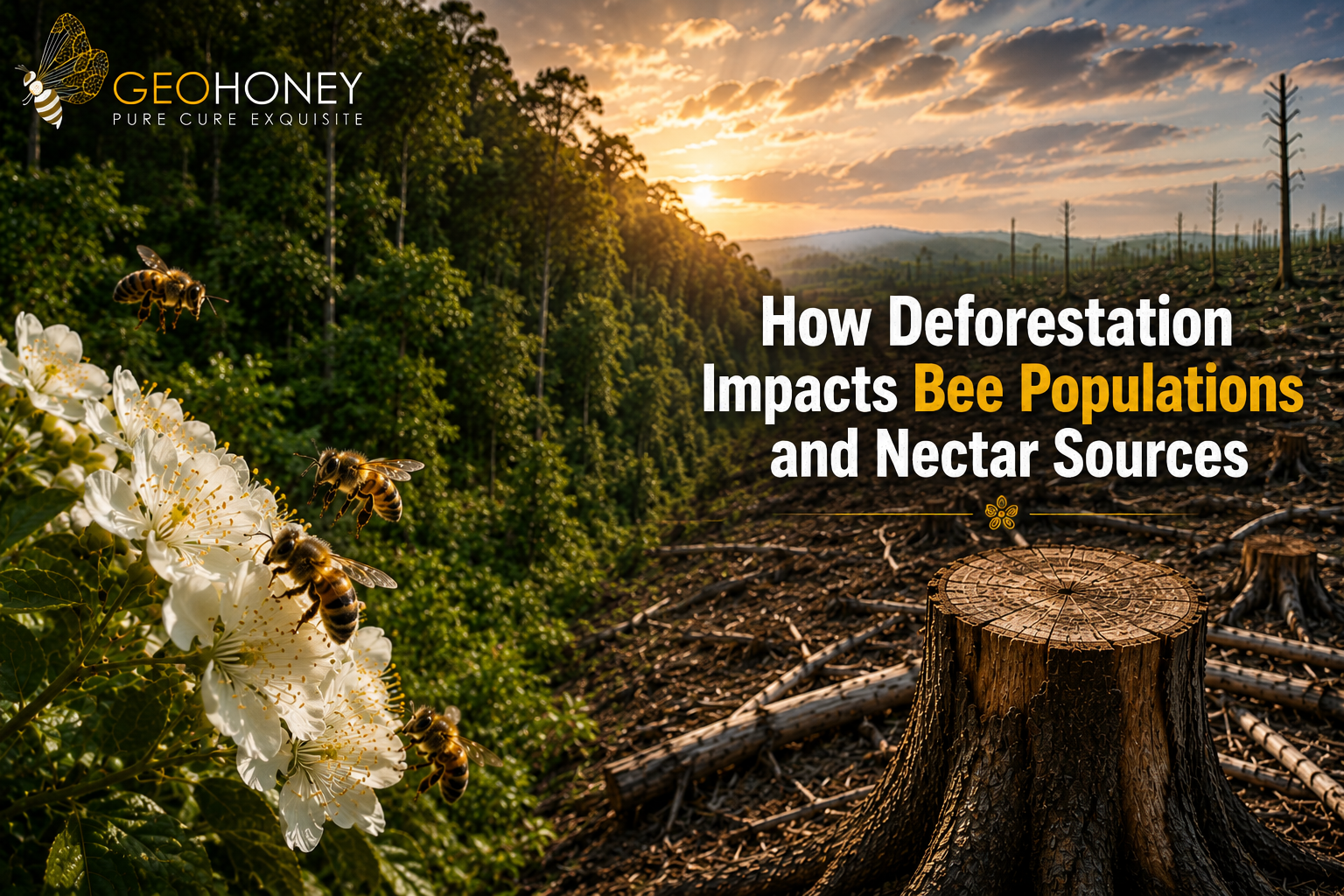


How Deforestation Impacts Bee Populations and Nectar Sources
- Reading Time: 2 minutes, 43 seconds
- Post Views: 1327
Forests are among the most important habitats for honey bees and thousands of other pollinator species. They provide a continuous supply of nectar, pollen, nesting sites, and shelter that support healthy bee populations throughout the year. However, widespread deforestation is rapidly transforming these ecosystems, threatening pollinators and disrupting the natural processes that sustain honey production.
As forests are cleared for agriculture, urban expansion, logging, and infrastructure development, bees lose vital food sources and habitats. These changes not only reduce honey yields but also weaken biodiversity, agricultural productivity, and global food security. Understanding the relationship between deforestation and bee populations is essential for promoting sustainable beekeeping and environmental conservation.
Why Forests Are Essential for Bees
Forests provide far more than trees. They create diverse ecosystems filled with flowering plants that bloom at different times of the year.
Healthy forests supply bees with:
Continuous nectar availability
Diverse pollen sources
Safe nesting and shelter
Stable temperatures and humidity
Protection from strong winds and extreme weather
Many premium honey varieties, including forest and wildflower honey, depend on these natural ecosystems.
How Bees Depend on Nectar Sources
Nectar is the primary source of carbohydrates for bees, while pollen supplies proteins, fats, vitamins, and minerals necessary for brood development.
Bees collect nectar to:
Produce honey
Fuel daily flight
Feed adult workers
Sustain colonies during food shortages
The diversity of flowering plants directly influences colony health, honey quality, and overall productivity.
What Is Deforestation?
Deforestation refers to the permanent removal or large-scale clearing of forests, often replacing them with agricultural land, roads, cities, or industrial developments.
Major causes include:
Commercial logging
Agricultural expansion
Livestock grazing
Mining activities
Urban development
Infrastructure construction
Wildfires intensified by climate change
Every year, millions of hectares of forests disappear, reducing the natural habitats available to pollinators.
Loss of Floral Diversity
One of the most immediate effects of deforestation is the disappearance of flowering plants.
When forests are removed:
Seasonal nectar sources decline
Native flowering trees disappear
Wild shrubs and herbs vanish
Plant diversity decreases
Without continuous blooms, bees struggle to find sufficient food throughout the year.
Reduced Nectar Availability
Fewer flowering plants mean less nectar production.
Consequences include:
Lower honey yields
Increased competition among pollinators
Longer foraging flights
Higher energy expenditure
Colonies may consume more stored honey simply to survive periods of food scarcity.
Habitat Fragmentation
Deforestation rarely removes entire forests evenly. Instead, it often leaves isolated patches separated by roads, farms, or urban areas.
Fragmented habitats can:
Interrupt bee foraging routes
Reduce genetic diversity
Isolate colonies
Limit pollination efficiency
Smaller forest fragments may no longer support healthy bee populations.
Effects on Bee Health
Poor nutrition caused by habitat loss weakens bee colonies.
Inadequate nectar and pollen can lead to:
Reduced brood production
Smaller worker populations
Lower queen performance
Increased disease susceptibility
Reduced resistance to parasites
Healthy nutrition is essential for maintaining strong immune systems in bees.
Changes in Honey Production
Forest ecosystems influence both the quantity and quality of honey.
Deforestation may result in:
Lower annual honey harvests
Reduced floral diversity in honey
Changes in flavor and aroma
Less availability of monofloral and forest honeys
Beekeepers located near degraded forests often experience declining productivity over time.
Impact on Pollination
Bees are responsible for pollinating thousands of flowering plant species and many agricultural crops.
Declining bee populations may reduce pollination of:
Fruit trees
Vegetables
Oilseed crops
Nuts
Wild flowering plants
Reduced pollination affects biodiversity and global food production alike.
Climate Change and Deforestation
Deforestation contributes to climate change by reducing carbon storage and altering local weather patterns.
Climate-related impacts include:
Irregular flowering seasons
Shorter nectar flows
Increased drought stress
Higher temperatures
Extreme weather events
These changes further reduce food availability for pollinators.
Effects on Wild Pollinators
Honey bees are not the only species affected.
Deforestation threatens:
Bumblebees
Solitary bees
Stingless bees
Butterflies
Hoverflies
Other beneficial pollinators
Many native pollinators depend on specialized forest plants that disappear when habitats are cleared.
Economic Consequences
The decline of bee populations affects multiple industries.
Potential impacts include:
Reduced honey production
Lower agricultural yields
Increased pollination costs
Loss of rural livelihoods
Declining biodiversity tourism
Healthy forests support both ecological and economic sustainability.
Sustainable Solutions
Forest Conservation
Protecting existing forests remains the most effective strategy for preserving pollinator habitats.
Conservation efforts include:
Preventing illegal logging
Expanding protected areas
Sustainable forest management
Reforestation and Habitat Restoration
Planting native flowering trees and shrubs helps restore nectar sources.
Successful restoration projects often focus on:
Native plant species
Pollinator-friendly landscapes
Long-term ecosystem recovery
Bee-Friendly Agriculture
Farmers can support pollinators by:
Maintaining hedgerows
Planting flowering cover crops
Reducing pesticide use
Preserving natural vegetation
These practices improve biodiversity while supporting crop production.
Responsible Consumer Choices
Consumers also play an important role by supporting:
Sustainably produced honey
Responsible forestry practices
Pollinator conservation initiatives
Environmentally certified products
Growing demand for sustainably sourced honey encourages better environmental stewardship.
The Future of Bees Depends on Forests
Protecting forests protects pollinators. As global awareness of biodiversity loss increases, governments, conservation organizations, researchers, and beekeepers are working together to restore habitats and improve pollinator health.
Long-term sustainability depends on balancing economic development with environmental conservation to ensure bees continue to support ecosystems and food production worldwide.
Conclusion
Deforestation has far-reaching consequences for bee populations, nectar availability, and honey production. By reducing floral diversity, fragmenting habitats, and weakening colony health, forest loss threatens one of nature's most important pollinators. Conserving forests, restoring native vegetation, and adopting sustainable land management practices are essential steps toward protecting bees and the ecosystems they sustain. Healthy forests provide the foundation for healthy pollinators, resilient biodiversity, and a secure future for honey production.
