- Tokyo: 02:46
- Singapore: 01:46
- Dubai: 21:46
- London: 18:46
- New York: 13:46
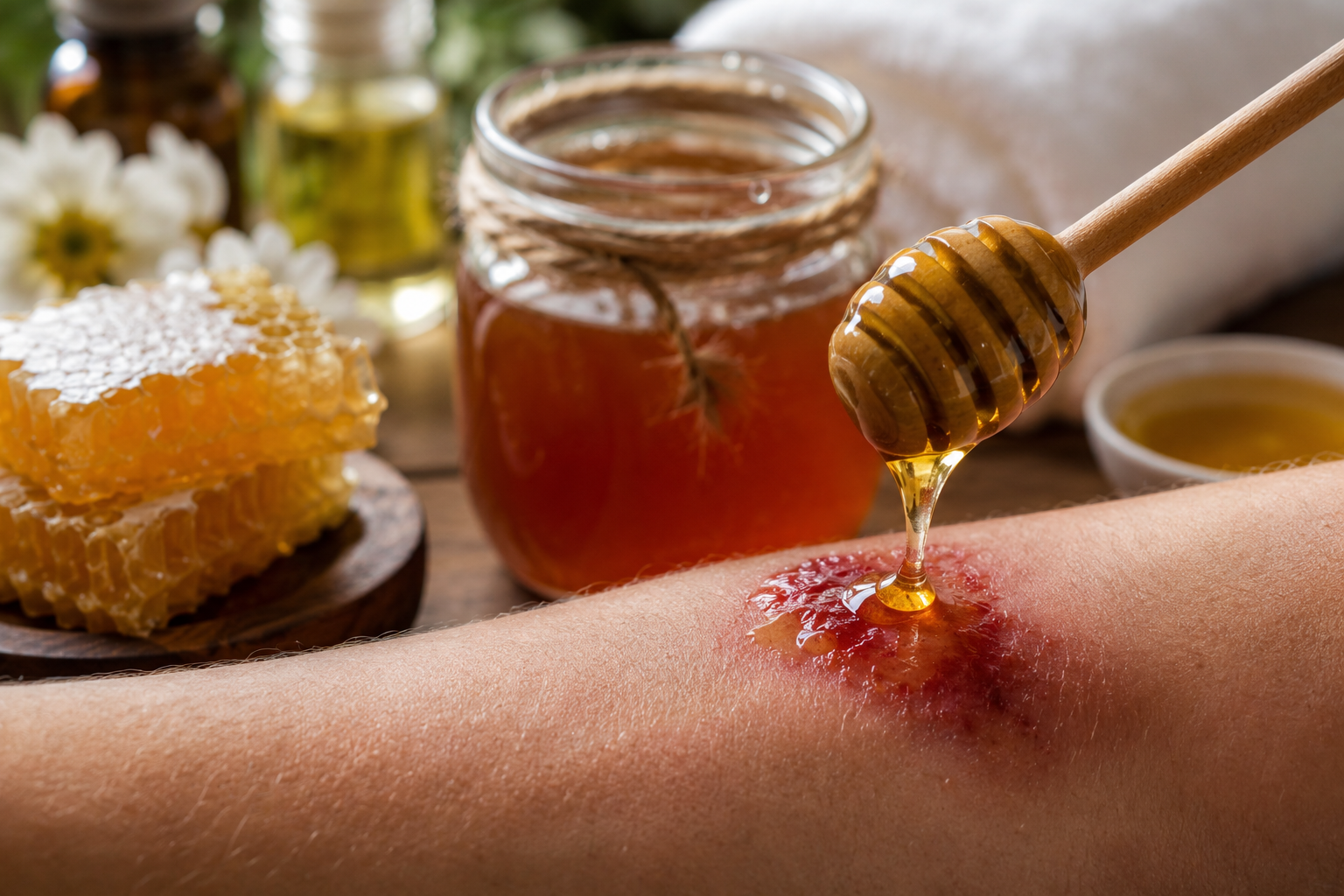


How Honey Supports Wound Healing and Tissue Repair
- Reading Time: 2 minutes, 43 seconds
- Post Views: 1327
Honey has been used as a natural wound treatment for thousands of years across many civilizations, including ancient Egypt, Greece, China, and the Middle East. Modern scientific research now confirms that honey possesses powerful antimicrobial, anti-inflammatory, and tissue-regenerating properties that support wound healing. Its unique chemical composition creates an environment that helps prevent infection, promotes tissue repair, and accelerates recovery.
Today, medical-grade honey is used in hospitals and clinical wound care for burns, ulcers, surgical wounds, and chronic skin injuries.
Why Honey Is Effective for Wound Healing
Honey supports healing through a combination of biological and chemical mechanisms. Unlike synthetic antiseptics that may damage healthy tissue, honey works gently while protecting the wound environment.
Its healing properties come from:
Natural antimicrobial activity
Moisture regulation
Anti-inflammatory compounds
Antioxidants and enzymes
Tissue-protective acidity
Nutrient-rich composition
These mechanisms work together to create ideal conditions for tissue repair.
Antibacterial Properties of Honey
Hydrogen Peroxide Production
One of honey’s most important healing mechanisms involves the enzyme glucose oxidase. When honey comes into contact with wound moisture, this enzyme slowly releases small amounts of hydrogen peroxide.
This provides:
Broad-spectrum antibacterial action
Reduced microbial growth
Protection against wound infection
Unlike concentrated chemical disinfectants, honey releases hydrogen peroxide gradually, minimizing tissue damage.
Low Water Activity
Honey contains very little free water and high natural sugar concentrations. This creates strong osmotic pressure that draws water away from bacteria and fungi, making it difficult for harmful microbes to survive.
This helps control:
Staphylococcus species
Wound-associated bacteria
Certain antibiotic-resistant organisms
Natural Acidity
Honey typically has a pH between 3.2 and 4.5, creating an acidic environment unfavorable to many pathogens.
Acidic wound conditions may also:
Improve oxygen release to tissues
Support cellular repair processes
Reduce harmful enzyme activity in chronic wounds
Anti-Inflammatory Effects
Excessive inflammation can delay wound healing and increase pain. Honey helps reduce inflammation naturally by limiting oxidative stress and regulating inflammatory responses.
Benefits may include:
Reduced swelling
Less redness and irritation
Decreased wound exudate
Lower pain levels
This soothing effect contributes to faster recovery and improved patient comfort.
How Honey Promotes Tissue Repair
Maintaining a Moist Healing Environment
Honey helps maintain optimal wound moisture without causing excessive wetness. Moist wound environments are known to:
Support new tissue growth
Prevent tissue dehydration
Reduce scab formation
Improve cell migration
This environment encourages healthy skin regeneration.
Supporting Granulation and Epithelialization
Granulation tissue forms during the healing process to rebuild damaged areas. Honey promotes:
Fibroblast activity
Collagen production
Formation of new blood vessels
Growth of healthy skin layers
This accelerates epithelialization, the process by which new skin covers the wound surface.
Autolytic Debridement
Honey can assist in the natural removal of dead tissue through autolytic debridement. It softens necrotic tissue while preserving healthy cells.
This helps:
Clean wounds naturally
Reduce odor
Improve healing efficiency
Lower infection risk
Types of Wounds Commonly Treated with Honey
Burns
Honey is widely studied in burn care because it:
Reduces infection rates
Helps soothe damaged skin
May speed superficial burn healing
Diabetic Foot Ulcers
Chronic diabetic wounds are difficult to heal due to poor circulation and infection risk. Honey may support healing by controlling bacteria and improving tissue regeneration.
Pressure Ulcers
Honey dressings are sometimes used for bedsores and pressure injuries to maintain moisture and reduce microbial contamination.
Surgical and Traumatic Wounds
Honey may help reduce wound complications and support postoperative recovery in certain cases.
Medical-Grade Honey vs Raw Honey
Not all honey is suitable for clinical wound treatment.
Medical-Grade Honey
Medical honey is:
Sterilized and purified
Tested for safety and consistency
Free from contaminants and spores
Prepared specifically for wound care
Raw Honey
Raw honey may contain beneficial compounds, but it can also carry contaminants if improperly handled. Medical supervision is recommended before applying non-medical honey to serious wounds.
Scientific Research on Honey and Wound Care
Clinical studies have shown that honey-based dressings may:
Reduce healing time in certain wounds
Lower bacterial colonization
Improve tissue regeneration
Reduce odor and inflammation
Research also suggests honey may help against some antibiotic-resistant bacteria due to its multiple antimicrobial mechanisms.
Factors That Influence Honey’s Healing Ability
The effectiveness of honey varies depending on:
Floral source
Enzyme activity
Antioxidant levels
Processing methods
Storage conditions
Raw and minimally processed honey generally retains more active compounds than heavily heated honey.
Limitations and Considerations
Although honey shows significant therapeutic potential, it is not a replacement for professional medical care in severe injuries.
Medical attention is essential for:
Deep wounds
Severe burns
Infected wounds
Diabetic complications
Surgical injuries
Individuals with bee-related allergies should also exercise caution.
Future of Honey in Modern Medicine
Researchers continue exploring honey’s applications in:
Advanced wound dressings
Tissue engineering
Antimicrobial biomaterials
Burn management systems
Combination therapies with modern medicine
As antibiotic resistance grows globally, honey’s natural antimicrobial properties are attracting renewed medical interest.
Conclusion
Honey supports wound healing through a remarkable combination of antimicrobial, anti-inflammatory, antioxidant, and tissue-regenerating mechanisms. Its ability to maintain moisture, prevent infection, and encourage tissue repair has made it valuable in both traditional medicine and modern clinical care. As scientific understanding advances, honey continues to demonstrate why it remains one of nature’s most respected healing substances.
