- Tokyo: 02:46
- Singapore: 01:46
- Dubai: 21:46
- London: 18:46
- New York: 13:46
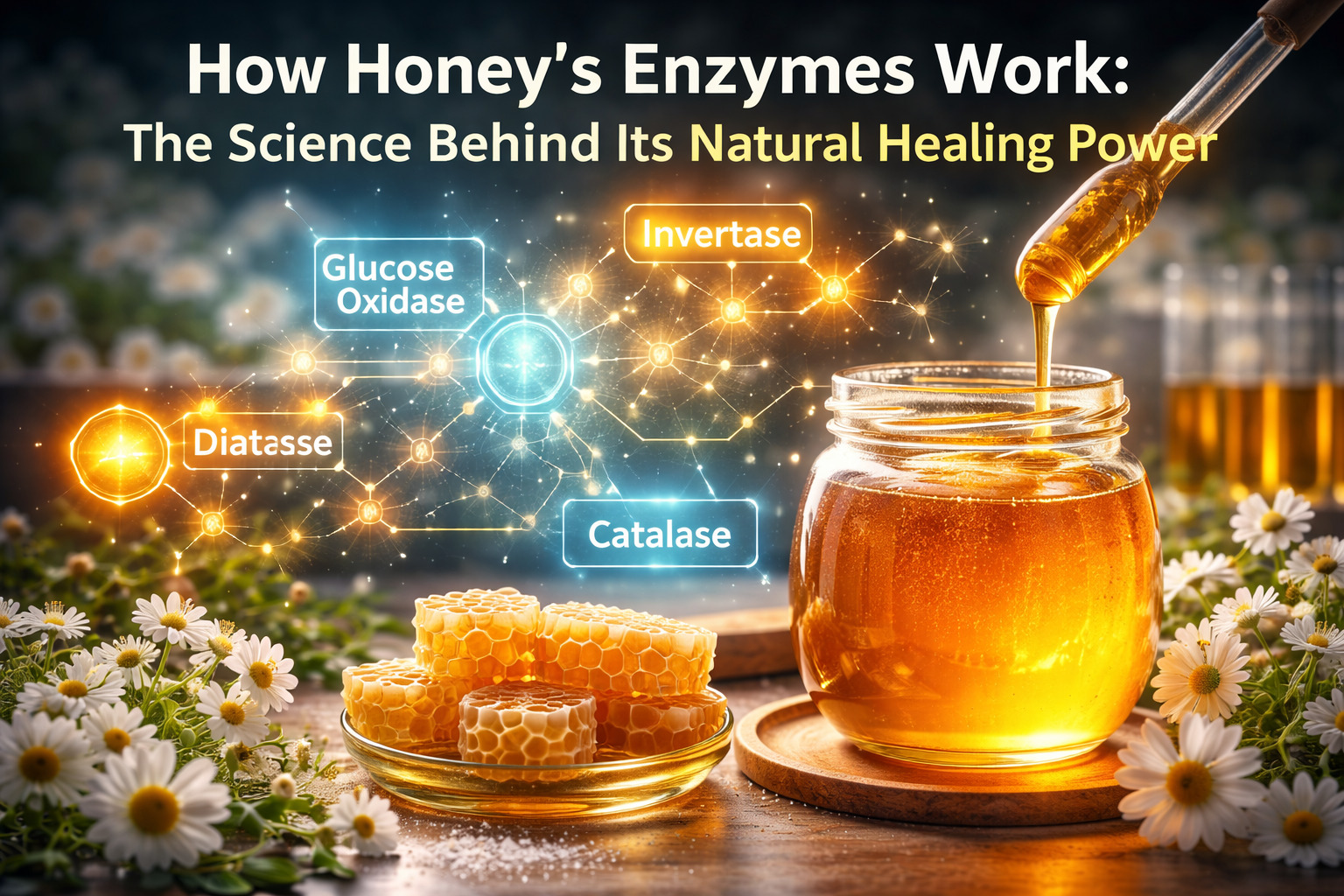


How Honey’s Enzymes Work: The Science Behind Its Natural Healing Power
- Reading Time: 2 minutes, 43 seconds
- Post Views: 1327
Honey has been used as food and medicine for thousands of years, long before laboratories and microscopes existed. Ancient Egyptians applied it to wounds, Ayurvedic medicine prescribed it for digestion, and traditional cultures valued it for preservation and immunity. Modern science now confirms that much of honey’s therapeutic value lies in its naturally occurring enzymes, which are responsible for its antibacterial, anti-inflammatory, and healing effects.
Understanding how honey’s enzymes work reveals why raw and high-quality honey remains one of nature’s most powerful functional foods.
What Are Enzymes and Why Do They Matter in Honey?
Enzymes are biological catalysts, proteins that accelerate chemical reactions essential for life. In honey, enzymes are introduced by worker bees during nectar collection and processing. These enzymes remain active in honey as long as it is not overheated or excessively processed.
Unlike vitamins or minerals, enzymes are living compounds. This means they are:
Highly effective at low concentrations
Sensitive to heat and light
Dependent on proper storage conditions
This explains why raw honey contains significantly higher enzymatic activity than processed honey.
How Bees Create Enzyme-Rich Honey
The journey from flower nectar to honey is both biological and chemical:
Bees collect nectar from flowering plants
Nectar enters the bee’s honey stomach
Enzymes are added through regurgitation
Moisture evaporates as nectar is passed between bees
Honey matures inside sealed honeycomb cells
This process transforms plant sugars into a stable, bioactive substance capable of long-term preservation and healing.
Key Enzymes in Honey and Their Healing Roles
Invertase – Improving Digestion and Energy Absorption
Invertase converts sucrose into glucose and fructose, making honey:
Easier to digest
Gentler on the digestive system
A fast and natural energy source
This enzymatic breakdown is one reason honey is often recommended as a natural alternative to refined sugar
Glucose Oxidase – Honey’s Natural Antibacterial System
Glucose oxidase is the most important enzyme responsible for honey’s healing reputation.
When honey is diluted (as happens on wounds or in the mouth), glucose oxidase produces:
Hydrogen peroxide (slow-release and low-level)
Gluconic acid lowers honey’s pH
This dual action:
Prevents bacterial growth
Inhibits infection
Promotes tissue regeneration
Unlike chemical antiseptics, honey’s antibacterial action is non-toxic and non-irritating, making it suitable for sensitive skin and wounds
Diastase (Amylase) – A Marker of Honey Quality
Diastase helps break down complex carbohydrates into simpler sugars. Its presence:
Supports digestion
Indicates honey freshness
Is widely used in honey quality testing
Low diastase levels often suggest overheating or excessive processing, which damages enzymes
Catalase – Maintaining Enzymatic Balance
Catalase regulates the amount of hydrogen peroxide in honey. Without it, peroxide levels could become harmful.
Catalase ensures:
Controlled antibacterial action
Long-term honey stability
Safety for internal and external use
This balance explains why honey can be both potent and gentle at the same time.
How Honey’s Enzymes Support Healing
Natural Antibacterial Protection
Honey enzymes create an environment that is:
Acidic
Low in moisture
Rich in antimicrobial compounds
This combination prevents bacteria from surviving or developing resistance, making honey effective against many pathogens.
Wound Healing and Skin Repair
Honey enzymes:
Keep wounds moist without promoting infection
Reduce inflammation and swelling
Support new tissue formation
Medical-grade honey is now used for burns, ulcers, and post-surgical wounds
Digestive and Gut Health Support
Enzymes aid in:
Sugar metabolism
Reducing gastric irritation
Supporting healthy gut bacteria
This explains honey’s traditional use for sore throats, ulcers, and digestive discomfort
Why Raw Honey Preserves Enzymes Best
Enzymes are extremely heat-sensitive. When honey is:
Pasteurized
Ultra-filtered
Stored at high temperatures
Most enzymes are destroyed or deactivated.
Raw honey:
Retains natural enzymes
Preserves antibacterial properties
Offers higher nutritional value
This is why raw honey is often preferred for therapeutic and medicinal use
Factors That Affect Enzyme Activity in Honey
Several factors determine how effective honey’s enzymes remain:
Floral source – Different plants influence enzyme potency
Geographical origin – Climate affects nectar composition
Processing methods – Heating reduces enzyme levels
Storage conditions – Light and heat degrade enzymes
Proper storage in a cool, dark place helps maintain enzymatic strength
Scientific Research and Modern Validation
Modern studies confirm that honey enzymes:
Inhibit bacterial growth
Reduce oxidative stress
Accelerate wound healing
Support immune response
This scientific validation explains why honey is increasingly used in medical, cosmetic, and nutritional applications
Final Thoughts
Honey’s healing power is not folklore; it is the result of a complex enzymatic system engineered by bees and perfected by nature. These enzymes transform nectar into a substance that nourishes, protects, and heals without synthetic intervention.
Choosing raw, minimally processed honey ensures that these enzymes remain active, delivering the full benefits that have made honey a trusted remedy across cultures and centuries.
