- Tokyo: 02:43
- Singapore: 01:43
- Dubai: 21:43
- London: 18:43
- New York: 13:43
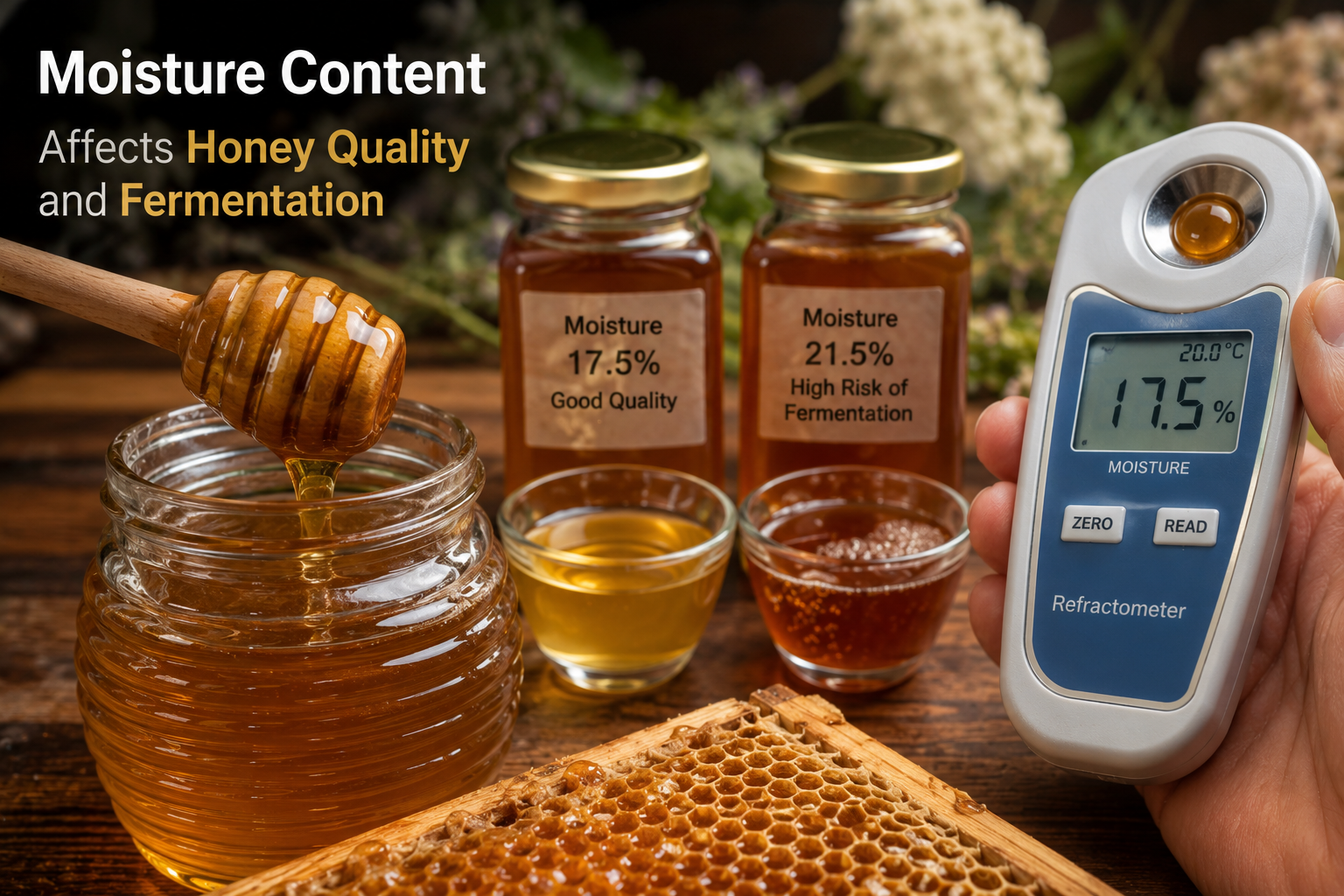


How Moisture Content Affects Honey Quality and Fermentation
- Reading Time: 2 minutes, 43 seconds
- Post Views: 1327
Moisture content is one of the most important factors determining honey quality, stability, shelf life, and market value. While honey is naturally known for its long-lasting nature, excessive moisture can compromise its quality by encouraging fermentation, altering flavor, and reducing storage stability. For beekeepers, honey processors, and consumers, understanding moisture content is essential for ensuring honey remains safe, pure, and enjoyable.
The balance between water and sugars in honey influences everything from texture and crystallization to microbial activity and preservation.
What Is Moisture Content in Honey?
Moisture content refers to the percentage of water present in honey. Although honey is primarily composed of natural sugars such as fructose and glucose, it also contains varying amounts of water.
Most mature honey contains approximately:
14%–20% water
80%–86% sugars and other compounds
The exact moisture level depends on:
Floral source
Climate and humidity
Harvest timing
Hive conditions
Storage methods
Honey harvested before it fully ripens often contains higher moisture levels than properly matured honey.
How Bees Naturally Reduce Moisture
Honey begins as nectar, which can contain more than 70% water. Worker bees transform nectar into honey through a remarkable process.
They:
Add enzymes to the nectar
Repeatedly transfer droplets between bees
Spread nectar across honeycomb cells
Fan their wings to promote evaporation
Once moisture reaches a suitable level, bees seal the honeycomb cells with wax caps. This capped honey is generally considered mature and ready for long-term storage.
Why Moisture Content Matters
1. Shelf Life and Stability
Low moisture content helps preserve honey naturally. Because honey contains little free water, most microorganisms cannot grow or reproduce.
Proper moisture levels:
Extend shelf life
Prevent spoilage
Maintain flavor quality
Preserve nutritional compounds
This is one reason archaeologists have found ancient honey that remained edible after centuries.
2. Texture and Consistency
Water content directly affects honey's texture.
Lower moisture honey:
Thicker consistency
Greater viscosity
Slower flow
Higher moisture honey:
Thinner texture
Faster flow
Reduced density
Consumers often associate thicker honey with premium quality, although floral source also influences consistency.
3. Flavor and Aroma Preservation
Moisture affects the stability of volatile compounds responsible for honey's aroma and flavor.
Optimal moisture levels help:
Maintain floral characteristics
Preserve natural sweetness
Protect aromatic compounds
Reduce off-flavor development
Excessive moisture can lead to flavor deterioration over time.
The Relationship Between Moisture and Fermentation
What Causes Honey Fermentation?
Fermentation occurs when naturally occurring yeasts become active and begin converting sugars into alcohol and carbon dioxide.
Honey naturally contains small amounts of osmophilic yeasts, but under normal conditions, low moisture prevents their growth.
When moisture rises beyond safe levels, yeast activity can increase significantly.
Signs of Fermented Honey
Fermented honey may develop:
Foaming or bubbling
Sour aroma
Alcohol-like smell
Altered flavor
Gas production inside containers
Although mildly fermented honey is not always dangerous, it is generally considered lower quality and less desirable commercially.
Critical Moisture Thresholds
Below 17% Moisture
Excellent storage stability
Very low fermentation risk
Preferred for long-term preservation
17%–20% Moisture
Generally acceptable
Moderate storage stability
Requires proper handling
Above 20% Moisture
Increased risk of fermentation
Greater likelihood of spoilage
Often unsuitable for extended storage
Many international honey standards recommend moisture levels below 20%.
Environmental Factors Affecting Honey Moisture
Humidity
Honey is hygroscopic, meaning it naturally absorbs moisture from the surrounding air.
In humid environments:
Honey can gain water after harvest
Fermentation risk increases
Storage challenges become greater
Rainfall and Nectar Sources
Heavy rainfall during nectar flow can increase nectar water content, making it more difficult for bees to produce fully ripened honey.
Climate Conditions
Tropical and coastal regions often present greater moisture management challenges than dry climates.
How Beekeepers Measure Moisture Content
Professional beekeepers commonly use refractometers to measure honey moisture.
These instruments:
Provide quick readings
Improve harvest decisions
Help prevent fermentation problems
Support quality control standards
Testing moisture before extraction helps ensure honey is ready for storage and sale.
Best Practices for Preventing Excess Moisture
Harvest Only Capped Honey
Capped honey typically indicates that bees have reduced moisture to acceptable levels.
Avoid Harvesting Too Early
Premature extraction increases water content and fermentation risk.
Use Proper Storage Containers
Airtight containers reduce moisture absorption from the environment.
Store Honey Correctly
Ideal storage conditions include:
Cool temperatures
Dry environments
Minimal humidity exposure
Protection from direct sunlight
Impact on Commercial Honey Quality
Moisture content plays a major role in international honey grading and trade.
Quality standards often evaluate:
Moisture percentage
Fermentation risk
Shelf stability
Consumer acceptability
Honey with optimal moisture levels generally commands higher market value because it offers better quality and longer storage life.
Moisture Content and Crystallization
Many consumers mistakenly believe crystallized honey is spoiled. In reality, crystallization is a natural process and often indicates authenticity.
Moisture content can influence:
Crystallization speed
Crystal size
Texture changes
Higher moisture levels may slow crystallization but increase fermentation risk.
Conclusion
Moisture content is one of the most critical indicators of honey quality. It affects texture, flavor, shelf life, stability, and susceptibility to fermentation. By reducing nectar moisture, bees create a naturally preserved food that can remain stable for long periods. Proper harvesting, testing, and storage practices help maintain ideal moisture levels, ensuring honey retains its quality from hive to table. Understanding the role of moisture not only helps prevent fermentation but also supports the production of safer, higher-quality honey for consumers worldwide.
