- Tokyo: 02:47
- Singapore: 01:47
- Dubai: 21:47
- London: 18:47
- New York: 13:47
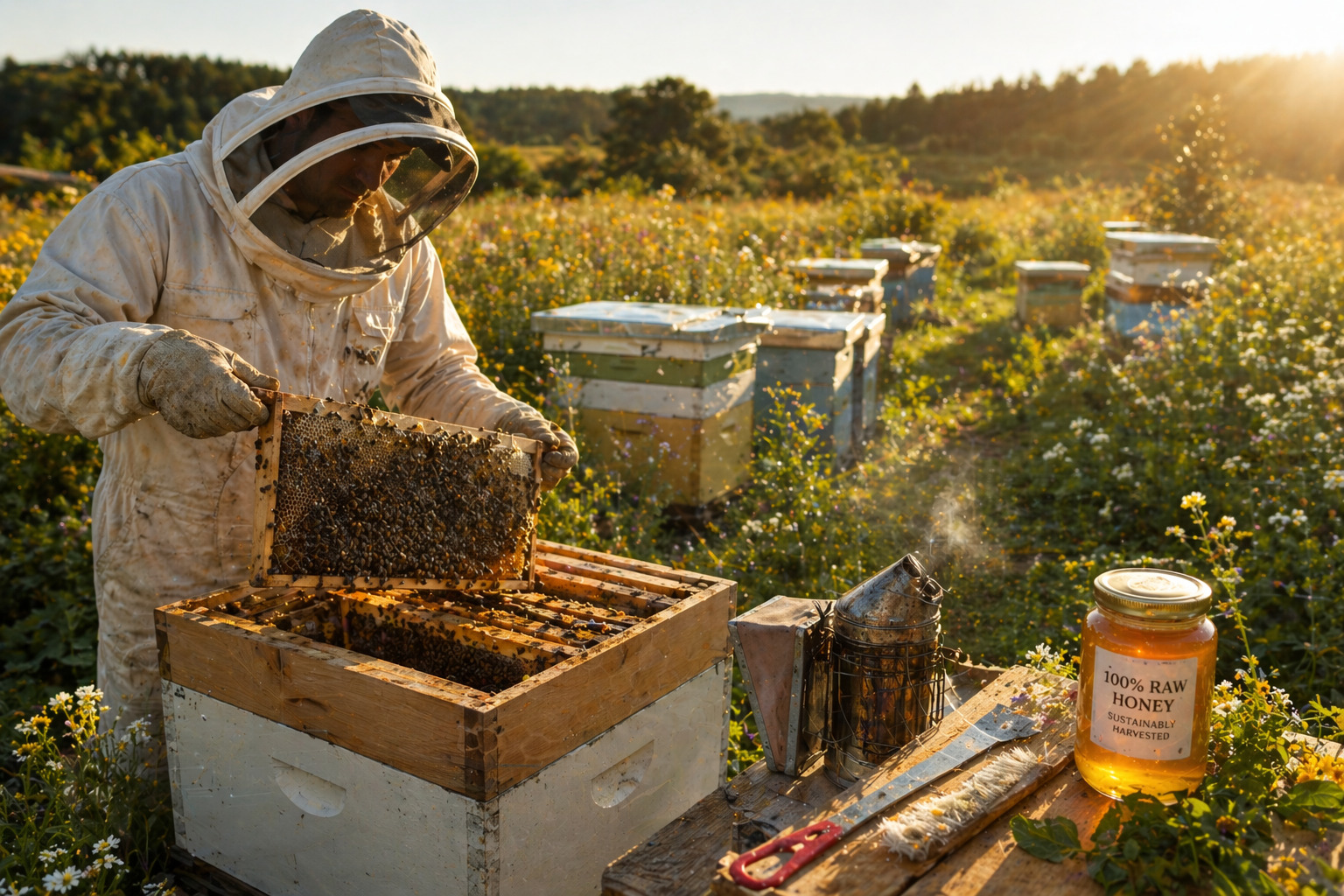


Sustainable Honey Harvesting: Protecting Colonies While Meeting Global Demand
- Reading Time: 2 minutes, 43 seconds
- Post Views: 1327
Honey is one of nature’s most valued foods, appreciated for its flavor, nutritional profile, and cultural importance. As global demand for natural sweeteners and bee-derived products continues to rise, the pressure on beekeeping systems has increased. This has made sustainable honey harvesting essential. Sustainable harvesting means collecting honey in ways that protect bee colonies, preserve long-term productivity, and support environmental balance. It combines ethical beekeeping, scientific colony management, and responsible market practices to ensure that both bees and people benefit.
Why Sustainable Honey Harvesting Matters
Honey bees play a critical role beyond honey production. They are among the world’s most important pollinators, helping support agriculture, wild plants, and biodiversity. Unsustainable harvesting practices can weaken colonies, reduce brood development, increase stress, and make bees more vulnerable to pests and disease.
Sustainable harvesting is important because it helps:
Maintain strong and healthy colonies
Protect pollination services for crops and ecosystems
Improve long-term honey yields
Reduce colony losses during harsh seasons
Build consumer trust in ethical honey production
The Growing Global Demand for Honey
Worldwide demand for honey has expanded due to:
Preference for natural sweeteners over refined sugar
Increased interest in functional foods
Rising awareness of honey’s traditional wellness uses
Growth of premium, monofloral, and raw honey markets
Expanding international trade
While this creates economic opportunities for beekeepers, it can also encourage overharvesting, poor colony management, and adulteration if sustainability is ignored.
What Is Sustainable Honey Harvesting?
Sustainable honey harvesting is the practice of collecting surplus honey while leaving enough stores for bees to survive, reproduce, and maintain colony health. It involves balancing commercial needs with the biological needs of the hive.
Core principles include:
Harvest only excess honey
Avoid disrupting brood areas
Minimize stress during inspections
Use clean and safe extraction methods
Protect bees from starvation after harvest
Support forage diversity and habitat health
How Beekeepers Protect Colonies During Harvest
1. Leaving Adequate Honey Reserves
Bees depend on stored honey for energy, especially during winter, drought, or nectar shortages. Responsible beekeepers estimate colony needs before harvest and leave sufficient reserves inside the hive.
2. Harvesting at the Right Time
Timing matters. Honey is usually harvested when nectar flows are strong and combs are capped, indicating mature honey with lower moisture content. Harvesting too early can reduce quality and stress colonies.
3. Gentle Hive Handling
Excessive smoke, rough frame movement, or frequent disturbance can stress bees. Sustainable methods use calm handling, minimal disruption, and efficient inspections.
4. Protecting the Queen and Brood
Honey supers are harvested while brood chambers remain undisturbed. This helps protect developing larvae and the colony’s reproductive stability.
Modern Technologies Supporting Sustainability
Smart Hive Monitoring
Digital sensors can track hive weight, temperature, humidity, and activity levels. These tools help beekeepers know when surplus honey is available without unnecessary hive openings.
Remote Data Analytics
Predictive tools help identify nectar flows, colony stress, and seasonal changes, allowing smarter harvest decisions.
Improved Extraction Equipment
Modern extractors and filtration systems reduce contamination, preserve quality, and improve efficiency without damaging comb structures.
Environmental Factors and Forage Protection
Healthy honey harvesting depends on healthy landscapes. Bees need continuous access to nectar and pollen from diverse flowering plants.
Sustainable practices include:
Planting bee-friendly flowers and trees
Reducing pesticide exposure
Preserving wild habitats
Supporting regenerative agriculture
Maintaining clean water sources for bees
Without forage security, even the best-managed colonies may struggle.
Challenges to Sustainable Honey Harvesting
Climate Change
Irregular rainfall, drought, and temperature extremes can shorten flowering seasons and reduce nectar availability.
Pests and Diseases
Varroa mites, Nosema, and viral infections weaken colonies and reduce harvest potential.
Market Pressure
Low-cost honey markets may encourage quantity over quality.
Adulteration and Mislabeling
Fraud in global markets can hurt ethical producers who invest in sustainable practices.
The Role of Consumers
Consumers influence the future of honey production through purchasing choices. Supporting trusted brands and responsibly sourced honey encourages better beekeeping standards.
Look for:
Transparent sourcing
Quality certifications
Raw or minimally processed options
Traceable origin information
Brands committed to bee welfare and sustainability
Benefits of Sustainable Honey Harvesting
For Bees
Reduced colony stress
Better winter survival
Stronger brood development
Improved resilience to disease
For Beekeepers
Stable long-term productivity
Better honey quality
Stronger brand reputation
Reduced colony replacement costs
For the Environment
Better pollination outcomes
Stronger biodiversity
Healthier ecosystems
Future of Sustainable Honey Production
The future will likely combine traditional beekeeping wisdom with modern science. Smart hives, traceability systems, climate-adaptive management, and eco-conscious consumer demand are expected to shape more responsible honey supply chains worldwide.
As sustainability becomes central to agriculture, honey harvesting must prioritize the health of pollinators as much as production volumes.
Conclusion
Sustainable honey harvesting is not simply about collecting honey; it is about protecting the living systems that make honey possible. By respecting colony needs, using better technology, preserving forage habitats, and supporting ethical trade, the honey industry can meet global demand while safeguarding bees for future generations. Healthy colonies are the true foundation of sustainable honey production.
