- Tokyo: 01:27
- Singapore: 00:27
- Dubai: 20:27
- London: 17:27
- New York: 12:27
Impact of Pollinator Activity on Nutritional Quality of Food Crops
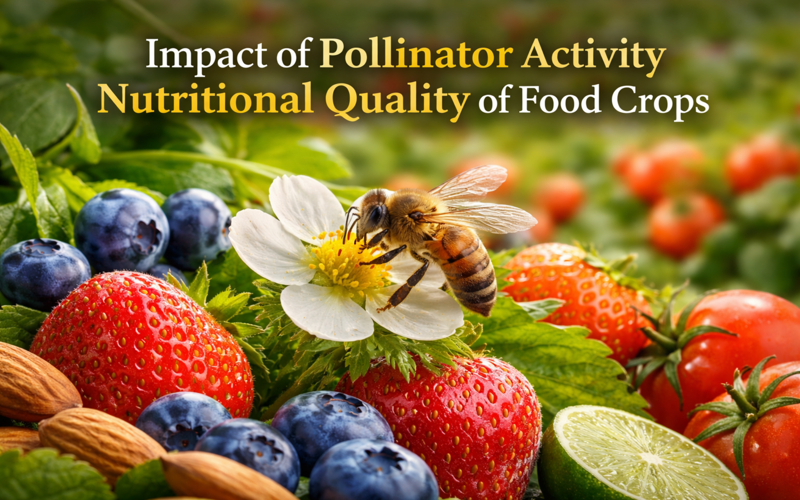
Pollinators such as honeybees, wild bees, butterflies, birds, and bats are fundamental to agricultural productivity and ecosystem stability. Beyond improving crop yield, pollination also influences the nutritional composition of many fruits, vegetables, nuts, and seeds. Scientific research increasingly shows that effective pollinator activity can enhance vitamin levels, mineral concentration, seed quality, and overall food nutritional value. Understanding this relationship is essential for ensuring sustainable agriculture and global food security.
Role of Pollinators in Crop Reproduction
Pollinators transfer pollen between flowers, enabling fertilisation and seed formation. This process determines not only the quantity of crops produced but also their quality and nutrient density.
Globally:
Approximately 75% of flowering plant species rely on animal pollinators.
Around 35% of global crop production depends on pollination services.
Without adequate pollination, many crops produce smaller, less nutritious fruits and seeds.
Influence of Pollination on Nutritional Content
Increased Vitamin Concentration
Pollination can significantly influence the concentration of vitamins in food crops. Studies have found that pollinator-dependent crops such as fruits and vegetables often contain higher levels of:
Vitamin C
Vitamin A precursors (carotenoids)
Vitamin E
Improved fertilisation results in better fruit development and increased nutrient accumulation.
Enhanced Mineral Content
Effective pollination can also affect mineral uptake and distribution in crops. Pollinated plants often show increased concentrations of:
Calcium
Magnesium
Potassium
Iron
These minerals contribute to better plant development and higher nutritional value for consumers.
Improved Protein and Fat Composition in Seeds
Pollination plays a crucial role in the development of nutrient-rich seeds and nuts. Adequate pollination leads to:
Higher protein levels in legumes and oilseeds
Improved fatty acid composition in nuts
Increased seed weight and quality
These improvements are particularly important for crops that serve as primary protein sources in many regions.
Effects on Crop Quality and Market Value
Pollinator activity not only improves nutrient content but also enhances the physical quality of agricultural produce, including:
Larger fruit size
Better shape and uniformity
Higher sugar content
Improved shelf life
High-quality produce often commands better prices in agricultural markets, providing economic benefits to farmers.
Crops Highly Dependent on Pollinators
Several nutritionally important crops rely heavily on pollinators, including:
Apples
Almonds
Blueberries
Cucumbers
Pumpkins
Avocados
These crops provide essential nutrients for human diets, highlighting the importance of protecting pollinator populations.
Consequences of Pollinator Decline
Declining pollinator populations can negatively affect crop nutrition. Reduced pollination can result in:
Lower vitamin and mineral levels in produce
Reduced crop yields
Poor fruit and seed development
Increased vulnerability to food insecurity
Studies suggest that declining pollination services could reduce the availability of key micronutrients in human diets, particularly in regions dependent on pollinator-dependent crops.
Strategies to Support Pollinator Activity in Agriculture
Pollinator-Friendly Farming
Planting wildflowers, hedgerows, and diverse flowering crops provides essential food sources for pollinators.
Reduced Pesticide Use
Limiting harmful pesticides helps maintain healthy pollinator populations.
Habitat Conservation
Protecting natural habitats ensures pollinators have safe nesting and foraging environments.
Sustainable Beekeeping
Responsible beekeeping practices support pollination services while maintaining colony health.
Future Research Directions
Further studies are needed to understand the complex relationship between pollination and crop nutrition. Advances in ecological monitoring, agricultural science, and pollinator conservation can help optimise pollination services for improved food quality.
Conclusion
Pollinator activity plays a critical role in enhancing not only crop yields but also the nutritional quality of food crops. Healthy pollinator populations contribute to improved vitamin content, mineral concentration, and overall food quality. Protecting pollinators is therefore essential for sustaining agricultural productivity, improving human nutrition, and ensuring global food security.


