- Tokyo: 12:01
- Singapore: 11:01
- Dubai: 07:01
- London: 04:01
- New York: 23:01
10 Traditional Arab Recipes That Use Honey
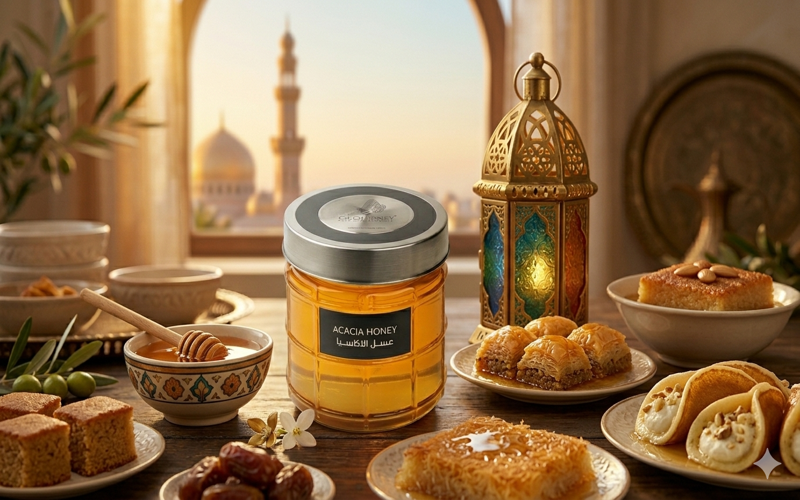
Honey has never just been a sweetener in Arab kitchens. It has been medicine, currency, a gift to guests, and a way of showing love without saying a word. Long before sugar became common, honey was what made celebrations taste different from ordinary days. And during Eid when kitchens come alive and families gather around tables loaded with food, honey finds its way into everything. These are not fancy restaurant interpretations. These are the recipes that grandmothers made without measuring anything, that mothers learned by standing close and watching, and that somehow taste better every single year. If you have ever been at an Eid gathering and noticed a plate of golden fried dough balls vanishing faster than anyone can explain, those were almost certainly luqaimat. They are small, crispy on the outside, soft and airy inside, and drenched in warm honey the moment they come out of the oil. Sometimes sesame seeds are scattered on top. Sometimes a little saffron goes into the batter. Every family has a version they swear is the original. The batter is simple: flour, yeast, water, a pinch of salt but the magic is in the frying. The oil needs to be exactly right. Too cool and they absorb oil and turn heavy. Too hot and the outside burns before the inside cooks. When you get it right, the dumpling puffs up into a near-perfect sphere, golden all over, ready for the honey. Yes, baklava is known everywhere now. But the Arab version made with orange blossom water in the syrup, layered with pistachios or walnuts, finished with real honey rather than plain sugar syrup is something else entirely. The layers of filo pastry need to be thin. The butter needs to be generous. And the syrup, poured hot over the freshly baked pastry, needs to include honey not as an afterthought but as the main event. The honey adds a depth that sugar alone cannot replicate, a slight floral bitterness that cuts through the richness. Make it the day before. Baklava is always better the next day, when the syrup has had time to settle into every layer. Muhallabia is a milk pudding delicate, barely sweet, scented with rose water or orange blossom. On its own it is elegant and understated. With a drizzle of dark Sidr honey across the top, it becomes something worth remembering. The contrast is the whole point. Cool, pale, lightly perfumed pudding beneath a ribbon of amber honey that is rich and almost smoky. A few crushed pistachios on top, and you have a dessert that looks effortless and tastes considered. It sets in the fridge in a couple of hours. Make it the morning of Eid 2026 and forget about it until you need it. This one barely qualifies as a recipe. But do not underestimate it. Take a large Medjool date. Remove the pit. Fill the centre with a small spoonful of good tahini, the kind that is runny and slightly bitter, made from whole sesame seeds. Drizzle raw honey over the top. That is it. The combination of the date's caramel sweetness, the nuttiness of the tahini, and the floral hit of honey creates something that tastes far more complex than three ingredients have any right to. It is served at almost every Eid gathering across the Gulf, usually piled on a plate with no ceremony, and eaten faster than anything else on the table. Use the best honey you can find for this one. It matters. In many Arab households, particularly across North Africa and parts of the Arabian Peninsula, Eid morning begins with asida. It is a thick, slow-cooked wheat porridge heavy, warming, deeply nourishing and it is eaten with butter and honey poured generously over the top. It does not look impressive. It is not supposed to. Asida is not about appearance. It is about sitting around a communal pot in the early morning, before the day gets busy, eating something that tastes like home. The honey melts into the warm surface, pools into the hollows made by the spoon, mixes with the butter into something golden and slightly runny. Some families add a little date syrup. Others keep it pure honey, nothing else. Eat it slowly. Eid morning only comes once a year. Qatayef are most associated with Ramadan, but they appear at Eid celebrations too particularly in the Levant, across Jordan, Palestine, Syria and Lebanon. They are small, thick pancakes cooked only on one side, so the top stays soft and slightly sticky. While still warm, they are filled with sweetened cheese, with crushed walnuts and cinnamon, with cream — then folded and either fried or baked until golden. The finishing touch is always syrup or honey, drizzled over the top just before serving. The fried version is crispier, more indulgent. The baked version is lighter. Both are very good. The honey version, where the natural sweetness cuts through the richness of the filling, is the one worth making twice. Rice pudding exists in every culture. The Arab version, when made properly, is in a category of its own. Saffron threads steeped in warm water, stirred into slow-cooked rice and milk, turn the pudding a deep gold. Rose water goes in at the end. Cardamom, sometimes. And honey stirred in off the heat, so it keeps its flavour rather than cooking away instead of refined sugar. The result is fragrant, creamy, faintly floral, and coloured like late afternoon sunlight. Served in small bowls with crushed almonds and a little more honey on top, it is one of those desserts that feels ancient in the best possible way. It takes patience. The rice needs to be stirred. The milk needs to be reduced slowly. But the result is worth the attention. Markook is a large, paper-thin flatbread common across the Arabian Peninsula and the Levant. Baked on a domed griddle called a saj, it comes off the heat pliable, slightly chewy at the edges, and impossibly light in the centre. Torn into pieces and eaten with qaimar: the thick, rich clotted cream made from buffalo milk and dark raw honey poured over the top, it is one of the most quietly perfect things you can eat at Eid breakfast. There is no elegance to it. You tear the bread, you pile on the cream, you pour on the honey. You eat it before it goes cold. And then you have another piece, because one is never enough. Eid Al-Adha 2026 is the Festival of Sacrifice, and lamb is at the centre of the table. Across the Arab world, the ways of cooking it are endless grilled, slow-roasted, stuffed with rice and nuts, cooked underground in some traditions. But a honey-glazed lamb, roasted low and slow until the meat falls from the bone, with a glaze made from honey, cumin, coriander, garlic and a little pomegranate molasses brushed on in the final half hour is something that earns its place. The honey caramelises against the heat. The spices bloom in the fat. The outside of the lamb turns a deep, lacquered brown while the inside stays tender. It is not a subtle dish. It is not trying to be. It is the kind of thing people talk about on the drive home. Ma'amoul are the biscuits of celebration in the Arab world. Made for Eid, for weddings, for any occasion that deserves something handmade and given with care, they are small moulded shortbreads filled with dates, pistachios or walnuts. The date version is the classic. The filling made from soft dates mashed with a little butter, warming spices, and a spoonful of honey to bind it and add depth goes into the centre of a butter-rich semolina dough. The biscuits are pressed into carved wooden moulds that give them their distinctive patterns, then baked until just golden. They keep for days in a tin. They are carried to neighbours. They are stacked on plates for guests. They are pressed into children's hands as they run past. Ma'amoul are not just a recipe. They are a way of saying: you matter to us, and we made this for you. That, more than anything, is what honey in Arab culture has always meant. Not just sweetness. Care. Geo Honey sources premium natural honey from across the region and beyond pure, authentic, and made to bring the best out of every tradition it touches.1. Luqaimat.The Little Dumplings That Disappear in Minutes
2. Baklava With Honey Syrup
3. Muhallabia Drizzled With Sidr Honey
4. Stuffed Medjool Dates With Honey and Tahini
5. Asida.The Comfort Food of Eid Morning
6. Qatayef.Filled Pancakes Finished With Honey
7. Honey and Saffron Rice Pudding
8. Markook Bread With Honey and Clotted Cream
9. Honey-Glazed Lamb — The Eid Al-Adha Centrepiece
10. Ma'amoul.Date and Honey Filled Shortbreads