- Tokyo: 07:06
- Singapore: 06:06
- Dubai: 02:06
- London: 23:06
- New York: 18:06
Honey Glycemic Index Explained: What Diabetics and Dieters Should Know
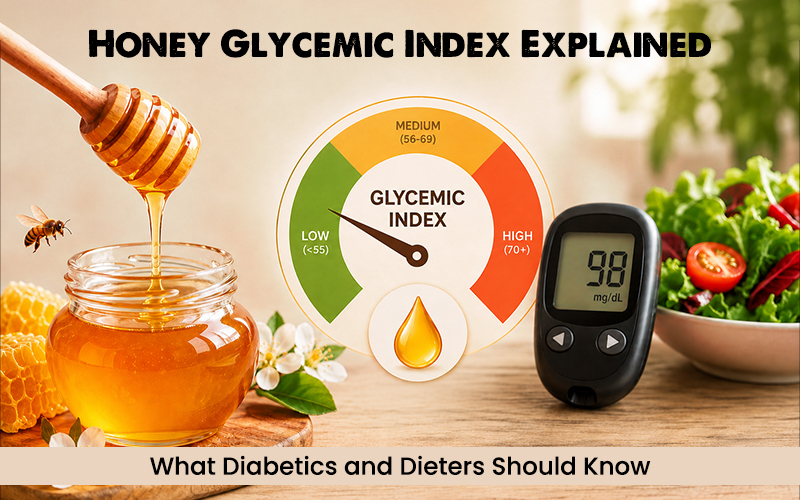
A lot of people switch from sugar to honey hoping it is the better option for blood sugar. For the most part, it is. The honey glycemic index is lower than refined sugar for most varieties, which means it raises blood glucose more slowly. But honey is still a source of sugar, and the type you choose matters more than most people realise. This blog covers how the honey glycemic index works, which varieties have the lowest GI, and what that means practically for diabetics and dieters. Understanding the Honey Glycemic Index How the Honey Glycemic Index Compares to Sugar Which Honey Has the Lowest Glycemic Index? What Diabetics Should Know About Honey Glycemic Index What Dieters Should Know About Honey Glycemic Index The glycemic index measures how quickly a food raises blood sugar, scored from 0 to 100. The lower the number, the slower the blood sugar rise. Anything under 55 is considered low GI. Anything above 70 is high. The honey glycemic index typically falls between 45 and 65, depending on the variety. That puts most honeys in the low to medium range. Refined white sugar sits at around 65. So honey is not dramatically different on paper, but the practical difference comes down to how much you use and which type you choose. The main reason honey tends to have a lower GI than sugar is its fructose content. Most honey varieties contain more fructose than glucose. Fructose has a very low GI of around 19, while glucose is at 100. The higher the fructose content in a honey, the lower its GI. White sugar is made of sucrose, which breaks down into equal parts fructose and glucose. Most honey varieties have more fructose than glucose, which is why the honey’s glycemic index tends to come in lower. Honey is also sweeter than sugar by volume. You need less of it to get the same level of sweetness, which means fewer calories and less sugar per serving in practice. Gram for gram, honey has slightly more calories than sugar. But most people naturally use less of it, and that changes the actual comparison. The other factor is nutritional value. Sugar offers nothing except sweetness. Raw honey brings antioxidants, enzymes, and trace minerals alongside its natural sugars. The calories are not empty in the same way. GI varies considerably between honey types, and the difference is worth knowing if blood sugar management is the goal. Acacia honey has one of the lowest GI values of any honey, coming in at around 32 to 35. It has an unusually high fructose content, which keeps its blood sugar impact very low. It is also mild in flavour and stays liquid longer than most varieties, which makes it practical for everyday use as a sweetener. Manuka honey has a moderate GI of around 55 to 60. It is more commonly known for its antibacterial properties, but it still compares well against refined sugar. Clover honey sits at around 58. Multifloral honeys vary more because their fructose and glucose ratios depend on which flowers the bees foraged from. If consistency matters to you, a single-origin monofloral honey is more predictable than a blend. Processing does not change the honey’s glycemic index significantly, but it does strip out the antioxidants, enzymes, and pollen that make honey nutritionally useful. Raw honey gives you the same GI range with everything else still intact. Honey is not a sugar-free food. It raises blood sugar, and anyone managing diabetes needs to treat it accordingly. That said, you should also consider the glycemic index of honey here. A lower GI food raises blood glucose more gradually, which is easier for the body to handle. Choosing a low-GI honey like acacia over refined sugar makes a real difference in how quickly blood sugar spikes after eating. There is also early evidence that the antioxidants in raw honey may have mild benefits for metabolic health. The research is still developing, and it is not a reason to eat more honey. Overall carbohydrate intake still matters most. Anyone with diabetes should check with their doctor or dietitian before making honey a regular part of their diet. Lower GI foods cause a steadier blood sugar curve, which tends to keep hunger at bay for longer and reduce cravings between meals. That is one reason switching from sugar to honey makes sense for people watching their weight. But honey is calorie-dense. A tablespoon of honey contains around 64 calories. Using it in the same quantities as sugar will not produce different results. The glycemic index of honey is the only advantage it holds if you use moderate portions. The practical approach is to use honey as a replacement, not an addition. A teaspoon in tea or yogurt instead of sugar is a sensible daily habit. Drizzling it freely on top of an already high-calorie diet is not. The honey glycemic index is lower than refined sugar for most varieties, and that’s because of the fructose content in the honey. Not all honeys are the same, and choosing the right type makes a real difference. For the best combination of a lower GI and full nutritional value, raw monofloral honey is the strongest option. At Geohoney, we source 100% pure raw honey from verified beekeepers across 53 countries and 155 farms worldwide. Browse our collection and choose a honey that actually helps your health.Understanding the Honey Glycemic Index
How the Honey Glycemic Index Compares to Sugar
Which Honey Has the Lowest Glycemic Index?
Acacia Honey
Manuka Honey
Clover and Multifloral Honeys
A Note on Raw vs Processed Honey
What Diabetics Should Know About Honey Glycemic Index
What Dieters Should Know About Honey Glycemic Index
Conclusion