- Tokyo: 03:29
- Singapore: 02:29
- Dubai: 22:29
- London: 19:29
- New York: 14:29
Honey vs. Agave: Pros, Cons & Health Benefits
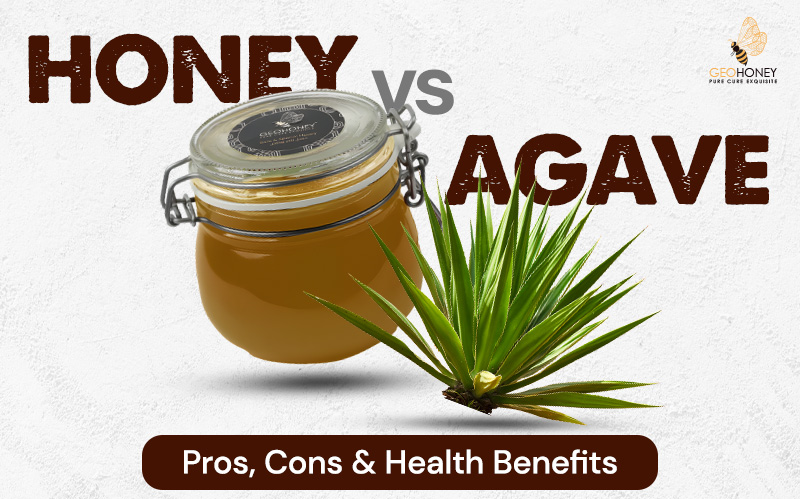
Sweeteners are a huge part of our lives. We use these for baking, making delicious beverages, and for countless cooking recipes. Recently, more and more people are on the lookout for natural sweeteners that satisfy their sweet tooth without risking side effects like blood sugar spikes or insulin resistance.
Now there are many natural sweeteners in the market that you can try out, but very few match the nutritiousness of raw honey and agave nectar. Both of these sweeteners are popular sugar alternatives. However, they differ significantly when it comes to their composition, flavor, and health benefits.
This blog explores these natural sweeteners in detail to help you understand what sets them apart. So, keep on reading till the end to make sure you choose the right sweetener for your recipes every single time.
What is Honey?
What is Agave?
Nutritional Comparison
Health Benefits/Pros of Honey
Cons of Honey
Health Benefits/Pros of Agave
Cons of Agave

What is Honey?
Honey is a well-known natural sweetener that bees make from the nectar of different flowers. The composition, color, flavor, and consistency of honey vary based on its floral nectar sources, processing method, and physical conditions like climate.
Honey contains simple sugars like glucose and fructose that are responsible for its sweetness. It also comes with B vitamins, vitamin C, and minerals like iron, magnesium, zinc, etc. Raw honey is also a rich source of antioxidants like phenolic acids or flavonoids.
You can find organic honey in raw and processed forms. Raw honey undergoes minimal processing or heating, which allows it to retain most of its nutrients and enzymes. Processed or pasteurized honey undergoes heavy processing, which enhances its shelf life but destroys some of its beneficial components.
How it is Made
First, bees extract liquid nectar from flowering plants. They keep this honey in their stomachs, where it breaks down and changes its composition. Then bees regurgitate this honey in their hives. Bees then flutter their wings to remove water from the honey by evaporation, which results in a denser consistency. Finally, they seal the honeycomb with the beeswax.
Key Features
Raw or organic honey possesses a complex flavor profile, which may have floral, fruity, herbal, earthy, or woody notes based on the nectar source.
The color of this honey can range from transparent to dark amber to yellow.
Pure honey has a thick consistency. It tends to crystallize or become grainy with the passage of time.
Honey is somewhat less sweet than agave. The reason is that it contains a mix of glucose and fructose.

What is Agave?
The Agave nectar or agave syrup comes from the sap of the agave plant. It mainly originates from the blue agave that is native to Mexico. This sweetener is an all-natural, vegan alternative to sugar.
Agave nectar comprises of 70% to 90% fructose, and that is what makes it very sweet. This sweetener contains glucose, vitamins, and minerals in trace amounts. Agave nectar undergoes heavy processing, which converts complex sugars into fructose. This processing gives it a clear consistency, longer shelf life, and a very sweet flavor.
One key feature of the Agave nectar is its low glycemic index. Agave nectar has a very low glycemic index of just 15–17. This results in a slower rise in blood glucose, which makes it perfect for people who want to manage blood sugar.
How it is made
First, you need to extract the fluid from desert succulents called Blue Agave. The resulting juice undergoes filtration. Then you heat the juice, which breaks down its components into simpler sugars or fructose. Finally, you concentrate the liquid to get a thick syrup.
Key Features
This sweetener gives you a very sweet, neutral, and mild flavor that has no floral notes.
You can find it in light golden, amber, and almost translucent hues.
Agave nectar has a smooth but runny consistency much like maple syrup.
The higher fructose content makes it much sweeter than raw honey.
Nutritional Comparison
The following is a quick comparison between the nutritional profiles of honey and Agave.

Health Benefits/Pros of Honey
The following are some notable pros of raw honey that make it a healthy addition to your diet.
Rich in Antioxidants
Honey is a source of antioxidants, including but not limited to flavonoids and phenolic acids. These bioactive compounds neutralize harmful free radicals in your body, which prevents the risks of chronic illnesses.
Soothes Sore Throats and Coughs
Honey can soothe sore throats and reduce cough severity, especially in children over age one. Honey’s thick consistency coats the lining of your throat. This prevents irritation, effectively reducing the symptoms of a sore throat.
Wound Healing and Skin Care
Hone is naturally antibacterial as well as anti-inflammatory. You can use it on minor wounds or burns to prevent infection. The use of honey promotes faster cell repair, which aids the healing process.
Honey’s bioactive compounds give it exceptional anti‑inflammatory activity. This reduces inflammation in chronic diseases and modulates immune responses. Many experts suggest it to treat wounds, burns, ulcers, and surgical sites as it inhibits the growth of harmful bacteria.
Digestive Health
Honey’s effective prebiotic features nourish the beneficial gut bacteria. These bacteria ensure your digestive system stays stress-free. The use of honey thus prevents the risks of acid reflux, constipation, bloating, etc.
Energy Boost
Honey is a superfood that can give you a quick but stable energy boost. Unlike regular sugar, you do not experience crashes after honey consumption, which makes it perfect for athletes and non-athletes alike.
Supports Heart Health
Honey consumption decreases total cholesterol, triglycerides, and LDL while increasing HDL. On the other hand, sucrose in regular sugar raises cholesterol and triglycerides. Honey also improves your lipid profile. Moreover, its use regulates your blood pressure. All of these benefits ensure there are minimal risks of heart disease.
Cons of Honey
Honey is mostly natural sugars. Its excessive use can create issues if you are diabetic or prediabetic.
Its use can lead to botulism in infants who are under 12 months of age.
This calorie-dense sweetener can lead to weight gain when you consume it in excess.
Pure raw honey is prone to crystallization.
Processed honey doesn’t give you a rich flavor or additional nutrients or minerals.
Health Benefits/Pros of Agave
Here are some key benefits of Agave for your health and general well-being.
No Sugar Spikes Due to Lower Glycemic Index
The GI of Agave is considerably lower than that of honey. This means the rise in blood sugar is very slow when you use this sweetener. This makes it effective for people who wish to enjoy their sweet treats without any fear of the sugar highs or crashes.
Moreover, people with insulin sensitivity or diabetes can also benefit from this aspect of agave.
Contains Prebiotic Fiber
Agave nectar gives you a soluble fiber that acts as an effective prebiotic. This fiber supports your digestive health by improving bowel regularity and enhancing the absorption of nutrients.
Helps with Weight Management
The consumption of agave promotes a feeling of satiety. When you feel full, your calorie intake automatically drops. This way, it helps you meet your weight loss goals with greater success.
Dental Health
Unlike regular sugar or processed honey, agave doesn’t stick or ferment in your mouth. This minimizes the risks of tooth decay or other oral health complications.
Cons of Agave
The high fructose content in agave increases the risk of fat buildup in the liver. This elevates your triglyceride levels as well.
This highly processed sweetener contains very few natural nutrients.
The calorie content of agave is higher per tbsp than refined sugar. One tablespoon of agave nectar gives you about 60 calories and approximately 14 g sugar.
Excessive use of agave increases the risk of digestive discomfort.
Conclusion
Honey and Agave both look and taste different. The difference in composition of these natural sweeteners leads to drastically different impacts on your health as well.
Honey is a nutrient powerhouse that comes in a complex flavor or different textures based on floral sources. Agave is a vegan alternative to honey with a sweeter flavor.
The choice between the two mainly depends on your health goals, recipe requirements, and the flavor that you wish to experience. So, make sure to learn more about these sweeteners to guarantee you pick the right one the next time you want to replace sugar with a healthier option.
Visit us at Geohoney today to order our 100% raw, monofloral honey that guarantees the best flavor, texture, and health benefits all in one.
FAQs
What makes raw honey a healthier choice than agave?
Raw honey is healthier as it is rich in antioxidants, trace vitamins, minerals, and enzymes. These healthy components support your immunity, heart, and digestive health. Agave’s high fructose content can create weight gain or metabolism issues. This makes it a less ideal option.
Is it ok to say that the agave syrup is vegan?
Since agave syrup comes from plants, it is a popular option among the vegan community.
Is agave or honey better for people with weight management goals?
Both honey and agave are rich in calories that can add to your weight. Honey’s low fructose content, however, makes it less dangerous for your metabolic health, which directly links with weight management.
Does agave come with any side effects?
Liver fat accumulation, insulin resistance, and an increase in triglyceride levels are some major side effects that one experiences if they consume this sweetener in excess.