- Tokyo: 04:44
- Singapore: 03:44
- Dubai: 23:44
- London: 20:44
- New York: 15:44
Honey vs. Stevia: Which Natural Sweetener Is Better?
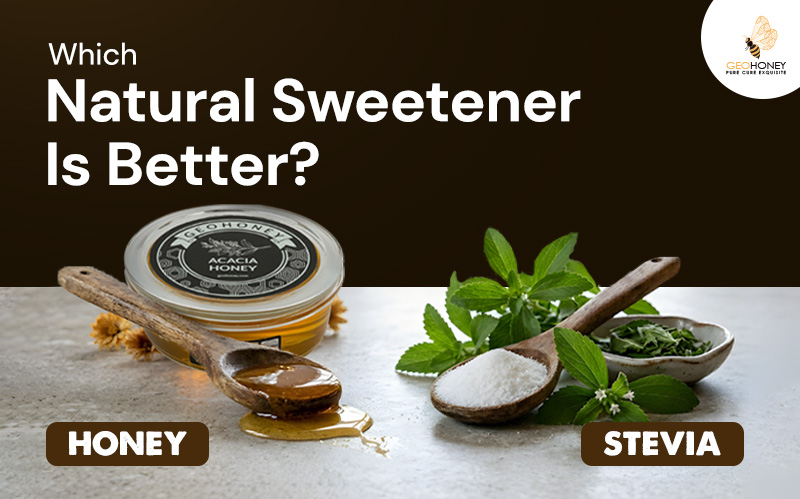
If you are finding a way to replace refined sugar in your diet, you might have already come across honey and stevia. They’re both very popular and for a good reason!
Honey gives you stable energy and boasts trace nutrients for better health. And stevia? It works very well for maintaining blood sugar levels.
Many people find themselves stuck with a choice to make. Which of the two is better? The answer actually depends on your health goals. Mind you, the decision is not that hard to make.
At a Glance
Honey contains sugar + water + enzymes + trace nutrients. People prefer honey because it has antioxidant and anti-inflammatory properties.
Stevia is a zero-calorie natural sweetener. It is a better option for controlling blood sugar and managing weight (reducing calories).
Honey is better than stevia for overall health benefits.
What is Honey?
We’ve all heard of honey, probably tasted it too. It is a naturally occurring sugar made by honeybees. Bees collect pollen and nectar and turn it into honey.
Composition
Honey contains:
Carbohydrates (sugars like fructose and glucose)
Water
Minor components (enzymes + acids + trace nutrients)
The ratio of fructose and glucose in honey determines its physical qualities. For instance, crystallization.
High fructose = honey remains in its liquid form longer.
Higher glucose = gives honey a coarse texture on solidifying.
Why Do People Choose Honey?
People choose honey as a more "wholesome" alternative to refined sugar for various reasons. These include:
It is natural and minimally processed (especially raw honey)
Honey boasts a rich, complex flavour which enhances the taste of drinks and baked goods.
It releases energy into your body without spiking the glucose levels.
It boasts beneficial compounds like flavonoids, which give honey its antioxidant properties.
What’s Stevia?
Stevia is another natural substitute for sugar. It is made from leaves of Stevia rebaudiana. You might think that it’s a fairly new discovery, but it's not! The Guaraní of South America have used stevia for centuries. They called it ka'a he'ê, which roughly translates to “sweet herb.” Moreover, the locals in Brazil and Paraguay use stevia to sweeten their teas.
What Makes It Calorie-Free?
Stevia is a calorie-free sweetener. Yes, you’re reading it correctly. The active compound in stevia, steviol glycosides, gives it the sweetness. However, humans cannot process these glucosides. This makes it “zero-calorie” despite all the sweetness.
Fun fact? It’s up to 400 times sweeter than sucrose. That’s practically a lot! This means you will need little stevia to experience the same sweetness.
How Much Stevia is Safe for Use?
FDA officials use the concept of acceptable daily intake to measure the safety of consumption. According to them, you will need to eat 27 packets of stevia each day to hit the limits.
Possible Benefits
Some of the potential benefits of stevia are:
It's safe for people with diabetes, obesity, or high blood pressure.
It is a potential antioxidant and may fight inflammation
May help your kidneys work better.
Note. The FDA does not approve of stevia for treating any health conditions. Moreover, stevia in the form of whole leaves, roots, stems, other parts, crude extracts (below 95% stevia), and supplements is not approved.
Comparison: Honey vs Stevia
Below is a table comparing honey vs stevia as natural sweeteners.
Which One is Better for Blood Sugar?
The verdict is clear if you’re looking for strict blood sugar control: Stevia.
It does not raise glucose levels, making it suitable for people with diabetes or those trying to manage insulin levels.
Honey contains natural sugars. Although it has a lower glycemic index, it can still increase your sugar levels if consumed in excess.
Honey or Stevia: Which One Should I Choose for Weight Management
Want to reduce your calorie intake? Go for stevia! It contains no calories. So you can enjoy the sweetness without adding to your daily intake.
What about honey? It’s natural, yes. But it is calorie-dense. One tablespoon contains around 60–65 calories.
Which Ingredient Will Give Me Energy Boost?
The sugar in honey makes it better at this. Stevia does not give you energy on its own. That's because your body can't break down its glucosides. Its major purpose is to substitute sugar so that your beverages still taste sweet but without the crash.
Which One Has More Health Benefits?
Stevia stops at sweetness. That's all it has to offer. Honey, on the other hand, is popular for containing enzymes and trace nutrients. It contains antioxidants to reduce oxidative stress. Plus, honey also acts as a remedy for treating sore throats, infections, ulcers, and wounds. It is anti-inflammatory and soothing, supporting your immune function, heart health, and gut.
Taste and Versatility
Honey has a warm, rich, and floral flavor. The flavor changes depending on where the honey comes from, the flowers. It's not too sweet, either. Stevia leaves a slightly bitter taste in your mouth after tasting overly sweet.
Therefore, people use honey for cooking and baking, and stevia for making their drinks sweeter!
Which One is Better for Daily Use?
Pick honey if you:
Want a natural, minimally processed option
Don't have strict sugar restrictions
Want added health benefits
Choose stevia if you:
Are managing diabetes
Are on a calorie-restricted diet
Follow a sugar-free lifestyle
Want to sweeten a beverage
FAQs
1. Is using honey better than stevia?
“Better” depends on what you need. Stevia is good at controlling blood sugar and calories, but honey is better for getting minerals and antioxidants.
2. Why are people avoiding stevia?
People stay away from stevia because of its side effects. Some of them include feeling sick, bloating, and having low blood pressure. Talk to your doctor before switching to stevia.
3. Can you eat stevia every day?
You can consume high-purity stevia every day. The FDA does not approve of raw stevia or crude extraction (below 95% stevia) for consumption. The acceptable limit is about 27 packets a day. However, anything in excess is not good for your body.
4. Which sugar has a zero glycemic index?
Stevia has a zero glycemic index. This means it does not raise your blood sugar levels at all.