- Tokyo: 07:33
- Singapore: 06:33
- Dubai: 02:33
- London: 23:33
- New York: 18:33
How to Identify Pure Honey vs Fake Honey (Simple Home Tests)
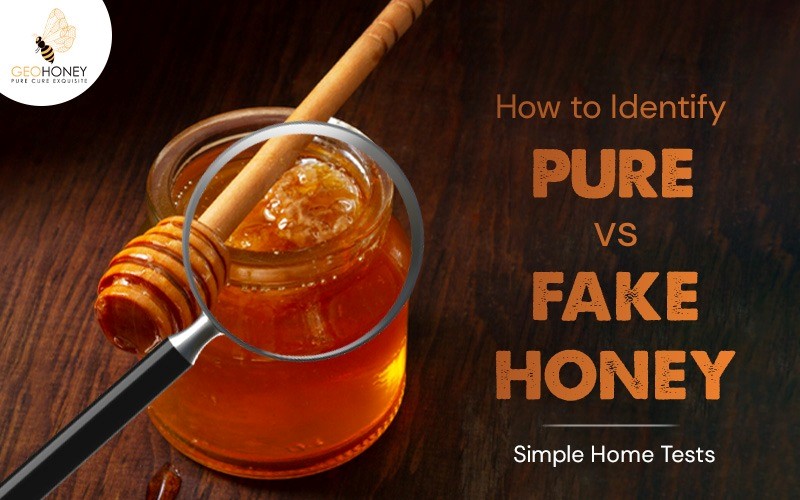
The adulteration or mislabeling of honey is a growing problem for both consumers and honey producers. Statistically, honey fraud occurs in approximately 10% of international trade. Furthermore, 30% or more samples found from countries like China and India are adulterated.
So, how do you identify whether the jar of honey you are currently consuming is pure or fake? This article covers at-home tests to help you distinguish pure honey from fake or adulterated ones.
Basics First!
Here are a few things to remember about real honey:
It is more cloudy and opaque
Real honey is thicker
You will notice a sweet, floral scent
It will crystallize faster
At-Home Tests to Distinguish Real vs Fake Honey
1. Water Test
Fill a glass of water at room temperature and keep it still. Add a spoonful of the honey you have without stirring the water. If it's pure honey, it will sink to the bottom due to its viscosity.
Real honey is made mainly of sugars, approximately 80% and sometimes even more. As a result, it has a distinct thickness to it, whereby if you let it drip, you’ll notice a resistance to flow. The honey will appear in almost a lush flow, heavy and dense. However, if it's adulterated, it will start spreading and dissolving because of added sugars.
Wondering, “Why is it important to avoid stirring?” That's because even pure honey dissolves on stirring. Thus, defeating the purpose of the test.
2. Burn It!
Moisture does not allow fire to breathe. That’s why this test makes sense because adulterated honey often has a higher water percentage.
Gather a cotton wick, a lighter, and your jar of honey. Dip the cotton wick carefully into honey and shake off the excess. Then, burn the wick with the lighter and observe how it burns. Ensure you don’t have any flammable objects nearby.
Pure honey burns clear, allowing the wick to catch fire. Fake honey, on the other hand, due to its water content, does not allow the wick to burn quickly.
3. The Thumb Test
Pure honey is thick and holds itself together. So place a drop on your thumbs and observe it for a couple of seconds. If at all the honey starts spreading, it is not 100% pure.
4. Bread Test
This is another way to test for added water in your honey. Take a slice of bread and spread honey over it. Wait for a few minutes and check if the bread is moist. If the honey is real, the bread will harden or dry out. Fake honey, on the other hand, will moisten the bread.
5. Blotting Paper Test
Another way to identify pure honey from the fake varieties is by pouring a few drops of your honey onto blotting paper. The thickness of the real honey should prevent it from spreading and wetting the paper.
If it’s fake, it will get absorbed or leave signs of moisture higher than usual. You can perform this test with toilet paper as well!
6. Foam Test with Vinegar
Pure honey has a low pH level, meaning that it’s acidic in nature. When you mix honey with vinegar, it does not react. However, if it contains additives, the pH of the naturally will rise, resulting in effervescence or foaming. That’s a sign that your honey is not pure.
7. Put it in a Microwave
This is another heat test that you can do at home. Simply take some honey and microwave it for about 30 seconds. Pure honey will caramelize and will release a caramel-like aroma. Adulterated honey, in contrast, may burn, froth, or even bubble because of water in it. It may also release a burnt odour.
8. Check for Crystalisation
If you open your jar and find that your honey has become thicker and crystallized, don’t be worried. In fact, it's a good sign. Pure honey crystallizes over time because of glucose oxidization. This process actually removes moisture from honey.
What Do You Need to Remember?
While all these tests help differentiate pure from fake honey, they are not foolproof. It is thus best to buy from trusted sellers like GeoHoney, who are reputed for their 100% raw, natural, and organic honey range.
The honey is freshly harvested from 500+ locations, highlighting their partnership with 50+ countries. GeoHoney works in tandem with beekeepers in high mountains and forests, equipping them with innovative Hi-Tech monofloral hives that ensure that every drop of honey meets the highest quality standards!
FAQs
Does real honey float or sink?
Real honey sinks to the bottom and stays in place if you drip it into still water.
How to test if honey is pure at home?
You can try the water test (pure honey sinks while fake honey dissolves), burn test (pure honey will burn clean and allow the wick to catch first, while fake honey will delay it), thumb test (a drop of pure honey stays in place due to its thickness), and vinegar test (pure honey does not react while fake honey will foam).
Does 100% pure honey crystallize?
Yes, pure natural honey crystallizes over time. This is a natural process and does not change the taste or color.
Can fake honey crystallize?
It cannot crystallize so readily. That’s because the added syrups and sugar do not crystallize over time. Furthermore, fake honey is more processed, removing the pollen and enzymes that start the process.
Does fake honey have bubbles?
Yes, it does. If you heat the honey and it starts to bubble, it's a sign that it is not pure.