- Tokyo: 22:51
- Singapore: 21:51
- Dubai: 17:51
- London: 14:51
- New York: 09:51
What Is Beeswax and What Is It Used For?
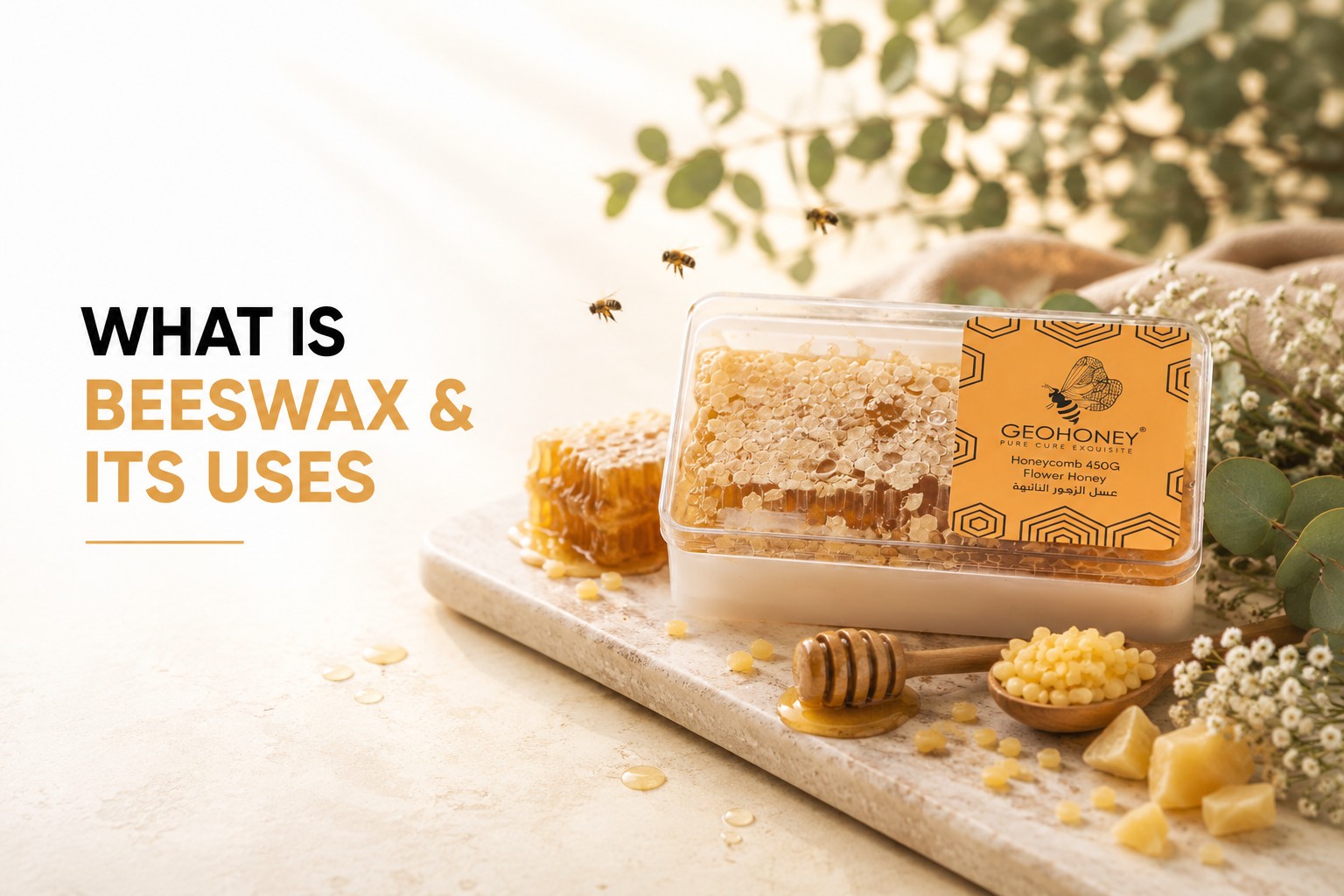
Beeswax is a fascinating beehive product that bees create to build and maintain the honeycombs. Worker bees secrete beeswax from specialized glands on their stomach. After that, they chew and mold the small wax scales into hexagonal cells that you find in a beehive.
Bees mainly use beeswax to store organic honey and pollen and to protect the bee larvae. Beeswax also has several uses for humans in skincare products, pharmaceutical applications, the candle industry, and more.
Beeswax is a prized material globally for its versatile and eco-friendly nature. This blog covers this beehive marvel in detail, highlighting its key features and applications to give you a better idea.
What Is Beeswax?
How Is Beeswax Harvested?
Uses of Beeswax
Benefits of Using Beeswax

What Is Beeswax?
Beeswax occurs naturally in beehives. Studies show that natural beeswax is a complex material that contains more than 300 bioactive compounds, including wax esters, hydrocarbons, free fatty acids, and free fatty alcohols, to name just a few.
Research also shows that the hydroalcoholic beeswax extracts show remarkable antibacterial activity against harmful microorganisms along with superior anti-inflammatory and antioxidant effects.
When bees secrete beeswax, it is initially white. Over time, however, it gradually assumes a yellow or golden hue as it comes into contact with other hive elements like bee pollen, honey, and propolis.
Beeswax production is an extremely resource-intensive process. Bees have to consume a very large amount of honey to produce a tiny amount of wax.
To produce about one pound of wax, bees have to consume 6-8 pounds of honey. After secretion, bees shape this wax into a hexagonal honeycomb cell structure, which possesses remarkable strength and flexibility.
How is it made?
First, worker bees feed on large amounts of honey and digest it. These bees convert the sugar of honey into liquid wax, which they secrete through special pores called wax mirrors on the underside of their abdomen.
After secretion, the wax scales harden into crystals as they come in contact with the air. Bees then remove the wax from their abdomens and chew it. This softens the wax as it adds enzymes from the saliva of the bee to it.
This makes the wax pliable enough to make hexagonal cells inside the hive. These cells are what bees use to raise new bees and to store honey for the winter.

How Do You Harvest Beeswax?
Beekeepers collect beeswax during raw honey extraction. First, they remove the wax caps from the honeycomb cells. These caps are made of the purest form of wax.
After removal, these wax caps undergo cleaning, heating or melting, and filtration to remove honey and other impurities from the wax. For filtration, beekeepers use a fine wire mesh or cheesecloth. This removes pollen, dead bees, or debris from the wax.
Then you can pour the wax into molds for cooling and storage. Cooling of wax allows the clean wax to come to the top, while impure wax can be scraped off the bottom.

Uses of Beeswax
According to research, beeswax is among the most widely used natural waxes in industries like pharmaceuticals, cosmetics, food coatings, candles, and biomedical materials, etc.
The following are some notable uses of beeswax in everyday life that make it an extremely valuable commodity.
Candles
Beeswax is a key ingredient in the candle industry. Candles that use this material produce less smoke, and they burn cleanly. These candles also burn longer than paraffin candles, and they produce a subtle honey-like aroma.
Skincare and Cosmetics
Beeswax’s natural moisture retention features make it a key part of several skincare or cosmetic products. This material finds uses in lip balms, moisturizers, hand creams, body lotions, facial products, and makeup formulations.
This wax creates a protective barrier on your skin, which prevents moisture loss, resulting in better skin hydration.
Food Preservation
Honeycomb wax is also an effective food preservation material. Wraps that use this material are a more eco-friendly alternative to plastic. Beeswax-based wraps can keep fruits, vegetables, and baked goods fresh longer without any harmful side effects.
Pharmaceutical Products
This material also finds countless uses in the pharmaceutical industry. This sector uses it to make ointments, creams, and several medicinal preparations. Beeswax is an effective stabilizer and thickener in many medicinal formulations.
Furniture and Wood Polish
Many wood polishes and conditioners also use honeycomb wax. This material not only protects wooden objects but also enhances their appearance. Beeswax creates a smooth and natural finish that instantly elevates both wooden furniture and structural elements.
Leather Care
Beeswax treatments can also keep leather products like shoes, belts, or bags fresh longer. It lubricates leather fibers and creates a protective, water-resistant barrier. This prevents the cracking or scratching of leather objects.
Industrial Applications
Beeswax also finds countless uses in several modern industries. It is a key ingredient in lubricants, waterproofing compounds, protective coatings, metal casting, food wraps, craft soaps, modeling clay, crayons, and more.
Conclusion
Beeswax is a versatile, eco-friendly, and sustainable natural substance that we obtain from a beehive. Worker bees consume large amounts of honey, break it down to convert it into wax, secrete it from their abdomens, and chew it to make it more pliable for making honeycomb cells.
Beeswax is rich in several bioactive compounds that make it a useful ingredient in candles, woodworking, medicine, food preservation, and countless other industries.
This versatility is what makes beeswax a highly sought-after natural commodity all over the world.
Visit our website, Geohoney, today to order our purest and raw beeswax and to explore over 350 monofloral honey varieties that elevate both your recipes and health every single day.
FAQs
What are some common uses of beeswax?
Beeswax finds uses in candles, skincare products, food wraps, cosmetics, pharmaceuticals, furniture polish, and various arts and crafts industries.
Does beeswax have an expiration date?
Beeswax generally has a very long shelf life. It can last several years if you store it in an airtight container in a cool, dry place.
Can I use beeswax on my face?
Yes. Beeswax is an active ingredient in many face creams. You can also use it topically on your face and benefit from its natural moisture retention and non-comedogenic features.
Do beeswax have anti-fungal features?
Beeswax has potent antifungal features. It slows down and inhibits the growth of several fungi and yeast species. This makes it effective for fungal-related skin issues like rashes or skin irritation.