- Tokyo: 17:27
- Singapore: 16:27
- Dubai: 12:27
- London: 08:27
- New York: 04:27
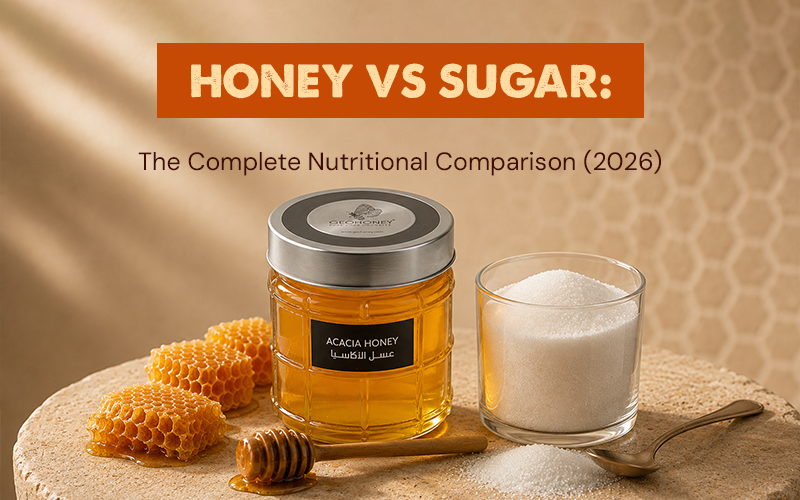
Honey vs Sugar: The Complete Nutritional Comparison (2026)
Honey and sugar are both common culinary ingredients that humans have used for thousands of years. Both of these substances are basically concentrated sugars. However, these are not the same when it comes to their nutritional profiles. A single serving or 100 grams of honey gives you more than 300 calories, 82 grams of carbs, 82 grams of sugars, antioxidants, vitamins, and trace minerals. The same serving of regular sugar gives you about 400 calories, 100 grams of carbs, 100 grams of sugars, and some trace minerals. This sweetener lacks beneficial antioxidants or minerals. This means sugar’s nutritional benefits are somewhat less than those of organic honey. This blog gives you a complete nutritional comparison of honey vs. sugar. With this information, you will come to know which of these sweeteners is nutritionally better than the other for your personal use. Honey vs Sugar: A Quick Nutritional Comparison Honey VS Sugar: Key Nutritional Differences Honey vs Sugar: Which Is Healthier? Here is a comprehensive table that highlights key nutritional differences between 100 grams of raw honey and sugar to help you make a smarter choice of sweetener that you need to add to your diet. This section lists some major differences between honey vs sugar in terms of their nutritional value. Honey vs Sugar: What are the Made of Table sugar is pure sucrose. It is a refined carbohydrate that contains glucose and fructose. This sugar is the result of the intense purification or processing of cane juice or beet juice. This processing removes most of the nutrients or minerals. The final product is a calorie-dense sweetener that has a neutral flavor. Pure or raw monofloral honey, on the other hand, comes from honey bees who feed on the nectar of flowers to make this natural substance. Honey mainly contains glucose or fructose. It contains less sucrose or carbs. Honey also contains water, minerals, healthy enzymes, and antioxidants that keep you healthy and energetic without side effects. These features are responsible for the countless health benefits of natural honey. Calories Content One tbsp of honey gives you 64 calories. The same amount of sugar gives you about 48 calories. This is because a tbsp of honey weighs a lot more than the same amount of sugar. However, if you take 100 grams of each, you find that honey actually has fewer calories because about 17-18% of its weight is actually water. Research shows 100 grams of honey gives you about 304 kcals. The honey is energy-dense because most of its dry matter is carbohydrates. This means you can take a small amount of honey to get your desired sweetness without an increase in your calorie intake. Carbohydrates and Sugar Content A 100 grams serving of honey gives you about 82 grams of carbs. With sugar, a 100 grams serving gives you close to 100 grams of carbs since most of it is essentially sucrose. Honey, on the other hand, has more free glucose or fructose that your body can easily digest. With sugar, your body first has to convert sucrose into glucose and fructose and then absorb it for energy. This difference in sugar content results in the different sweetness levels of these substances. Nutrient Comparison Research shows the superior nutritional features of honey in comparison with refined sugar are due to the presence of small quantities of minerals and bioactive compounds such as phenolics and flavonoids. Apart from sugars or carbs, honey also has other nutrients that are absent in refined sugar. Honey contains vitamins A, B, and C and minerals like potassium, calcium, zinc, and iron. It also has antioxidants, amino acids, and healthy enzymes. These healthy nutrients are not present in sugar. In some organic sugar products, however, you can find these nutrients in very small amounts. Antioxidants Honey has beneficial bioactive compounds that make it nutritionally superior. It is a rich source of antioxidants like flavonoids or phenolic compounds. These compounds strengthen your body’s natural defenses against free radicals. With sugar, you do not get these antioxidants, which affects your health. Glycemic Index The GI, or glycemic index, determines how quickly a carbohydrate-rich food can raise your blood glucose level. The GI ranges between 50 and 60, depending on different types of honey. The GI of sugar, on the other hand, is more than 65. This means sugar raises your blood sugar more quickly than honey. However, it is important to note that if you consume a large serving of a low GI food, it can still lead to a sugar spike. This is why you need to consume honey in moderation. It is clear from the nutritional comparison between honey and sugar that the former is a healthier sweetener. Honey is lower in calories and rich in antioxidants. It also comes with trace amounts of vitamins and minerals. Another thing that makes it better is its low glycemic index. However, you still need to use honey in moderation, as its calorie content is comparable to sugar. Sugar, on the other hand, has no additional nutrients. It is rich in carbs, and it raises your blood glucose faster. However, for most culinary applications in home kitchens, sugar is a more favorable ingredient due to its neutral flavor or predictable behavior. This is why, in terms of health, it has more to do with the quantity of these sweeteners rather than their nutritional value. Honey’s nutritional profile is superior to regular sugar. However, the difference between the two should not be exaggerated. It is true that honey is rich in nutrients like minerals, vitamins, antioxidants, and enzymes that you do not find in sugar. You still need to consume it in moderation. Regular sugar doesn’t give you micronutrients due to its intense processing. You can replace it with raw honey in most recipes to fulfil your nutritional needs to some extent without sacrificing sweetness. The healthier approach, however, is to always use less of these sweeteners whenever possible. This ensures you are able to enjoy your recipes without risking your health in the long run. Visit our website Geohoney today to explore our exclusive range of over 300 different raw monofloral honey types. We source our honey ethically from over 155 farms in more than 53 countries where local beekeepers prioritize bee conservation and environmental sustainability above all else.
Honey vs Sugar: A Quick Nutritional Comparison

Honey VS Sugar: Key Nutritional Differences


Honey vs Sugar: Which Is Healthier?
Conclusion