- Tokyo: 07:53
- Singapore: 06:53
- Dubai: 02:53
- London: 23:53
- New York: 18:53
What Does a Queen Bee Look Like?
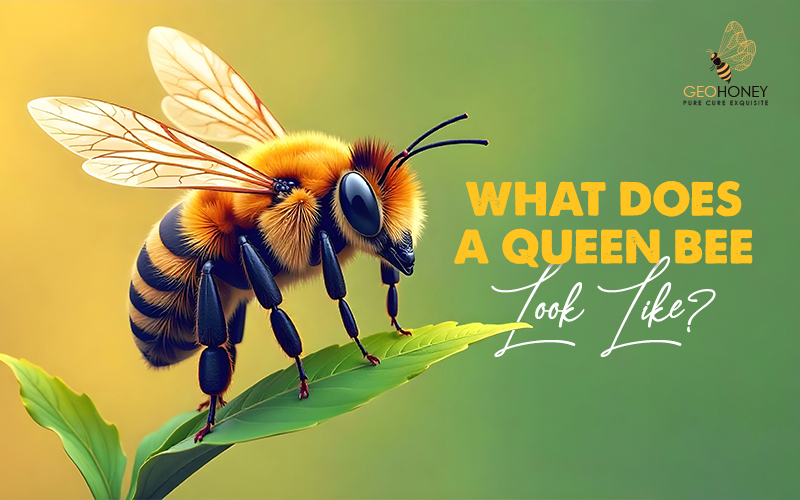
A queen bee is an integral part of a beehive. Queens bees are larger and longer than worker or drone bees. Their abdomens are elongated, which extend beyond their shorter wings. Overall, these bees have a more regal appearance than any other member of the colony.
But this is not all that makes this important bee stand out inside the hive. If you do not know how to spot a queen bee and you want to know exactly what a queen bee looks like, this blog is all you need.
This article looks into the physical features of queen bees in detail. This information highlights what sets a queen bee apart from the rest of the hive. So, let’s get right into it.
What is a Queen Bee?
How is a Queen Bee Born?
What Does a Queen Bee Look Like?
Queen Bees vs Worker Bees vs Drones
What is the Queen Bee’s Role in a Hive?

What is a Queen Bee?
A queen bee is a large, adult, mated female bee that is the mother of all the bees inside the hive. These bees are essential for the survival of bee colonies as they are the only fertile females in the hive.
A healthy honey bee queen lays between 1,500 and 2,000 eggs every day during peak season. This makes her the primary reproductive individual in the colony. These bees ensure a consistent supply of worker and drone bees inside the hive, which is essential for the survival of the colony.
The main duty of a queen bee is to maintain a healthy bee population inside the hive. Other bees, like workers and drones, on the other hand, perform tasks like collecting nectar, building honeycomb, and rearing the larvae.
Queen bees are larger in size than worker bees. Queen bees are 18-20 mm in size, while regular bees are about 11-15 mm in size. The queen bee is also the only creature inside the hive that feeds on a special diet called royal jelly in the larval phase. Other bees feed on bee pollen or organic honey for survival.
Unlike the barbed stinger of worker bees, queen bees have a smooth stinger, which allows them to survive even after stinging multiple times.
How is a Queen Bee Born?
The honey bee queen lays a few eggs in special queen cups inside the hive. Queen cups are dome-shaped cups that contain eggs for future colony queens. Once an egg is inside the cup, the nurse bees draw out the comb to create a queen cell. These cells have vertically oriented structures that look like peanut shells.
After that, worker bees excrete royal jelly and feed it to the larvae for the first few days. Then, bees switch the diet of workers and drones to bee bread or pollen while the future queen continues to get royal jelly. This change in diet leads to full development of the ovaries or reproductive organs and a longer life of the queen.
When the old queen dies or the colony splits in two due to a large population, the new queen emerges inside the hive. Once the new queen appears, she kills other developing queens inside the hive to ensure her survival.

What Does a Queen Bee Look Like?
It is very easy to spot a queen bee inside a hive if you just know what to look for. Here are some distinctive physical features of a queen bee that set her apart.
Bigger in Size
Queen bees are bigger than regular bees. They have elongated bodies with 18-20mm dimensions. In comparison, a worker bee is only 10-15mm long.
Long and Tapered Abdomen
The abdomen of a honey bee queen is long, and it extends well beyond its wings. This is what leads to its elegant appearance. The abdomen of this queen appears more pointed than that of worker bees. This part of the bee is what carries its fully developed reproductive organs.
Smaller Wings
The wings of the queen bees are much shorter relative to their abdomen. The wings of worker bees cover their entire bodies. This is not the case with queen bees, whose wings reach only partway down the abdomen.
Smooth and Shiny Thorax
The thorax is the middle part of a bee’s body. Queen bees have a smoother and shinier thorax than worker bees. These bees do not gather pollen or nectar, which makes their thorax appear more polished.
Different Movement Patterns
The movement pattern of the queen bee inside the hive is also different. It moves across the honeycomb in a calm and purposeful fashion while worker bees surround her at all times. This bee inspects cells to find the right spots for laying eggs.
Color of Queen Bee
The color of the queen bee is not drastically different from that of regular bees. This bee appears golden yellow or black with amber stripes.
Mandibles
Just like worker bees, queen bees also have mandibles, which are a pair of jaws on either side of the head. The mandibles on a queen bee are not tough enough to sting or defend the hive.

Queen Bees vs Worker Bees vs Drones
Queen, worker, and drone bees are different in terms of their looks as well as their roles inside the hive. Queen bees are larger with long and pointed abdomens. A queen bee is the longest-lived member of a honey bee colony. It can survive 2–5 years. In comparison, the worker bees often live only 4–6 weeks during summer.
Worker bees have smaller bodies and longer wings. These bees are sterile, and they only live for 5-6 weeks. These bees have hairy thoraxes, and their main purpose is to collect nectar, make honey, and raise the larvae.
Drone bees are male honey bees. The only role of these bees is to mate with the queen. Drones have wide and stockier bodies with round abdomens. These bees do not have stingers, and they possess large eyes that nearly touch the top of their heads.
What is the Queen Bee’s Role in a Hive?
A queen bee is at the reproductive center of the hive. These bees produce new workers and drones that keep the hive healthy. When the queen becomes weaker, worker bees begin raising new larvae by feeding them royal jelly. Queen bees are the only bees with fully developed ovaries. This means only they are the ones who can lay eggs.
Queen bees release a specific pheromone known as Queen Mandibular Pheromone (QMP). A reduction in the amount of this pheromone helps worker bees know when the lifecycle of queen bee ends, and this is what allows them to rear new queens.
The QMP pheromone also prevents worker reproduction as well as the rearing of new queens. This ensures there is only one queen inside the hive at a time.
Inside the hive, the queen bee directs the behavior, work assignments, and population balance. They influence the behavior of other bees, which causes them to assume specific roles inside the hive as workers, drones, and potential future queens.
Conclusion
A queen bee looks a lot different than other members of the hive. This bee is larger, longer, and shinier. Queen bees have long and tapered abdomens, shorter wings, and a calm demeanor.
These are the only bees inside the hive who have a fully developed reproductive system. These unique features result from a special diet called royal jelly that worker bees feed them throughout their lives.
Queen bees lay thousands of eggs during their life, and they maintain a healthy hive function by releasing special chemicals or pheromones. This is what makes queen bees a fascinating and really integral part of beehives, without which no bee colony can survive for long.
Visit us at Geohoney today to learn more about bees and beekeeping and to explore our wide range of 100% pure, raw monofloral honey varieties that guarantee an amazing flavor and countless health benefits in every spoonful.
FAQs
How can you spot a queen bee?
These bees have larger bodies with elongated abdomens inside the hives. They also possess smooth thoraxes, and their wings are much shorter than their bodies. Typically, several worker bees surround the queen bee inside the hive for protection.
Do queen bees possess a stinger?
Yes. These bees have stingers. However, their stingers are smooth and non-hairy. They use these mainly to fight rival queens.
Why are queen bees essential for beehives?
These bees lay eggs that turn into workers, drones, and future queens. They also release pheromones to maintain order inside the hive. This makes them extremely important for the health of a beehive.
What makes a queen bee different from a worker bee?
Queen bees are fertile, larger in size, and they release chemicals or pheromones to direct the roles of other bees inside the hive. Worker bees are smaller, and they lack reproductive capabilities. These bees forage, feed the larvae, and care for the queen bee.