- Tokyo: 12:02
- Singapore: 11:02
- Dubai: 07:02
- London: 04:02
- New York: 23:02
Predicting Bee Colony Collapse: The Role of Machine Learning in Protecting Pollinators
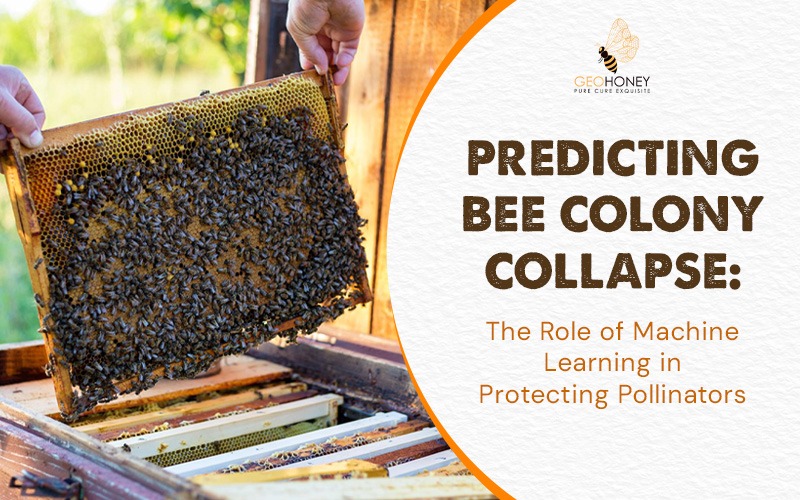
Pollinators are decreasing in numbers, and that’s bad news! Climate change, habitat destruction, and industrial farming are affecting the basic needs of these species. Their collapse is not just an issue for farmers but also for entire ecosystems and the global food supply.
Today’s article talks about the role of machine learning in protecting declining bee colonies.
Key Insights
Bees pollinate three-fourths of the global crops for human consumption.
Commercial honey bee colony losses in the US are projected to range between 60% and 70% in 2025.
However, reports from early 2025 suggest that bee populations in Asian countries have been steadily growing.
Machine Learning in Protecting Pollinators
1. Improving Colony Health
Temporal assessment of bee colony strength involves counting the number of comb cells with brood and food reserves. It needs to be done multiple times a year, and since there are thousands of cells inside a comb, counting them manually becomes time-consuming, tedious, and prone to errors.
Machine learning makes it easier to automate this process with the help of image processing techniques. It aids in automatically detecting cells and uses deep learning for cell content classification.
With frequent counting cycles and data from them, beekeepers can easily identify issues like low bee birth rate or a reduction in honey production. Based on this, they can plan on how to improve the colony's health based on several factors, like:
Weight
Population growth
Temperature and humidity
Brood and mortality
2. Identifying Stress from the Environment
Climate change is one of the biggest drivers of bee colony decline in various parts of the world. Factors like extreme heat, unpredictable rainfall, and changing flowering cycles affect bee nutrition significantly. This, in turn, impacts their ability to produce honey and survive at large.
Machine learning can forecast floral shortages, identify safe forage zones, and assess pesticide exposure risk. Additionally, it can predict seasonal stress on the colonies, equipping bee farmers with the data to make necessary adjustments.
3. Analyze Bee Activity
Bee activity is a critical indicator of colony health. A healthy colony exhibits high energy levels, with bees buzzing and the queen bee performing well.
Several attempts have been made to analyze bee activities with the help of Computer Vision and Object Detection techniques, YOLO v5. YOLO v5 is primarily used for real-time object detection, offering a balance of speed, accuracy, and ease of use.
A previous study done on 6,993 datasets using YOLO v5 for enhancing pollinator protection reveals that YOLO v5 is the fastest option, processing each frame at 5.7 milliseconds. The final model was added to an explainable AI system that created time-stamped visual summaries. This makes the results easy to understand for non-technical users and stakeholders in the beekeeping industry. This helps support better, more sustainable pollinator management.
4. Tracking Parasites and Diseases
Varroa destructor mites are capable of causing significant harm to the bees as they feed particularly on larvae and adult workers. Their feeding impacts the bees’ immune systems and even impairs their reproduction.
Traditionally, farmers use an integrated pest management approach, combining chemical treatments with natural methods. Machine learning can analyse hive audio, video, and sensor data to detect early signs of parasitic infestation or viral infections.
Thus, instead of routine chemical treatments, which may harm bees, AI enables targeted action only when needed.
5. Predicting Collapse Patterns
Machine learning is characterized by pattern learning and recognition. Researchers can train models on years of hive data, allowing for the prediction of:
High-risk colonies
Environmental factors driving decline
Time until a colony collapses
Specific interventions that can reverse the trends
This prediction, which can happen weeks in advance, can help farmers create conducive conditions to preserve and improve colony health for better survival.
6. Support Beekeepers with Futuristic Insights
Besides preserving colony health and recognizing patterns, machine learning tools can drive personalized insights such as:
Best hive placement
Expected honey yields based on bee activity
Migration strategies for commercial pollination
Stress periods during upcoming weather events
This makes beehive management easier and efficient, reducing losses.
FAQs
What causes bee colony collapse?
Factors like parasites, diseases, pesticides, loss of habitat, malnutrition and climatic changes lead to the collapse of bee colonies.
How long can a colony survive without the queen bee?
Colonies do not collapse immediately. However, as the older bees die, there will not be more bees to replace them. Consequently, over the next 2-3 months, the colony eventually fails.
How does artificial intelligence affect beekeeping?
AI helps farmers monitor bee and hive health in real-time and identify potential issues such as pests or diseases. Furthermore, collects data on hive activity and environmental conditions for analysis using machine learning to identify various patterns.
How does machine learning help optimize hive management?
By studying patterns, machine learning algorithms can provide suggestions on when to move hives, when to add or remove frames, and when to harvest, too.