- Tokyo: 15:52
- Singapore: 14:52
- Dubai: 10:52
- London: 07:52
- New York: 02:52
Royal Jelly vs Honey: What Is the Difference?
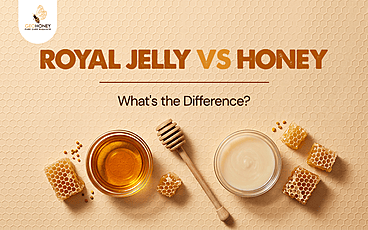
When most people think of what honey bees make, only a single thing pops up in the mind: honey. But that is not the case. A beehive also contains another amazing substance that is prized for its flavor, amazing nutritional profile, and medicinal value. This substance is known as royal jelly. But what exactly is royal jelly and what makes it different from organic honey? This is what this blog is all about. This article looks into both honey and royal jelly in detail, highlighting their unique features and key differences. So, keep on reading till the end to know what makes each of these beehive products so special. What Is Honey? What Is Royal Jelly? Royal Jelly vs Honey: Key Differences That Set Them Apart Honey is a natural sweetener that we get from beehives. Honey bees make honey after collecting nectar from flowers. This nectar goes inside the bee’s stomach, where enzymes break down its sugars. Bees then regurgitate this nectar inside honeycomb cells and then fan their wings to remove moisture. Finally, they cap the cells with wax. This process is what turns nectar into a thick, stable, and energy-rich substance that we all adore. Raw honey contains fructose, glucose, water, trace enzymes, antioxidants, amino acids, vitamins, and trace minerals that impart impressive medicinal and therapeutic properties to it. Key Features of Honey Honey is naturally sweet and syrupy. It comes in transparent, clear, amber, golden, dark brown, and even black colors based on the floral sources. Honey has a smooth and runny texture. It has an indefinite shelf life with proper storage. This is due to its low moisture content and acidic pH. Royal jelly is a nutrient-rich secretion that young worker bees produce inside the hives. This milky substance doesn’t come from the floral nectar. It comes from the glands inside the heads of the young bees. Young bees or nursing bees consume pollen and honey, digest them, and secrete the final substance from the hypopharyngeal and mandibular glands in their heads. Raw royal jelly serves as the diet of the queen bee throughout her life. This is what makes the queen bee dramatically different from the rest of the hive in terms of its appearance. Royal jelly consumption is what leads to the larger body sizes, fully developed reproductive organs, and longer lifespans of queen bees. Unlike honey, royal jelly has a very high water percentage of about 60% to 70%. It also contains proteins, peptides, and B-complex vitamins. Studies show that royal jelly is also rich in amino acids, enzymes, phenolic compounds, fatty acids, and several other bioactive compounds. Key Features It has a creamy or milky texture. It tastes slightly tangy or sour. Unlike honey, royal jelly is highly perishable. It requires refrigeration or freeze-drying for long-term storage. It has a white or pale-yellow color. Here is an even more detailed comparison between honey and royal jelly to help you understand what makes them so different. Source The source of monofloral honey is the nectar of wildflowers. Bees collect it in their stomachs, break it down, regurgitate it, store it in the cells, and fan it with their wings to make honey. Royal jelly is a product that comes directly from the glands in the heads of young worker or nursing bees. To make royal jelly, worker bees consume and process honey and pollen together. Nutritional Comparison Honey contains about 17-20% water, 80% sugars, trace proteins and lipids, and unique compounds like enzymes, antioxidants, and vitamins. Royal jelly, on the other hand, has more water, i.e., about 60-70%, less sugars, i.e., about 10-16%, and more proteins and fats or lipids. Royal jelly is also rich in complex compounds like 10-hydroxy-2-decenoic acid (10-HDA) and Major Royal Jelly Proteins (MRJPs) that you do not find anywhere else in nature. Purpose in the hive Honey serves as a source of food for the entire bee colony. Royal jelly, on the other hand, is exclusively a part of the diet of the queen larvae and queen bees. Taste and texture Honey possesses a thick texture. It is extremely sweet and, in some cases, can have bitter, herbal, fruity, or smoky notes based on floral origins. Royal jelly has a creamier texture. It tastes tangy or slightly bitter compared with honey. Shelf life Honey’s water content is negligible. This prevents it from getting spoiled even after decades under proper storage conditions. Royal jelly is rich in water, and that makes it prone to spoilage. This product loses its integrity without proper refrigeration. Uses Honey is a versatile natural substance. It finds uses as a natural sweetener in beverages, bakery items, and general cooking. Many people use it as a sugar substitute in their diet. Royal jelly finds use as an important dietary supplement. You can find it in capsule form or consume it raw to get energy and vitality. It is also an important ingredient in anti-aging creams and other skincare products. Many wellness enthusiasts also recommend it for immune support, metabolic improvement, and hormonal balance. Health Benefits Studies show that honey’s antioxidant action is linked to phenolic acids and flavonoids, which protect us against cardiovascular disease, diabetes complications, and neurodegeneration. Research also shows that honey is effective in cough suppression and mucosal soothing in upper respiratory infections. Honey is also an important part of skincare products like face masks, creams, etc. Regular use of honey also improves the metabolic system, prevents cholesterol spikes, and promotes better sleep. Royal jelly’s impressive nutritional profile makes it effective for immune system health. Skin products or masks based on this substance lead to better hydration and elasticity. Royal jelly also has potential anti-aging effects, and its regular use enhances energy and vitality. Honey and royal jelly both come from beehives. However, their raw materials, production processes, nutritional profiles, and physical features are quite different. Honey comes from floral nectar. This golden substance has a sweet flavor with a runny texture. Royal jelly uses pollen and honey as raw materials. It has a tangy flavor with a milky consistency. Honey is an energy-dense superfood that improves your immunity, digestive health, cardiovascular system, and sleep. Royal jelly, on the other hand, has several benefits for your skin, metabolic health, and vitality in general. It is important to understand what makes honey and royal jelly different. This can help you choose a product that meets your culinary expectations and fitness goals every single time. Visit us at Geohoney today to order our premium quality raw monofloral honey and fully organic royal jelly products that come directly from the hive to your table. Our natural monofloral honey and royal jelly offer exceptional flavors along with several nutrients to keep you healthy and energetic every day. Honey is a natural sweetener that bees make from the nectar of flowers. This golden substance with a thick texture and a sweet flavor serves as a food source for the bee colony. Royal jelly is a nutrient-rich product that nursing bees secrete from the glands in their heads. Bees use pollen and honey to make this milky substance that only bee larvae and queen bees consume inside the hives. Yes. You can take about 1,000mg of royal jelly every day to enjoy this hive product without any side effects. For maximum benefits, you should take royal jelly on an empty stomach about 20-30 minutes before breakfast. No. Royal jelly and honey are not the same at all. Honey is a carbohydrate-rich substance that bees make from floral nectar. Royal jelly is a water and protein-rich secretion that young bees make from pollen and honey.
What Is Honey?

What Is Royal Jelly?


Royal Jelly vs Honey: Key Differences That Set Them Apart
Conclusion
FAQs
How are honey and royal jelly different?
Is it ok to take royal jelly daily?
What is the right time to take royal jelly?
Are royal jelly and honey the same?