- Tokyo: 16:44
- Singapore: 15:44
- Dubai: 11:44
- London: 08:44
- New York: 03:44
What Happens to a Beehive in Winter?
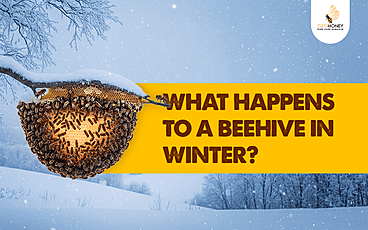
Winter is usually pretty rough for a beehive. As the temperature lowers and flowers start to disappear, bees have to show remarkable endurance and adaptability to survive. But what exactly happens to a beehive in the winter? In this season, bees do not hibernate or abandon their hives altogether. They instead work collectively to form tightly packed clusters to keep the hive warm. Bees survive on stored honey, rotate positions inside the hive to keep the temperature stable, and wait patiently for spring. Unlike other insects that either die off or enter a dormancy phase, bees remain active and determined to survive the winter. This blog explores what happens inside a beehive during this intense period in detail. So, keep on reading till the end to understand how this keystone species protects its home in this unforgiving season. How Do Honey Bees Prepare the Hive for Winter? The Winter Cluster: Nature's Heating System How Bees Generate Heat What Does the Queen Bee Do During Winter? What Happens During Extremely Cold Weather? Research shows that the global honey bee population is approximately 101.7 million colonies. This shows a 47% increase since 1990. The same report also shows that Asia contains the largest share of the world's beehives, with about 45.2 million colonies, and Europe has approximately 25.4 million colonies. Bees prepare the hive for the winter very early. Worker bees collect as much nectar from the flowers as they possibly can during late summer or autumn. They convert this nectar into honey and store it inside the hive for winter. Healthy bee colonies can store several dozen pounds of organic honey at a time. This honey lasts all winter and until spring in some cases. Before winter, bees also reduce the number of male bees or drones, who consume more resources and add no value to the hive’s survival. The drone eviction from the hive ensures less food scarcity in the winter. As winter approaches, the queen bee reduces her egg-laying activity as well. This allows the hive to spend fewer resources on feeding new larvae and focus more on their own survival and the queen’s health. One key aspect of winter beehive behavior is the winter cluster formation. As the temperature falls below 14°C or 57°F, worker bees form a tightly packed, basketball-sized cluster in the warmest part of the hive to survive the cold and protect the queen bee. This cluster allows them to conserve heat and energy and share warmth, which increases the survival rate of the hive. A winter cluster is a two-layered structure. The outer shell consists of closely packed layers of bees with their heads facing inwards. These bees use their interlaced bodies to insulate the group inside and keep the temperature above 50°F or 10°C. The core or the center layer contains the queen bee and the developing brood. The temperature of the core is usually between 64°F or18°C. It can also reach 33°C to 35°C or 91°F to 95°F if the queen starts laying eggs. There is also a rotating mechanism for keeping the outer bees warm during winter clusters. After some time, outer bees move inward to warm up, and the warmer bees from the center move up to make sure everyone stays safe from the cold. The entire winter cluster itself is not stationary either. The whole cluster moves very slowly as bees look for honey stores near them. The movement of the cluster is usually upwards across the frames where there is more food. But how do bees generate heat even in the coldest part of the year? They do this by vibrating their flight muscles without actually taking a flight. This process, called thermogenesis, produces metabolic heat. This heat is what keeps the cluster and hive warm. During heat production, bees constantly use stored honey as a fuel. This allows them to maintain a stable and warm temperature of about 80°F and 95°F (27°C to 35°C), which is suitable for the survival of the hive. In the winter, the queen resides inside the cluster, and worker bees surround her to keep her warm. At this time, the queen bee reduces her egg-laying activity. During summer, the queen can lay thousands of eggs in a day. But in the winter, there is a broodless period inside many beehives where the queen doesn’t lay any eggs at all. This means the remaining bees do not need to spend more honey or produce more heat to nourish and protect the brood. When temperatures become drastically low, there are a few changes that happen inside the beehive. The winter clusters become even tighter or denser, and bees minimize their movement to conserve energy. During this period, bees consume more raw honey, and their flight activity stops. At this time, heat generation is the primary activity of the entire beehive. When temperatures rise, some bees take brief cleansing flights to go outside and relieve themselves. However, even during this time, there is no significant foraging activity since bees quickly return to the hive to resume their duties. From the outside, the beehive may look very quiet or dormant during the winter. However, inside, the bee colony maintains its cluster, slowly consumes honey, and rotates patiently while awaiting the spring. Surviving the winter is extremely challenging for bees. However, these resilient creatures work together before and during this time to keep the hive healthy. During winter, the form clusters around the queen and vibrate their flight muscles to generate heat. The bee colony consumes stored honey during this time, and the queen stops laying eggs to conserve resources. This combined effort is what keeps a beehive functioning during this critical time of the year. This brilliant adaptability and proactive nature of the honey bees are what make them the most resilient creatures on the planet. Visit us at Geohoney today to learn more about bees and beekeeping and to source premium quality, raw, and 100% pure monofloral honey sourced directly from beehives from over 53 countries and 155 farms all over the world. Bees form a tight cluster around the queen and generate heat by moving their flight muscles violently. They also consume stored honey and stop producing new brood. Yes. Healthy bee colonies can maintain a temperature of 97 degrees Fahrenheit inside the hive during the winter and consume stored honey to survive this season. They do this by creating clusters and vibrating the muscles of their wings to produce heat. This keeps both the cluster and the hive warm enough for the bees to survive. Bees use honey that they store in the hives during the summer as a food source in the winter. These include starvation, moisture buildup, and diseases spread inside the hives.
How Do Honey Bees Prepare the Beehive for Winter?

The Winter Cluster Formation: A Fascinating Winter Bee Behavior

How Bees Generate Heat
What Does the Queen Bee Do During Winter?
What Happens During Extremely Cold Weather?
Conclusion
FAQs
What happens inside a beehive when winter comes?
Can beehives survive the intense winter seasons?
How do bees keep the beehive warm even in freezing temperatures?
What serves as the food for bees in the winter?
What are the biggest threats to a beehive in winter?