- Tokyo: 07:18
- Singapore: 06:18
- Dubai: 02:18
- London: 23:18
- New York: 18:18
Top 10 Flowers to Attract Honeybees to Your Garden
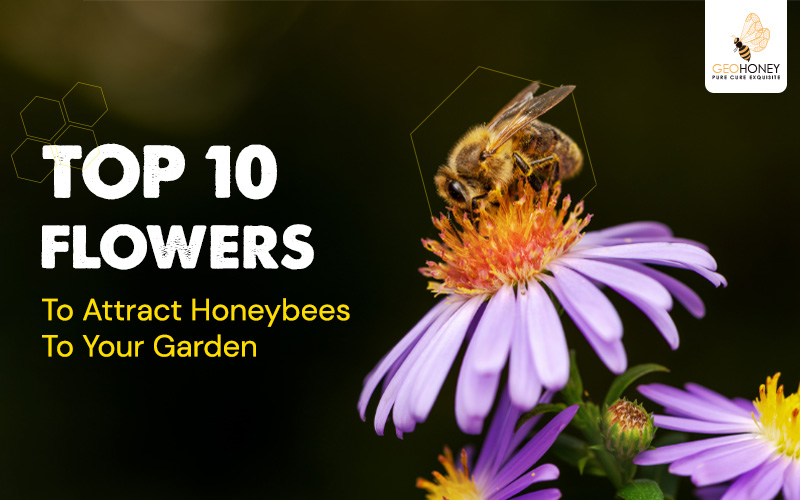
A bee is not just a random insect that just produces honey that we all love. These are essential pollinators that play a big role both in global food production and ecosystem biodiversity.
The population of honeybees has been in decline for the past few decades. These creatures face threats like habitat loss, pesticide exposure, and limited availability of certain floral species that they feed on. A 2025 study reveals there are more than 60% colony losses in the USA alone. These losses were much higher than in previous years, which makes this an alarming situation.
However, there is one effective way we can protect this keystone species from extinction. And that is by planting more flowers in our gardens that attract and nourish these creatures.
This blog lists the top 10 flowers that you can quickly grow in your garden to attract more bees. These flowers not only provide bees with nectar to make organic honey, but they also enhance the natural beauty of your garden.
Importance Of Plants for Honey Bees
Criteria For Selecting Honey Bee Plants
Top 10 Flowers that Attract Honey Bees to Your Garden
Additional Tips for Creating a Bee-Friendly Garden

Importance Of Plants for Honey Bees
It is fair to say that, as we humans cannot survive without bees, bees cannot survive without plants. Plants are valuable resources for bees as they give them pollen and nectar to grow and to make raw honey. These food sources provide bee colonies with proteins, fats, vitamins, carbohydrates, and countless other micronutrients.
Floral diversity is what keeps bees alive. This is why to support the role of bees in ecosystem experts suggest you need to plant different flowers in your garden at varying times to ensure bees always have food sources nearby.
Planting different flowers not only helps bees but also creates biodiversity where other animals can also thrive alongside bees and humans. Apart from food, certain plants also provide habitat to bees. These creatures nest in plant cavities, hollow stems, and dense foliage during their search for nectar. Without this shelter, bees cannot survive for long in the wild.
This is why it is absolutely necessary to make sure our gardens have more of the plants or flowers that honey bees find attractive.
Criteria For Selecting Honey Bee Plants
Before we look into the top 10 flowers in your garden that attract bees, let’s first look at some general factors that you can consider before you make this choice.
Bees prioritize plants with a higher nectar content. You can consider lavender, sunflower, or thyme, as they provide abundant nectar to the bees.
Bees also find pollen-rich plants like borage quite attractive. Pollen is essential for the bees as it provides the colony with vital nutrients.
Choose more than one flower with varying blooming periods. This leads to continuous nectar availability. You can also plant flowers that bloom all year round to make sure bees can go through the dearth periods safely.
Always prioritize native plants as they are well-adapted to local bee colonies.
Choose flowers with spacious landing surfaces and bright colors as they attract more bees to the garden.
Top 10 Flowers that Attract Honey Bees to Your Garden
Research shows the available diversity of flowers is linked to better bee nutrition and colony health. This means you need to plant a mix of several bee-friendly plants in your garden to create an inviting atmosphere for the bees.
Here are the top flowers that bees are most attracted to.
Lavender

Lavenders are among the most attractive flowers for bees due to their colorful and fragrant nature. These flowers can easily grow in sunny, well-drained gardens. These flowers bloom all summer long, which provides bees with food and shelter in the scorching heat.
The long blooming season, along with a high nectar content per flower, makes this plant the biggest ally of the honey bees. Lavender’s smell also keeps mosquitoes away and this also makes it a great choice for your garden.
Sunflowers

These easy-to-grow flowers attract bees due to their bright and bold colors. Sunflowers have spacious landing platforms that bees immediately find attractive. You can grow sunflowers in groups around your garden so that many bees can forage on these at the same time. After the forage season, you can collect the dried seeds of the sunflower and use them to plant newer ones the next year.
Borage

Borage blooms at the height of summer when the early blooms are all past their best. These star-shaped flowers bloom all summer long, which means bees can always rely on them for nectar. Borages are annual flowers. This means you just have to plant the seed once a year to enjoy its blooms in all seasons. An interesting thing about these plants is that they are also self-seeders. This means sometimes you do not even have to plant the seeds yourself to grow newer ones in the garden.
Bee Balm (Monarda)

These bright tubular flowers are named after bees which goes to show how effective they are for attracting bees to your garden. The bright color, along with the nectar-richness of these flowers, is what makes honey bees so interested. These flowers can grow in partial shade to full sun conditions. Bee balms also attract hummingbirds and butterflies to your garden, enhancing its appeal even further.
Coneflowers (Echinacea)

These are vibrant flowers that you can plant alongside ox-eye daisies and poppies to create an attractive garden landscape. These nectar-packed flowers grow on tall stems that bees can locate from a considerable distance. These flowers bloom for several weeks throughout the spring and summer seasons. These drought-tolerant plants can grow even in sunny spots of your garden with well-drained soil.
Honeysuckle

These very easy-to-grow flowers can climb and twist up walls. You can also use them to adorn trellises and pergolas. These trumpet or tube-like flowers also have a pleasant aroma that attracts both bees and humans alike. You can also find certain variations of honeysuckles that bloom all year round.
Thyme

Thyme is a popular herb that we use in culinary applications. What most people do not know is that it is also a great bee magnet. The tiny flowers of this plant are loaded with nectar. This is what attracts bees to your garden. These plants are perfect for the pathways or borders of your garden as they create an aromatic ground cover.
Crocus

This is another bee-friendly flower that serves both as a nectar source as well as a shelter for honey bees that forage in the spring. This flower is among the earliest blooms in the season that bees tend to visit the most. Just make sure to plant these bulbs in the autumn so that they are ready by the spring when bees are ready to forage.
Foxglove

Foxglove flowers have tall spires that burst with tubular blossoms during the summer. These dappled flowers can grow even in shade, and they resist slugs which makes them perfect for your home gardens. One key thing to remember is that these flowers are toxic which means they are not a good option for houses with toddlers or untrained pets.
Zinnias

These colorful flowers are extremely easy to grow. Bees find these flowers attractive due to their bright colors as well as easy nectar access. The single-petaled varieties of these flowers offer both a resting spot as well as plenty of nectar to bees. Zinnias bloom from summer through late fall, which makes them a reliable food source for the bees.
Additional Tips for Creating a Bee-Friendly Garden
Recent research shows bee colony losses result from several factors like parasites, pesticides, and climate stress. These combined effects reduce bee immunity, lower reproduction, and increase mortality rates. This is why it is not enough to only plant flowers that bees find attractive in your garden. There are some additional things as well that can make this space more inviting for these creatures. Here is what you can do to further support bee conservation.
Make sure to plant flowers in large patches or clusters as bees prefer them this way.
Never use pesticides or chemical treatment in your garden unless absolutely necessary.
Provide bees with water in a shallow dish with stones in it.
Ensure continuous bloom by planting flowers in the garden from early spring to late fall.
Plant more blue, purple, white, and yellow flowers.
Do not remove herbs like basil, mint, or oregano from the garden.
Provide bees with shelter by leaving a small wild area like a hedgerow.
Do not plant double-petal flowers as they make nectar access difficult for the bees.
Create shrubs or fences to protect active bees from strong winds.
Conclusion
It is on all of us to protect honey bees as they do so much for us. And the best way to do that is by creating a welcoming environment in your gardens. Bees forage on a wide range of nectar-rich and colorful flowers.
If you plant these flowers in your garden, minimize pesticide usage, and maintain a chemical-free environment, you can guarantee local bee colonies have access to plenty of food and shelter.
This can result in consistent growth of these pollinators, which is good both for the plant’s ecosystem and the food supply. So, make sure to plant the flowers in your garden that this blog lists to create an inviting, pleasant, and attractive landscape in your garden that pulls these creatures in every single time.
Visit us at Geohoney today to learn more about honey bees, pollination, and the latest agri-tech innovations. Geohoney also offers more than 200 types of 100% raw, monofloral honey sourced from local beekeepers all over the world to give you nothing but the best.
FAQs
What makes honeybees important for my home garden?
Honey bees pollinate flowers, which results in more blossoms, fruits, vegetables, and seed production. Gardens where honeybees forage are thus healthier, more pleasant-looking, and productive.
What color flowers do bees find attractive?
Honeybees find blue, purple, white, and yellow flowers the most attractive as they can easily detect these colors.
What do you need to avoid in your bee-friendly garden?
Do not use pesticides or chemical fertilizers, as they affect bees. You also should not remove harmless weeds or wildflowers as they provide bees with food.
What are some features of flowers that bees find attractive?
Bees prefer nectar-rich flowers with blue or yellow petals. They also find flowers with sweet or minty scents quite attractive. Bees also like flowers with more landing space and symmetrical shapes.
What is the right time to plant bee-friendly flowers in your gardens?
Spring and autumn are perfect for growing bee-friendly plants in your garden.