- Tokyo: 15:00
- Singapore: 14:00
- Dubai: 10:00
- London: 07:00
- New York: 02:00
Clover Honey vs Wildflower Honey: What's the Difference?
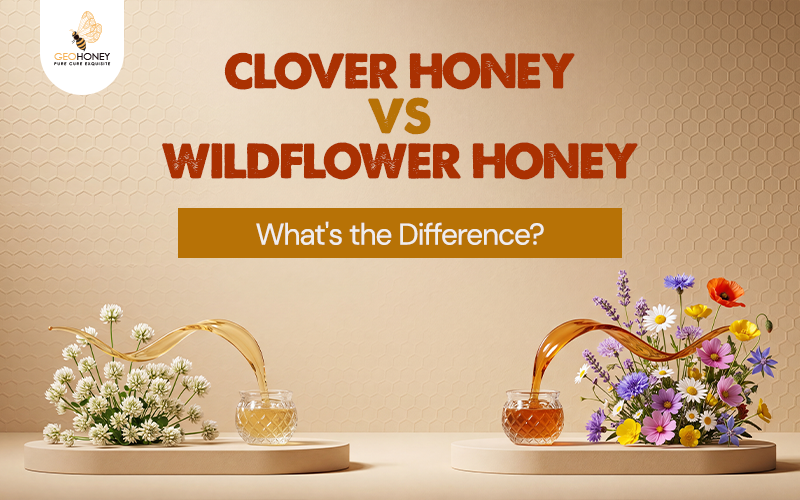
Have you ever bought a jar of raw honey, loved it, then bought another one that tasted completely different? Same color. Same label. Same shelf. Yet one was light and gentle, while the other had a stronger flavor that lingered long after the spoon was empty. That's because honey doesn't really start with bees. It starts with flowers. Every jar is a record of where bees spent their time collecting nectar. Change the flowers, and you change the honey. Because of this, although being produced in the same manner, clover and wildflower honey can have rather different flavors. Clover honey mostly comes from clover blossoms. Wildflower honey comes from many different flowers. Clover honey usually tastes milder and more predictable. Wildflower honey can change in flavor from season to season. Some studies suggest multifloral honeys may contain a wider range of plant compounds. Neither honey is automatically better. They simply offer different experiences. Imagine two groups of bees. One group visits clover fields for the most of its time. The other flies across meadows, gardens, shrubs, and flowering trees, collecting nectar from whatever happens to be blooming. Even though both groups produce honey, they're bringing back very different ingredients. That's the root of the difference between clover honey and wildflower honey. The bees are doing the same job. The flowers are not. According to internationally recognized honey classification methods, a honey is generally considered monofloral when pollen from a single floral source makes up more than about 45% of its pollen profile. That's how clover honey is usually classified as a monofloral honey, while wildflower honey is considered multifloral. If you've ever stirred honey into tea, spread it on toast, or squeezed it from a plastic bottle at a restaurant, there's a good chance you've already tasted clover honey. It's one of the most common honey varieties in countries like the United States, Canada, and New Zealand. Clover blossoms, which are members of the Trifolium family, are the main source of it for bees. Because most of the nectar comes from a single type of flower, clover honey tends to be fairly consistent. One jar usually tastes a lot like the next. That's part of its appeal. The flavor is often mild, sweet, and easy to enjoy without overpowering whatever you're adding it to. For many people, clover honey is simply "what honey tastes like." Wildflower honey is harder to predict. And that's exactly what makes it interesting. Bees don’t rely on one dominant flower source. They collect nectar from many different plants. The final flavor depends on what was blooming during that particular season and in that particular location. A spring harvest can taste different from a summer harvest. Honey produced in mountain regions can taste different from honey harvested near forests, farms, or grasslands. Every jar tells a slightly different story. You might assume one honey must be sweeter than the other. Usually, that's not the most noticeable difference. Flavor complexity matters more. Clover honey tends to have a lighter, cleaner taste. You’ll find it delicate and floral and yet not intense. Wildflower honey can be richer and more layered. Depending on the flowers involved, you might notice fruity, herbal, earthy, or even slightly spicy notes. Some people love that variety. Others prefer the reliability of clover honey because they know exactly what they're getting. Next time you're comparing jars, pay attention to color. Clover honey is usually lighter. Wildflower honey is often darker, though not always. That color difference isn't just cosmetic. Researchers have found that darker honeys often show higher antioxidant activity. Many wildflower honeys contain nectar from multiple plant sources. So, they may also contain a broader range of naturally occurring plant compounds. Still, there is a tiny detail you’ll want to know. Darker doesn't automatically mean healthier. It simply reflects differences in the flowers that contributed to the honey. If you're choosing between the two because of calories or sugar content, the differences are surprisingly small. Both are made mostly of natural sugars, primarily fructose and glucose. A tablespoon of either honey typically contains around 60 calories. The more interesting differences show up in the smaller components. Studies have found that multifloral honeys often contain higher levels of phenolic compounds and flavonoids, which contributes to antioxidant activity. At the same time, research comparing multiple honey varieties found that clover honey showed particularly strong antibacterial activity among the samples tested. So the question isn't really which honey is healthier. It's more accurate to say that different floral sources create different combinations of naturally occurring compounds. If you want a honey that tastes familiar every time, clover honey is usually the safer choice. It's mild, versatile, and works well in tea, coffee, yogurt, oatmeal, baking, and everyday cooking. If you enjoy discovering new flavors, wildflower honey can be more rewarding. No two harvests are exactly alike, and that's part of the experience. One isn't better. They're simply different expressions of the flowers bees happened to visit. Team Clover or Team Wildflower? Explore GeoHoney's honey collection and see which jar wins a permanent spot in your kitchen. Yes. As long as it hasn't been mixed with other sweeteners. "Clover" only describes the flower source. It does not mean the honey is less pure. Not necessarily. Some studies suggest it may contain a wider range of antioxidant compounds, but overall nutrition remains very similar to other natural honey varieties. Clover honey is regular honey. The name simply refers to where most of the nectar came from. People with heart failure should check with their doctor. Honey is still a source of sugar and should be consumed in moderation within their diet plan.Key Takeaways
Why One Jar of Honey Tastes Different From Another
Clover Honey: The Honey Most of You Already Know
Wildflower Honey: A Snapshot of a Place and Time
The Difference Isn't Sweetness
Why Wildflower Honey Is Often Darker
What About Nutrition?
Which One Should You Buy?
FAQs
Is clover honey 100% pure honey?
Is wildflower honey healthier?
Is clover honey healthier than regular honey?
Is honey good for heart failure patients?