- Tokyo: 01:50
- Singapore: 00:50
- Dubai: 20:50
- London: 17:50
- New York: 12:50
How to Become a Beekeeper: A Step-by-Step Beginner's Guide
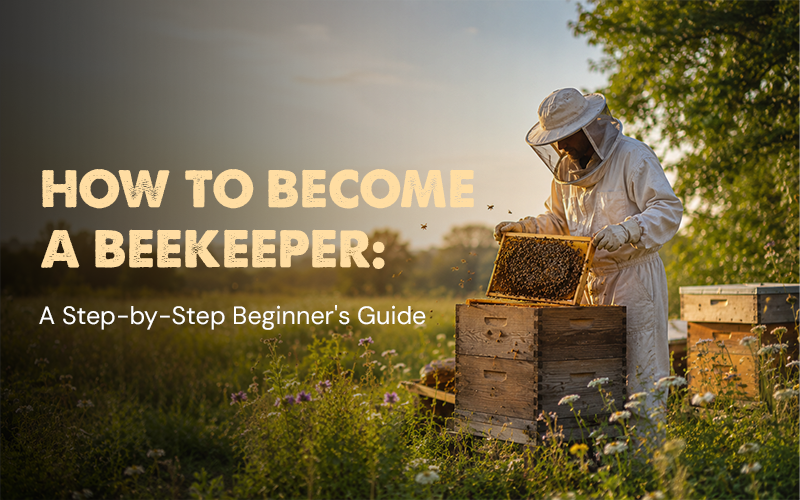
Beekeeping, or apiculture, is a practice where humans care for or manage bee colonies in man-made hives to collect honey or other bee products like beeswax, propolis, and royal jelly. To become a better beekeeper as a beginner, you need to know all there is to know about bees, types of hives, suitable hive locations, and ethical organic honey harvesting practices. This allows you to create optimal conditions where bee colonies can thrive without existential threats. To do better as a beginner beekeeper, you need to approach it with utmost care so that you do not accidentally harm these creatures. This is what this entire blog is all about. This step-by-step guide will help you start your beekeeping journey in a safer and more productive manner. So, stay with us till the end. What is a Beekeeper? How to Become a Beekeeper as a Beginner: A Step-By-Step Guide Common Mistakes to Avoid as a Beginner Beekeeper Beekeepers are skilled individuals who can manage large honey bee colonies. These experts create perfect conditions to ensure the bee colonies remain healthy for a long time. Research shows that the global number of managed hives is approximately 101.7 million colonies worldwide, which shows a continued increase in the trend. Beekeepers perform several tasks, such as hive inspections or looking after the queen and the brood. They also monitor bee food stores. They also prevent pest attacks or bee swarming risks through bee-friendly measures. Apart from raising bee colonies, beekeepers also harvest honey or other hive products like beeswax or propolis from time to time. For a good beekeeper, raw honey production is not always the main focus. Instead, they prioritize bee health or conservation above all else. A good beekeeper also strives to learn more about the right bee conservation methods that involve regular inspections to assess bee colony health or growth. Here are some effective tips for beekeeping for beginners to make sure you are better able to care for your honey bee colonies at the start of your journey. Step 1: Master The Beekeeping Basics The first step is to learn all there is to know about different members of bee colonies along with their behavior. There are three main types of honey bees in a hive. Queen bees are the reproductive members of a hive that lay eggs to maintain a healthy hive population. Next up are worker bees who maintain the hive. These bees also feed the larvae and produce wax. Older worker bees guard the hive and forage for nectar. You also find male bees, or drone bees, inside a hive that mate with queens from other hives. These bees do not collect nectar or perform maintenance tasks inside a hive. Apart from types of bees, you also need to educate yourself about the lifecycle of bees, common diseases that affect them, and sustainable honey harvesting methods. To learn all of this, you can either take a beginner course on beekeeping or join a local beekeeping association. Step 2: Know About All the Local Beekeeping Rules Next up, you need to look at your local apiculture rules to start this practice. The rules about bee colony registration, hive placement, fencing, or property boundaries differ in different countries or states. If you know the local rules, it can help you place your bee colonies in a location where they do not affect your neighbors or the surrounding populations. This can also help you avoid legal issues that result from unauthorized beekeeping operations down the line. Step 3: Pick a Perfect Location for the Hive After obtaining permission from local authorities, you need to pick a suitable location for the hives. Choose a place that gets more sunlight, as it forces bees to forage earlier in the day. Do not place the hive in an area with strong winds or rainwater drainage systems. These locations affect the ability of the bees to fly far for nectar collection. Make sure to provide the bees with a clean water source nearby. You also need to keep the hive in a place that is away from public access or the reach of children or pets. Step 4: Choose an Appropriate Type of Hive In this step, you pick a hive that most beekeepers in your area are already using. Most beekeepers use a Langstroth hive. This hive has removable frames inside stacked boxes. You can also go with top-bar hives, warré hives, flow-style hive systems, or traditional or locally adapted hive designs. If you choose a common hive type, it allows you to find replacement parts easily. Just pay attention to regular hive maintenance to make sure it keeps your bees safe for a long time. Step 5: Gather the Right Beekeeping Tools Every successful beekeeper, or people who do beekeeping as a hobby, need the right tools to get better results. Here are some things that you need to gather before you start. A beehive where bee colonies can easily live or store honey. Frames that provide bees with a structured space where they can build their combs. You also need a bee suit or protective jacket along with special beekeeping gloves. You also need to invest in a veil or hat-and-veil combination and suitable closed footwear. Another key thing is a hive tool that helps you separate hive components or manipulate frames. It also helps you remove propolis or wax when you extract honey. You also need a smoker that calms bees when you inspect the hive. A bee brush is another important accessory that helps you move bees inside a hive without causing physical damage. You can also get a feeder to supplement the bees with food when the natural forage is insufficient or when you wish to establish a newer colony. Step 6: Look for a Healthy Bee Colony As a beginner, you can start with a nucleus colony. This colony contains frames with bees and their brood. It also comes with food stores as well as a queen bee. You can also go with a package of bees. This package gives you a considerable number of adult bees along with a queen bee. To get these bees, you can contact a reputable beekeeper in your area. Just make sure to verify the health of the bees and the queen. This can save you so much trouble down the line. Step 7: Install Your Bees Once you position the hive correctly, you can start the installation of these bees. Wear your protective clothing and keep your other tools at hand. Make sure to calmly allow the bees inside the hives in the presence of an experienced beekeeper if possible. After installation, ensure the bee colony has enough time to settle before you start with inspections or hive manipulation. Step 8: Learn Hive Inspection Methods As a beginner in honey beekeeping, timely hive inspections are crucial. Always make sure to cause as little disturbance inside the hive as possible during the inspection. In a hive inspection, you need to ensure the hive has a queen. You also need to look at its egg-laying pattern. You also need to look at the health of the brood. Another key thing to look at is the availability of food inside the hive. Finally, you need to look for signs of pests or diseases inside the hive. An unhealthy hive has abnormal bees, mites, and unusual odors. Looking for these signs can help you take timely measures that protect the hive’s health in the beginning. Step 9: Beware of Common Bee Pests and Diseases There are several pests or parasites that cause diseases or environmental stress to bee colonies. One major pest is a varroa mite that spreads harmful viruses inside bee colonies. Some hives also attract beetles or wax moths. This is why you need to learn about the common pests or diseases that affect beehives in your region particularly and over the globe generally. Step 10: Learn Proper Honey Harvesting Methods Honey harvesting is another major aspect of beekeeping. As a beginner, you need to worry less about honey harvesting and focus more on bee colony growth. Once the colony grows, you can go ahead and gather essential equipment for honey harvesting. To collect honey safely, you need to remove honey-filled frames with extreme care. Then you need to separate the bees from the frames with a brush. This allows you to uncap the honeycombs with ease. Now you can extract the honey without any harm to the bees. Just make sure to leave some honey for the bees inside the hive to keep them nourished. Here are some common mistakes that most beginner beekeepers make. These mistakes result in poor bee colony health as well as low honey yield. Most beginner beekeepers do not learn beekeeping fundamentals before they start. They invest in low-quality equipment that doesn’t fit their hive system. Most beginners also make frequent inspections that disturb bee colonies a great deal. Another mistake is when you harvest too much honey and leave very little for the colony. Most beginners either do not use protective gear or they do not know how to use it right away. To become a successful beekeeper, you need to understand that it is a long journey that requires your continuous willingness to learn and to be patient. To better manage a bee colony, you need to have a grasp of basic keeping practices, types of hives, types of bees, common diseases or pests that affect them, and the right honey harvesting methods. You also need to invest in quality hive handling tools and protective gear. This can help you approach your beekeeping hobby in a much safer manner, both for yourself as well as the bees. Visit us at Geohoney today to learn all there is to know about beekeeping as a beginner. We also offer an exclusive range of 100% pure honeybee products like raw honey, royal jelly, propolis, bee pollen, and more that promise the best flavor as well as health benefits every single time.
What is a Beekeeper?

How to Become a Beekeeper as a Beginner: A Step-By-Step Guide

Common Mistakes to Avoid as a Beginner Beekeeper
Conclusion