- Tokyo: 02:47
- Singapore: 01:47
- Dubai: 21:47
- London: 17:47
- New York: 12:47
HONEY Researches

Bee Gut Microbiome & Honey Quality: Emerging Research Findings
In recent years, scientists have turned their attention to a fascinating and underexplored topic: the gut microbiome of honeybees. Much like humans, bees harbor a unique community of microorganisms in their digestive system that plays a crucial role in their overall health, digestion, and immunity. Beyond maintaining colony wellbeing, emerging evidence suggests that these gut microbes may also influence the quality, composition, and medicinal properties of honey. Understanding this relationship is becoming increasingly vital for sustainable apiculture and honey production.Composition of the Bee Gut MicrobiomeThe honeybee gut hosts a relatively simple yet highly specialized microbial community dominated by just a few bacterial genera. Core members include Gilliamella apicola, Snodgrassella alvi, Lactobacillus spp., Bifidobacterium spp., and Frischella perrara. Each of these microbes occupies a specific niche within the digestive tract and serves a vital function:Gilliamella species aid in carbohydrate metabolism, breaking down complex plant polysaccharides from nectar and pollen.Snodgrassella forms a protective biofilm on the gut lining, supporting immune defense and nutrient absorption.Lactobacillus and Bifidobacterium genera contribute to fermentation processes, lactic acid production, and the inhibition of harmful bacteria.Frischella species stimulate immune responses, though excessive colonization may sometimes cause inflammation.Together, these microbes maintain digestive balance, protect bees against pathogens, and influence the processing of floral nectar into honey.Microbiome’s Impact on Honey Production & QualityHoney formation is a biologically complex process that starts with nectar collection and continues through enzymatic activity and dehydration inside the hive. Gut microbes play an active role in several of these stages.Recent studies (Kwong & Moran, 2016; Kešnerová et al., 2020) show that certain gut bacteria produce enzymes that help convert nectar sugars—mainly sucrose—into glucose and fructose, the key components of honey. They also produce antimicrobial peptides and organic acids that contribute to honey’s natural preservation and antibacterial qualities.Moreover, microbiome-driven fermentation can influence honey’s aroma, flavor, and bioactive compounds. For instance, Lactobacillus kunkeei, a species frequently found in honeybee guts and honey itself, is associated with the production of antioxidant compounds that enhance honey’s nutritional profile. These microbial contributions suggest that a healthy bee gut directly translates into higher-quality honey with richer enzymatic and medicinal properties.Environmental & Pesticide InfluenceThe bee gut microbiome is highly sensitive to external stressors. Factors such as floral diversity, pesticide exposure, and antibiotic use can significantly disrupt microbial balance (Engel et al., 2012). Bees feeding on monoculture crops or contaminated nectar often experience reduced microbial diversity, leading to weaker immunity and increased vulnerability to diseases such as Nosema and Varroa infestations.Pesticides, particularly neonicotinoids, have been shown to suppress beneficial bacteria like Snodgrassella alvi, affecting digestion and detoxification processes. This disruption not only weakens bee health but may also alter honey’s microbial and enzymatic composition, potentially affecting taste and safety. Protecting microbial diversity through natural habitats and organic farming practices is therefore essential for both bee survival and honey quality.Emerging Research & Genomic InsightsThe advent of metagenomics and next-generation sequencing has revolutionized bee microbiome research. Recent studies have decoded how microbial genes contribute to honeybee metabolism, immunity, and product quality. For example:Kešnerová et al. (2020) demonstrated that different bacterial strains specialize in breaking down pollen walls, releasing essential amino acids and fatty acids that enrich honey’s nutritional profile.Zheng et al. (2021) found that honey samples from colonies with diverse gut microbiota had higher levels of phenolic compounds and antioxidant activity.Ellegaard & Engel (2019) revealed that variations in microbiome composition across geographic regions correlate with differences in honey’s flavor, viscosity, and color.Such findings indicate that microbial diversity in bees not only supports health but also drives regional honey uniqueness, similar to terroir in winemaking.Future Directions in Bee Microbiome ResearchAs research advances, scientists are exploring microbiome manipulation as a potential tool for improving bee health and honey production. Probiotic supplementation—introducing beneficial microbes into bee diets—has shown promise in enhancing disease resistance and honey yield. Trials with Lactobacillus and Bifidobacterium strains have improved colony resilience and nectar conversion efficiency.Furthermore, microbiome engineering using synthetic microbial consortia may one day allow beekeepers to optimize honey characteristics, such as flavor and medicinal potency, through targeted microbial management. However, ethical and ecological considerations must guide such innovations to avoid disrupting natural microbial ecosystems.ConclusionThe bee gut microbiome represents a hidden but powerful force behind the quality and distinctiveness of honey. From influencing enzymatic activity and nectar processing to shaping honey’s sensory and medicinal properties, these microscopic allies are integral to the world’s favorite natural sweetener. Emerging research continues to uncover how environmental conditions, diet, and microbiome diversity interact to determine honey quality.Understanding and preserving this delicate microbial ecosystem is not only essential for sustainable beekeeping but also for ensuring the continued production of high-quality, health-promoting honey.
Multiple | Created at: October 25, 2025 | Researched at: March 30, 2026
Read more →
Detecting Honey Adulteration with Machine Learning: A New Era of Food Safety
Honey has always been celebrated as nature’s golden gift—valued for its taste, health benefits, and cultural significance. Unfortunately, its popularity also makes it one of the most frequently adulterated foods. From sugar syrups to artificial sweeteners, adulteration undermines consumer trust and threatens genuine producers. Traditional methods like pollen analysis or basic lab checks often fall short in spotting sophisticated fraud. But now, advanced technologies are changing the game.A recent study by researchers at Wollo University, Ethiopia, shows how machine learning combined with hyperspectral imaging can detect honey adulteration with accuracy above 98%. This breakthrough holds tremendous promise for protecting consumers and maintaining integrity across the honey industry.Why Honey Adulteration is a Growing ProblemCounterfeiters mix natural honey with cheaper sugars (like corn syrup or sucrose) to increase profits.Adulteration not only reduces honey’s nutritional value but can also introduce harmful substances.Rising global demand and limited authentic supply make honey an easy target for fraudulent practices.Consumers increasingly demand proof of authenticity. For brands like Geohoney, ensuring transparency and purity is a necessity.The New Approach: Machine Learning + Hyperspectral ImagingThe study introduces a cutting-edge method:Hyperspectral imaging captures both visual and spectral information from honey samples. Each wavelength acts like a fingerprint, revealing subtle differences between pure and adulterated honey.Machine learning algorithms (Artificial Neural Networks, Support Vector Machines, Random Forests, K-Nearest Neighbors, and Decision Trees) analyze these fingerprints to classify whether a sample is genuine.Through hyperparameter tuning (fine-tuning the algorithm’s internal settings), accuracy levels reached nearly 99%.Among the tested methods, Artificial Neural Networks (ANNs) performed the best, consistently identifying adulterated honey even at low levels of tampering (as little as 5–10%).Key Findings of the ResearchHigh accuracy: Over 98% classification accuracy across multiple honey types.Robust detection: Worked well across different brands and botanical origins, including premium Manuka honey.Scalability: The system can classify both “pure vs. adulterated” honey and different levels of adulteration (5%, 10%, 25%, 50%).Future-proof: As datasets expand, this technology can evolve into a universal fraud detection system for global honey markets.What This Means for the Honey IndustryTrust and Transparency: Advanced testing ensures customers receive genuine honey.Quality Control: Importers, exporters, and regulators gain a reliable, non-destructive testing tool.Brand Protection: Premium honey producers like Geohoney can safeguard their reputation and highlight authenticity as a competitive advantage.Looking AheadMachine learning is no longer just a buzzword—it’s becoming a real-world solution for food safety. For honey, this means:Better protection against counterfeit products.Faster, more accurate quality assurance.A pathway toward blockchain-backed traceability, where every jar of honey comes with scientific proof of purity.At Geohoney, we believe technology and nature can work hand in hand. By embracing innovations like hyperspectral imaging and AI, the honey industry can ensure that consumers around the world continue to enjoy honey the way nature intended—pure, authentic, and unadulterated.
Multiple | Created at: September 10, 2025 | Researched at: March 30, 2026
Read more →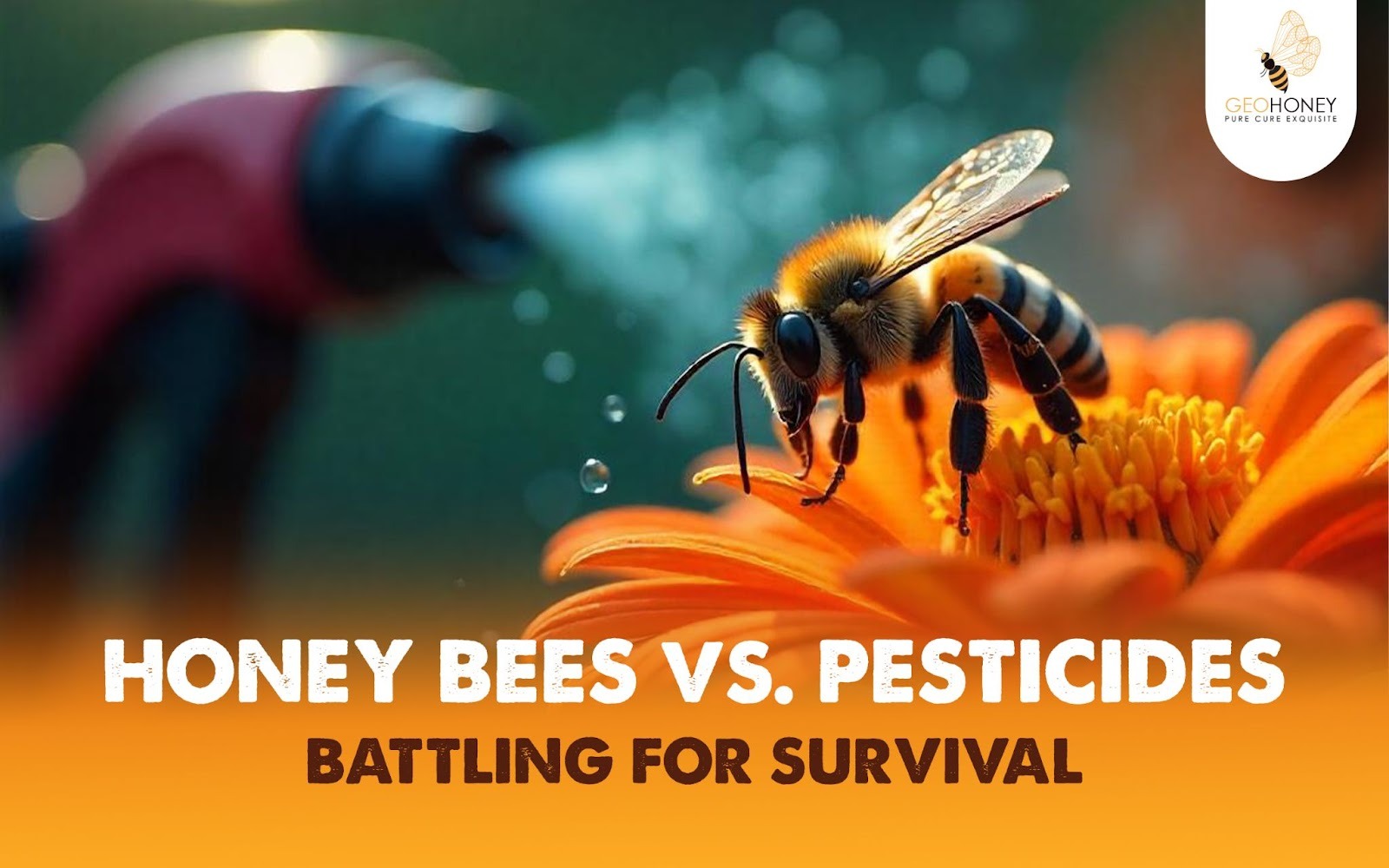
How the World Around Us Affects Honey Bees: A Look at Pesticides and Landscapes
Honey bees play a crucial role in keeping our ecosystems buzzing. They help pollinate many of the crops and wild plants we depend on, ensuring food security and biodiversity. But their populations have been declining, raising alarm bells for scientists and environmentalists worldwide. One of the culprits? Pesticides.A recent study by researchers in Japan sheds light on how the landscapes around honey bee colonies influence their exposure to pesticides. Here’s what they found, explained in simple terms for everyone to understand.What Did the Study Look At?The researchers focused on Japanese honey bees (Apis cerana japonica), a native species of Asia. These bees are an important part of the local ecosystem, and many beekeepers across Japan maintain colonies in natural and semi-natural settings.The scientists collected honey and beeswax from 175 honey bee colonies spread across various parts of Japan. They tested these samples for different types of pesticides, including insecticides, herbicides, and fungicides. They then analyzed how the land-use types around the colonies—like forests, agricultural fields, or urban areas—affected the presence and levels of these pesticides.Key Findings: Landscapes Matter!Here are the highlights from their findings:Agricultural Areas Are High-Risk Zones:Bee colonies near paddy fields and orchards had the highest exposure to pesticides. These areas use pesticides heavily to protect crops, and bees visiting these fields often bring those chemicals back to their hives.Urban Areas Are Surprisingly Risky:You might think cities are safer since they don’t have large farms, but bees in urban areas were also exposed to pesticides. This is likely due to pesticides used in gardens, parks, and landscaping.Forests Offer a Safe Haven:Forested areas were found to have the lowest pesticide residues. Natural forests, in particular, provide a safer environment for bees, with less exposure to harmful chemicals.Multiple Pesticides in One Hive:Many colonies had residues of more than one type of pesticide. This “pesticide cocktail” effect can be even more harmful to bees, affecting their health and survival in complex ways.Why Does This Matter?Bees are exposed to pesticides when they forage for nectar and pollen in treated plants. These chemicals can harm their nervous systems, affect their ability to navigate, or even lead to colony collapse. When bees are exposed to pesticides from multiple sources—agricultural fields, urban gardens, or even forested areas—the risks multiply.The study highlights a pressing issue: It’s not just about what happens on farms. Urban areas, forests, and other landscapes also play a role in pesticide exposure. This means we need to rethink how and where pesticides are used, not just in agriculture but everywhere.What Can We Do?Here’s how you can help protect honey bees and other pollinators:Support Organic and Sustainable Farming:Buy organic produce or support local farmers who minimize pesticide use.Create Bee-Friendly Spaces:Plant native flowers and shrubs in your garden to provide food for bees.Avoid using pesticides in your yard or garden. Opt for natural pest control methods instead.Advocate for Better Policies:Push for stricter regulations on pesticide use, especially in urban areas and public spaces.Support initiatives that protect natural habitats like forests, which can serve as safe zones for pollinators.Educate and Spread Awareness:Share what you’ve learned with friends and family. The more people understand the risks, the more we can work together to protect bees.ConclusionBees are more than just honey-makers. They’re vital to our food systems and the planet’s biodiversity. This study is a reminder that the world around us—whether it’s a farm, a city park, or a forest—affects these hardworking pollinators. By making thoughtful choices and supporting bee-friendly practices, we can ensure that honey bees continue to thrive and keep our ecosystems healthy.Let’s all do our part to create a world where bees and humans can thrive together!
Multiple | Created at: August 15, 2025 | Researched at: March 30, 2026
Read more →
How Climate Change Is Forcing Asian Honey Bees Out of Their Natural Habitats
Asia's native honey bees—Apis cerana, A. dorsata, and A. florea—are confronting a formidable challenge: climate change is reshaping their habitats. A recent paper in the Journal of Wildlife & Biodiversity (June 2025) reveals that by 2050, average annual temperatures across their range are projected to rise by 2.3–2.5 °C, with 50–60 mm more precipitation. These changes are expected to alter foraging periods and impose intense summer heat stress (Wildlife Biodiversity,ResearchGate).Key FindingsApis florea may face an average temperature rise of +2.5 °C; A. cerana +2.4 °C; A. dorsata +2.3 °C.Increased rainfall could extend foraging in spring/winter, but hotter summers may threaten survival (Wildlife Biodiversity).Habitat suitability models (using MaxEnt and WorldClim data) show significant contraction in current ranges, especially in Pakistan. Many regions may become inhospitable during peak summer months.Broader consequencesRising temperatures may force bees upslope or poleward, disrupting existing ecosystems.Colony resilience could decline under thermal and moisture stresses.Crops and wild flora dependent on these bees may lose critical pollination services.Conservation & action stepsLandscape management: preserve corridors between cooler regions, forests, and shaded refuges.Climate-informed apiary siting: prioritize elevations and microclimates that buffer extreme temperatures.Assisted migration and breeding programs: propagate heat- and humidity-resilient subspecies.ConclusionClimate change isn't just a distant threat—it’s actively reshuffling bee habitats now. Our native Asian honey bees are at the forefront of this ecological upheaval. We cannot stand by while warming temperatures uproot pollination networks essential to agriculture and biodiversity.
Multiple | Created at: July 22, 2025 | Researched at: July 28, 2025
Read more →
Is Your Honey Safe? Shocking Levels of Pesticides Found in Bee Products
Honey is a symbol of purity, but new research tells a more troubling story. A study published in Environmental Toxicology & Pharmacology (April 2025) sampled honey, pollen, and wax foundation sheets from over 40 apiaries. The results are shocking: 96%–100% of the samples contained at least one pesticide residue—revealing chronic, widespread exposure in bee products (ResearchGate).What they foundWax foundation and pollen were nearly universally contaminated.Common agrochemicals, including neonicotinoids and fungicides, persist in hive materials.Chronic exposure—even at low levels—can subtly impair bee health by affecting development, immunity, and reproductive success (Wildlife Biodiversity,Wikipedia).Why it mattersBees ingest or contact these chemicals constantly—not just during foraging, but within the hive.Long-term exposure could accumulate, increasing risks for colony decline.Even trace levels can combine synergistically, amplifying their impact compared to single-pesticide studies .Implications for beekeepers & consumersMonitoring residue levels isn't just for regulated food safety—it's critical for hive health too.Sourcing wax foundation from pesticide-free or organic-certified suppliers can reduce contamination.Demand for raw, minimally processed honey may help reduce exposure—yet vigilance remains essential.TakeawayYour sweet spoonful of honey may be carrying unseen chemical baggage. This study urges beekeepers, consumers, and regulators to prioritize pesticide monitoring and take action to protect the intricate balance within hives.
Multiple | Created at: June 18, 2025 | Researched at: July 31, 2025
Read more →
10 New Insights in Climate Science 2024/2025
10 New Insights in Climate Science 2024/2025Source: Future Earth, The Earth League, and the World Climate Research ProgrammeEach year, the scientific community compiles the most significant recent advancements in climate science to support informed policy and societal action. The 2024/2025 edition of 10 New Insights in Climate Science—based on peer-reviewed research published between January 2023 and June 2024—synthesizes urgent findings for decision-makers, negotiators, and the broader public. Produced by Future Earth, The Earth League, and the World Climate Research Programme, this report brings together interdisciplinary knowledge to highlight both accelerating risks and emerging opportunities.The following summary presents these insights in detail, unpacking their scientific basis, implications, and recommendations for future action.Understanding the State of the ClimateThe years 2023 and 2024 have marked the hottest period ever recorded, with August 2024 registering temperatures 1.51°C above pre-industrial levels. Simultaneously, global sea surface temperatures reached historic highs, and extreme weather events—from Canada’s unprecedented wildfires to South Asia’s deadly heatwaves—have become increasingly likely and intense. These developments emphasize the need for a new level of urgency and ambition across climate mitigation, adaptation, and resilience planning.Key Scientific Insights1. Methane Levels Are Surging: A Critical Opportunity for Fast MitigationMethane, a powerful but short-lived greenhouse gas, has been rising rapidly, with emissions from fossil fuel extraction, agriculture, and waste identified as the primary drivers. Since 2006, global methane levels have accelerated sharply, surpassing historical records.Scientific Highlights:Methane is over 80 times more potent than CO₂ over a 20-year period.It has contributed ~0.5°C to global warming since the 19th century.Natural methane emissions, such as from wetlands, are also increasing due to feedback from warming.Challenges and Opportunities:Only 13% of methane emissions are currently regulated under binding policy mechanisms.Satellite monitoring now enables the identification of major methane “super-emitters.”Deep cuts in methane emissions—particularly from oil and gas operations and waste facilities—are both technically feasible and cost-effective.The agricultural sector remains harder to reform but offers mitigation potential via feed management, waste reduction, and dietary changes.Governments should incorporate explicit methane targets into their Nationally Determined Contributions (NDCs), supported by enforcement mechanisms, monitoring frameworks, and international collaboration.2. Declining Air Pollution Unmasks Underlying WarmingGlobal efforts to reduce aerosol emissions (air pollutants such as soot and sulfates) have significantly improved public health but also removed their temporary cooling effect on the atmosphere.Scientific Highlights:Aerosols reflect sunlight and cool the Earth’s surface, partially masking the warming effects of greenhouse gases.Reductions in aerosols are now exposing the full warming potential of CO₂ and methane.Regional aerosol changes are altering rainfall patterns and increasing the frequency of extreme weather events.Implications:The unintended warming effect from aerosol reduction could accelerate climate change temporarily.South and East Asia show diverging aerosol trends, influencing localized climate risks.Aerosols must be accounted for in both mitigation and adaptation plans. A global task force on aerosols—similar to methane initiatives—could help incorporate these dynamics into national strategies and inform the next IPCC guidance.3. Heat Is Rendering Regions Increasingly UninhabitableHuman health, productivity, and survival are tied to a narrow range of climatic conditions. With rising temperatures and humidity, more regions are moving outside the so-called “human climate niche.”Scientific Highlights:Over 600 million people now live in areas with conditions deemed uninhabitable for extended periods.Each degree of warming could push an additional 10% of the global population outside habitable ranges.Heat stress is especially deadly when combined with high humidity and poor infrastructure.Societal Impact:Populations in the Global South are disproportionately affected due to limited access to cooling infrastructure, healthcare, and water resources.Vulnerable groups—such as outdoor laborers, pregnant women, children, and the elderly—face the highest risks.Heat Action Plans and Early Warning Systems must be scaled urgently. Adaptation planning should prioritize urban design, labor protections, and infrastructure improvements that can mitigate the worst impacts of heat.4. Climate Change Threatens Maternal and Reproductive HealthClimate-related stressors are exacerbating health risks for women and children, particularly in low-income and climate-vulnerable regions.Scientific Highlights:Heat exposure is linked to higher rates of miscarriage, preterm birth, and maternal mortality.Floods and displacement can disrupt healthcare access and increase exposure to disease and violence.Climate-related food and water insecurity further compounds reproductive health challenges.Structural Gaps:Fewer than 25% of NDCs reference maternal or newborn health.Gendered dimensions of climate risk remain underrepresented in adaptation frameworks.Maternal and reproductive health must be integrated into climate adaptation and healthcare systems. Gender-equitable planning and investment in climate-resilient health infrastructure are essential.5. Ocean Warming Raises Alarms Over El Niño and AMOC InstabilityOceans are warming at record-breaking levels, affecting global circulation systems and atmospheric dynamics. Two key concerns are emerging:A. El Niño IntensificationEconomic losses from El Niño are now estimated in the trillions.Frequency and severity are expected to increase with warming.B. AMOC Collapse RiskThe Atlantic Meridional Overturning Circulation (AMOC) is weakening, with potential for abrupt collapse in the coming decades.This could disrupt weather patterns, sea levels, and ecosystems across the globe.Robust ocean monitoring systems and risk assessments are urgently needed. Climate models must be refined to incorporate feedback and thresholds, with increased investment in ocean–atmosphere observation networks.6. Biocultural Diversity is Key to Amazon Forest ResilienceThe Amazon is facing dual threats from climate change and human activities like deforestation and illegal mining.Scientific Highlights:Parts of the forest have shifted from carbon sinks to carbon sources.The forest is approaching ecological tipping points linked to rainfall and temperature thresholds.Solutions:Indigenous and local stewardship enhances resilience through traditional knowledge.Preserving biodiversity—both ecological and cultural—is critical to maintaining ecosystem stability.Support regional cooperation, law enforcement, and the development of sustainable economic models that prioritize conservation. Brazil’s proposed Tropical Forest Forever Fund should be operationalized by COP30.7. Infrastructure Systems Are Vulnerable to Cascading Climate RisksCritical infrastructure—such as energy grids, water systems, healthcare, and transportation—faces growing risks from extreme climate events.Scientific Highlights:Interconnected infrastructure increases the risk of cascading failures.Informal settlements, where infrastructure is weakest, are home to over 1 billion people.Emerging Tools:AI and machine learning can enhance resilience through predictive analytics, smart grids, and real-time risk monitoring.Resilience reviews must become standard practice, particularly in urbanizing regions. Investments should prioritize decentralized systems, nature-based solutions, and integration with climate adaptation strategies.8. New Frameworks Can Drive Climate-Resilient Urban DevelopmentCities are central to climate solutions but often fail to integrate mitigation and adaptation holistically.Scientific Highlights:The SETS (Social-Ecological-Technological Systems) framework offers a blueprint for aligning environmental, social, and technological priorities.Integrated urban planning can unlock co-benefits such as reduce
Multiple | Created at: May 01, 2025 | Researched at: May 02, 2025
Read more →
How Honey Bees are Changing Tibetan Grasslands: A Tale of Spillover
Multiple | Created at: April 29, 2025 | Researched at: May 01, 2025
Read more →
Innovative Microparticles To Protect Bees From Pesticides
Multiple | Created at: September 13, 2024 | Researched at: September 05, 2024
Read more →
The Sweet Solution: Honey's Role in Managing Diabetes
Wiley | Created at: June 20, 2024 | Researched at: February 04, 2018
Read more →
Honey’s Role in Wound Healing: Mechanisms and Benefits
Science Direct | Created at: May 16, 2024 | Researched at: May 22, 2022
Read more →
Which Is Healthier: Natural Sugar, Table Sugar, or Artificial Sweeteners?
Stanford Prevention Research Center | Created at: March 28, 2024 | Researched at: March 28, 2024
Read more →
How Honey Bees Loaded with Nectar Prevent Overheating
University of Wyoming | Created at: March 04, 2024 | Researched at: March 04, 2024
Read more →We rely only on exclusive and trustworthy resources.